Previously Posted: Top 10 Worst Places to Catch a Taxi

For those new to CabbieBlog or readers who are slightly forgetful, on Saturdays I’m republishing posts, many going back over a decade. Some will still be very relevant while others have become dated over time. Just think of this post as your weekend paper supplement.

Top 10 Worst Places to Catch a Taxi (05.03.2010)

I have recently found the site mapvivo.com where travellers can relate their experiences, as it’s coming up to deciding your travel arrangements for this year I would suggest that you check it out, it’s a great source of information and frankly very funny. At the risk of being accused of plagiarism, although the author’s consent has been given, I think this post is worthy of inclusion in CabbieBlog.

Well, maybe not the absolute worst, but a catalogue of experiences around the world which explain why a taxi is always my last resort for getting from A to B, and why I’d rather walk, take public transport or a bike just about anywhere.

Disclaimer: Many taxi drivers are polite, courteous, professional and very honest. It’s the others that give you a bad rap, which are the ones I am complaining about…

BANGKOK: Don’t expect taxi drivers to know the way – particularly if there has been a bad crop recently in the countryside, since in these times your taxi driver is likely to be an out of work farmer who is unlikely to find his way home, let alone that restaurant you just asked for. In fact, it may take 2 or 3 different attempts before you find a taxi driver that knows where your destination is; let alone how to get there.

If you are lucky the driver will tell you that he has no idea where the destination is in advance, otherwise he’ll just drive you around for a little while.

Having somebody write the destination down for you (or learning how to pronounce words in Thai) can help, but not always, as can calling the place where you are staying and asking them to talk the taxi home for you.

NEW YORK: Not that bad actually. Relatively inexpensive and efficient, but smells horrible and don’t expect much in the way of courtesy – either from the driver or other passengers competing for the same cab.

New York cabs win a prize for being the largest vehicles with the smallest passenger space, but definitely count as one of the world’s better taxi experiences.

It could be said that there is not much difference between driving a cab in London than driving one in New York – except that we speak in English and have to rely on our brains to get us from one part of the city to another and not rely on a numerical grid system.

LONDON: Encyclopaedic knowledge of London’s streets, spacious cabs, polite drivers (to passengers at least – comments made to other road users are part of the entertainment) and cheap fares. London is Taxi heaven. I can’t disagree with those fine words.

Until midnight that is, when the black cabs go home and unlicensed mini-cabs take over to fill the demand. Beware of these guys: people tell of drivers rolling joints whilst driving with their knees, whilst others talk of drivers who’ve obviously had several already. A phone call followed by a quick detour to help a friend of the driver escape from a crime scene is also not unheard of. Police reports describe far more sinister doings, particularly concerning women travellers.

ZÜRICH: If your hotel isn’t one of the five biggest in Zürich then bring your own map, or chose a driver with a GPS. English is rarely spoken and German or other Swiss languages are not guaranteed. And bring plenty of cash – that number on the meter really is the cost.

Definitely the most expensive and most often lost taxi drivers in the world. On one occasion I spent 30 minutes while a taxi tried to find my (rather large) hotel, asking for directions from several pedestrians on the way. We eventually found it, and a long argument ensued over the expectation that I pay the meter fare for the whole duration. Which I won only narrowly.

ROME: If you manage to actually find a cab in Rome then please comment. I’ve given up each time as taxis are scarce in Rome, and drivers tend to strike (whilst blocking traffic in the city) every time the city tries to increase the number of taxi licences.

In a blog post, Pauline relates to an experience where a driver busy taking a phone call made them wait outside before allowing them in, in the rain, with the meter running (including the approach fare), for 10 minutes. That’s service.

PARIS: Generally professional, but basically rude. Can make a bit of a fuss when asked to take you somewhere that’s not totally convenient for them – consider this when choosing destinations such as out of the way places where they won’t pick up a huge fare right after.

I once spent 15 minutes in a taxi being complained at by the driver because he ‘claimed’ he would lose money driving to my destination (near the airport). I paid him 1/3rd more than the fare as a good-will token, but it didn’t make him happy and he drove off refusing to give a receipt.

INDIA: Finding a taxi or auto rickshaw is easy. Just wait by the road and they’ll soon be fighting over you. The family member’s shop or restaurant that they recommend is never as good as the place you originally wanted to go to, so be persistent and insist that you want to go to your original destination. Like many attempted transactions in India it comes down to a war of attrition.

Taxis are cheap enough to rent for the day in some cases, so make sure you enjoy the unique spectacle of road transport in India, complete with sleeping cows in the middle of the carriage way, oncoming trucks in the wrong lane, constant use of the horn, etc.

CAIRO: Similar to India, except they continue to fight over you after you’ve arrived. In fact, Taxi drivers will follow you around all day, stalking you. The family member’s shop or restaurant is also never as good as the place you actually wanted, but in many cases they will take you there anyway and just pretend that’s what you asked for.

Don’t be alarmed by the fact that obeying traffic signals are optional in Cairo, meaning that they are always ignored, and on a three lane carriageway there will be at least four cars abreast.

However, if you can find an honest one (and don’t rely on a hotel concierge for this) then they can make excellent tour guides.

Don’t expect the negotiated price to remain the same for the entire journey; it usually has doubled when you get to your destination. If you are unlucky to have a driver who speaks English, a warning, they will talk to you whilst driving as you sit in the back seat, but face to face.

CHINA: Don’t lose the piece of paper with your destination written in Chinese, unless you are good at charades, as you shouldn’t count on being able to pronounce your destination no matter how much you practice. Otherwise Chinese taxis are honest, professional and courteous, if a little erratic in their driving style.

WARSAW: Very keen to get going to the extent that over eager drivers can slam doors shut before all appendages are inside the taxi. It can really hurt.

Speeds on wet roads defy the laws of physics (or at least common sense).

Generally, taxis in Warsaw are very reasonable and honest providing you take a licensed taxi, not one of the private taxis that lurk around airport arrivals and on popular streets.

Test Your Knowledge: April 2023

Today is Good Friday, and as we enter the penultimate day of Holy Week, today’s quiz concerns Easter in London. As before the correct answer will turn green when it is clicked upon and expanded to give more information. The incorrect answers will turn red giving the correct explanation.

1. Since 2010 Trafalgar Square has been the venue for what open-air event?
Easter bunny play
WRONG A moving 90-minute portrayal of the final days of Jesus is performed twice during Good Friday afternoon which includes more than a hundred players in costume, as well as real-life horses, doves and a donkey.
The Passion of Jesus
CORRECT A moving 90-minute portrayal of the final days of Jesus is performed twice during Good Friday afternoon which includes more than a hundred players in costume, as well as real-life horses, doves and a donkey.
An Easter egg hunt
WRONG A moving 90-minute portrayal of the final days of Jesus is performed twice during Good Friday afternoon which includes more than a hundred players in costume, as well as real-life horses, doves and a donkey.
2. What Easter treat does a sailor climb up and hang from a pub’s ceiling every Good Friday?
Easter eggs
WRONG An old widow, on receiving news that her son would return from fighting in the Napoleonic Wars that Easter, traditionally baked him a hot cross bun to welcome him home. He did not return, and every year after that, on Good Friday, she would bake a fresh hot cross bun and hang it in her home. The Widow’s Son pub was erected on the site and they carried on the tradition.
A hot cross bun
CORRECT An old widow, on receiving news that her son would return from fighting in the Napoleonic Wars that Easter, traditionally baked him a hot cross bun to welcome him home. He did not return, and every year after that, on Good Friday, she would bake a fresh hot cross bun and hang it in her home. The Widow’s Son pub was erected on the site and they carried on the tradition.
Simnel cake
WRONG An old widow, on receiving news that her son would return from fighting in the Napoleonic Wars that Easter, traditionally baked him a hot cross bun to welcome him home. He did not return, and every year after that, on Good Friday, she would bake a fresh hot cross bun and hang it in her home. The Widow’s Son pub was erected on the site and they carried on the tradition.
3. The rector of St. Bartholomew the Great in Smithfield asks what question on Good Friday whilst standing over a grave?
Are any poor widows present who are in need of 20 shillings?
CORRECT A 1902 account details 21 widows raising their hands and each approaching the grave in turn and collecting from it a single silver sixpence. It then describes them being given a hot cross bun and offered a steadying arm as they completed a ritualistic walk across the tombstone.
Who believes in Christ’s Ascension to Heaven?
WRONG A 1902 account details 21 widows raising their hands and each approaching the grave in turn and collecting from it a single silver sixpence. It then describes them being given a hot cross bun and offered a steadying arm as they completed a ritualistic walk across the tombstone.
Are there any evil spirits within?
WRONG A 1902 account details 21 widows raising their hands and each approaching the grave in turn and collecting from it a single silver sixpence. It then describes them being given a hot cross bun and offered a steadying arm as they completed a ritualistic walk across the tombstone.
4. On Ascension Day, 40 days after Easter, what do children hit at the Tower of London?
Iron markers
CORRECT Beefeaters and children march the perimeter of the Tower grounds and whip its iron markers with sticks. Known as Beating of the Bounds its origins are in a 17thC riot. In 1698, an angry group of Londoners gathered outside the Tower in protest after the King had granted the expansion of the Tower’s boundaries, depriving locals of land that had formerly been theirs.
The White Tower
WRONG Beefeaters and children march the perimeter of the Tower grounds and whip its iron markers with sticks. Known as Beating of the Bounds its origins are in a 17thC riot. In 1698, an angry group of Londoners gathered outside the Tower in protest after the King had granted the expansion of the Tower’s boundaries, depriving locals of land that had formerly been theirs.
The execution site
WRONG Beefeaters and children march the perimeter of the Tower grounds and whip its iron markers with sticks. Known as Beating of the Bounds its origins are in a 17thC riot. In 1698, an angry group of Londoners gathered outside the Tower in protest after the King had granted the expansion of the Tower’s boundaries, depriving locals of land that had formerly been theirs.
5. The Cart Horse Parade and the Van Horse Parade traditionally held in London on Easter Monday amalgamated in 1966. The renamed Harness Horse Parade now takes place at which venue?
South of England Centre, Ardingly
CORRECT There were several initiatives in the 19th Century to try to improve the conditions of the city’s horses, one of which was the Cart Horse Parade, established in 1885 to encourage the owners of horses to take pride in their animals and to show to their peers and the public in a formal annual parade.
Essex County Showground, Brentwood
WRONG There were several initiatives in the 19th Century to try to improve the conditions of the city’s horses, one of which was the Cart Horse Parade, established in 1885 to encourage the owners of horses to take pride in their animals and to show to their peers and the public in a formal annual parade.
Kent Showground, Detling
WRONG There were several initiatives in the 19th Century to try to improve the conditions of the city’s horses, one of which was the Cart Horse Parade, established in 1885 to encourage the owners of horses to take pride in their animals and to show to their peers and the public in a formal annual parade.
6. Easter House is an apartment block in which London area?
Docklands
WRONG Situated in Drummond Road, Bermondsey, curiously the ground floor apartments are designed on two levels to negate the flood risk to bedrooms and the site straddles the Metropolitan Line underground.
Bermondsey
CORRECT Situated in Drummond Road, Bermondsey, curiously the ground floor apartments are designed on two levels to negate the flood risk to bedrooms and the site straddles the Metropolitan Line underground.
Greenwich
WRONG Situated in Drummond Road, Bermondsey, curiously the ground floor apartments are designed on two levels to negate the flood risk to bedrooms and the site straddles the Metropolitan Line underground.
7. Crucifix Lane can be found under the viaduct of which London station’s approach?
King’s Cross
WRONG An old inn existing here some years ago, having for its sign St. Christopher, associated it with the bearer of the cross, hence the Crucifix-Lane. The Victorian London Bridge railway lines were constructed at a later date. The houses now Nos. 37 and 38 are called ‘God’s Providence’ and are the gift of Robert Banyard in 1659 to the relief of the poor of the parish forever.
Paddington
WRONG An old inn existing here some years ago, having for its sign St. Christopher, associated it with the bearer of the cross, hence the Crucifix-Lane. The Victorian London Bridge railway lines were constructed at a later date. The houses now Nos. 37 and 38 are called ‘God’s Providence’ and are the gift of Robert Banyard in 1659 to the relief of the poor of the parish forever.
London Bridge
CORRECT An old inn existing here some years ago, having for its sign St. Christopher, associated it with the bearer of the cross, hence the Crucifix-Lane. The Victorian London Bridge railway lines were constructed at a later date. The houses now Nos. 37 and 38 are called ‘God’s Providence’ and are the gift of Robert Banyard in 1659 to the relief of the poor of the parish forever.
8. Who played the eponymous role in Jesus Christ Superstar when it opened in London?
Michael Crawford
WRONG Superstar opened at the Palace Theatre in 1972, starring Paul Nicholas as Jesus, this production was much more successful than the original production on Broadway, running for eight years and becoming the United Kingdom’s longest-running musical at the time.
Tommy Steele
WRONG Superstar opened at the Palace Theatre in 1972, starring Paul Nicholas as Jesus, this production was much more successful than the original production on Broadway, running for eight years and becoming the United Kingdom’s longest-running musical at the time.
Paul Nicholas
CORRECT Superstar opened at the Palace Theatre in 1972, starring Paul Nicholas as Jesus, this production was much more successful than the original production on Broadway, running for eight years and becoming the United Kingdom’s longest-running musical at the time.
9. In what year was April’s highest recorded temperature for the 20th century?
1949
CORRECT On Easter Saturday, the 16th of April 1949, an amazing 85°F was recorded at Camden Square, this is the highest recorded temperature in April for the 20th century in the British Isles, and not just for the Easter period.
1979
WRONG On Easter Saturday, the 16th of April 1949, an amazing 85°F was recorded at Camden Square, this is the highest recorded temperature in April for the 20th century in the British Isles, and not just for the Easter period.
1999
WRONG On Easter Saturday, the 16th of April 1949, an amazing 85°F was recorded at Camden Square, this is the highest recorded temperature in April for the 20th century in the British Isles, and not just for the Easter period.
10. The London-based drama Long Good Friday saw the film debut of which future James Bond?
Timothy Dalton
WRONG Pierce Brosnan was 25 when he played an IRA man alongside BAFTA-nominated Bob Hoskins and Helen Mirren.
Pierce Brosnan
CORRECT Pierce Brosnan was 25 when he played an IRA man alongside BAFTA-nominated Bob Hoskins and Helen Mirren.
Daniel Craig
WRONG Pierce Brosnan was 25 when he played an IRA man alongside BAFTA-nominated Bob Hoskins and Helen Mirren.

Gutenberg doesn’t work

I am back to complaining about Gutenberg. CabbieBlog’s theme is Twenty Fourteen released as WordPress’ theme of the year. Sidebar headings were displayed in black with a rule running above them. Now if I want to insert a new item I cannot incorporate this heading, even though they at WordPress developed the theme. I can see soon my days fighting Gutenberg will be over.

Johnson’s London Dictionary: The Met

THE MET (n.) Unarmed organisation of law enforcers, who upon accosting a criminal doth say “stop, or I’ll say stop again”.

Dr. Johnson’s London Dictionary for publick consumption in the twenty-first century avail yourself on Twitter @JohnsonsLondon

The London Grill: John Grindrod

We challenge our contributors to reply to ten devilishly probing questions about their London and we don’t take “Sorry Gov” for an answer. Everyone sitting in the hot seat they will face the same questions ranging from their favourite way to spend a day out in the capital to their most hated building on London’s skyline to find out what Londoners think about their city. The questions are the same but the answers vary wildly.

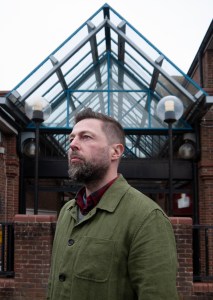
John Grindrod is the author of Concretopia (2013), exploring the postwar rebuilding of Britain, Outskirts (shortlisted for the 2017 Wainwright Prize), which tells the strange story of the green belt, and Iconicon (2022), touring the landmark buildings of contemporary Britain. The books are a combination of social history, travel writing and architecture, and have grown from a personal geeky interest in the subject. John was born in Croydon and after 52 years in London has recently moved to Milton Keynes. He regularly gives talks and appears on radio and podcasts, and you can find out more at johngrindrod.co.uk or here.

What’s your secret London tip?

It’s not a secret, but Embankment Station is your friend. Takes no time to get down to the platforms, is a well-connected super-easy gateway into central London, and has a handy park next door if you need a quick nap on a bench.

What’s your secret London place?

I grew up in New Addington, on the edge of Croydon, and stayed there till I was 30. As a result, my secret London is concentrated around the edges there: the viewing spot in Shirley Hills; the record shops of the town centre; the strange concrete landscape beneath the 60s towers of East Croydon. They are still very much my London. I know how to have fun.

What’s your biggest gripe about London?

The constant building work. In the midst of a climate crisis shouldn’t we be knocking down fewer old buildings, council estates etc, and putting up fewer brand-new ones? It’s not even as if they are the things Londoners really need, like housing. For the most part, it’s speculative nonsense like more shops and offices, or more buy-to-leave apartments, based on a version of life we seem to be shifting away from.

What’s your favourite building?

Even if I just narrow this down to the Southbank, this is still a tricky one! I will say the National Theatre because I find it strikingly beautiful (both the form itself and all of that wood-shuttering grain on the concrete) and because it’s the perfect place to while away a day. As a teenager coming into London from the suburbs the area around Waterloo was a favourite spot. The National – back in the days when taxis used to rumble right past the front entrance – reminds me of hanging out with mates and seeing some incredible plays in that cosy modernist cave.

What’s your most hated building?

St. George’s Wharf on the banks of the Thames at Vauxhall is an absolute horror. Visually it’s the noisiest structure going, all those glass balconies and facets and tricks to maximise the value of every flat at the expense of the architecture itself. It’s incredibly confusing inside too because of the sheer number of entrances and routes. How I ever managed to find my way to those numerous what-I’m-going-to-call-‘dates’ in there back in the day I’ll never know. Beside it stands Terry Farrell’s MI6 building, which I love. It’s a big theatrical flourish – rather ironic for a secret service building.

What’s the best view in London?

I love the view from the Horniman Museum gardens in Forest Hill. It’s quite an idiosyncratic one, as much of central London is hidden behind Dawson’s Heights, the glorious 70s ziggurat in neighbouring East Dulwich designed by Kate Macintosh, but it means you focus on some of the less obvious landmarks instead. On a clear day seeing Wembley glinting in the sun in the far distance feels magical

What’s your personal London landmark?

In the 90s I worked for a while in Covent Garden at Waterstone’s (it still had the apostrophe then). I used to spend my lunch breaks sat on Seven Dials roundabout munching my sandwiches and watching the world go by. It remains my favourite people-watching spot, though it’s much harder finding a perch these days.

What’s London’s best film, book or documentary?

A fascinating and original insight into London can be found in Penelope Lively’s 1991 novel City of the Mind, about an architect working on a new tower in Docklands. In it, she manages to weave in the Empire history of Docklands and the ambitions of the modern rebuilding into a personal narrative that’s haunting and magical. The Covent Garden of Hitchcock’s Frenzy is full of ghosts too, of a rather less salubrious sort, captured in the early 1970s just as the market itself was moving down to Nine Elms. And I am in love with St Etienne and Paul Kelly’s documentary made up from archive footage, How We Used to Live, which captures post-war London in all of its muddle of change, dereliction and modernity.

What’s your favourite restaurant?

If I frequent a cafe in London it inevitably closes within two years. I’m like the grim reaper of hospitality. New Piccadilly? City Snacks? Gone and probably my fault. So I love Giovanni’s caff on Museum Street, but please don’t let the curse strike again. Mine’s a sausage sandwich with mustard on crusty bread and a black earl grey, bag taken out, thanks.

How would you spend your ideal day off in London?

Breakfast at Giovanni’s. Barbican exhibition and lunch in the cafe. Pointing at colourful geese in St James’s Park. Buy film and music in almost-defunct formats and heaps of paperbacks I can barely carry. Film at the NFT (old habits and all that). Drinks in the Retro Bar. Sandwich on the train home. Fin.

Taxi Talk Without Tipping