Watching wildlife

One compensation for these lockdowns has been the increase in spotting wildlife. Living on London’s north-eastern extremity, a country park is but a short walk away, with less human activity or more time to observe, the increase in wildlife is noticeable.

At night we now have a chorus of toads trying to hook-up, at the last count five were sitting, and mating, on my lawn.

Foxes ever-present, have managed to destroy my watering system whilst playing one night, then last weekend, one of the parents dropped a dead cub on my neighbour’s (artificial) lawn.

We now have a flock of about 50 sparrows nesting in my neighbour’s pyracantha bush, I know the number as these were counted during the RSPB’s weekend bird count audit.

A bird box at the foot of our garden, not 5 foot from my neighbour’s flank wall, has seen six fledgeling blue tits leaving their nest last May. This year looks promising with a pair busily checking the bird box out.

Whilst writing this post, a flock of 12 Canadian geese have just flown past going south, presumably to alight on our local park to cover it with their defecations.

We have parakeets squawking as they fly overhead, now they have migrated out from the warmth and salubrious west London, to join their down-market cousins in east London.

But the most amazing siting (and the reason for this post), are the red kites now being regularly observed high up in the sky yards from our house. The other day two were apparently courting, or fighting, while a third looked on.
Lazy Days

This has just been the longest March I can ever remember. It just went on … and on …

Perhaps like me, you’ve sorted out photographs, lists, cupboards, drawers etc, while sorting out the computer was a bit like the wardrobe – deciding what to delete from years gone by and now forgotten like bell-bottom jeans and kipper ties … they all come back given time, but not thousands of old emails and long unsupported programs.

While I was there I’ve also updated the blog’s sidebars, and sent off a few book proposals, and received some more don’t call us, we’ll call you replies.

This England requested a piece for next year’s annual, marking 125 years of the black cab. I obliged, noting they also publish Beano and Dandy magazines, which seems to sum up the extent of my fine prose.

All this makes for a rather laid back approach to life these days. This lethargy also manifests in writing, you know how it is, one day ideas are popping out of your ears, then you relax and … nothing.

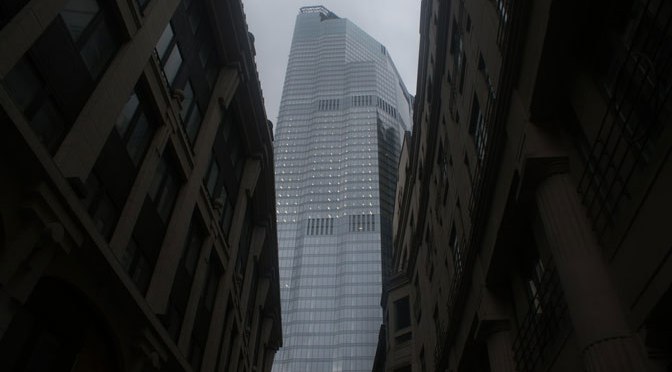
So I’ve been thinking about a nickname for the new skyscraper nearing completion at 22 Bishopsgate, a gargantuan office building that will utterly dwarf all that has gone before, trumping every property developer’s wildest fantasy. Other huge erections have been given monikers: the Cheesegrater, the Walkie-Talkie and my favourite considering it is the home of the London Assembly – The Testicle.

Now with a combined bulk of all those three combined comes 22 Bishopsgate containing 32 acres of floor space heaped in a 250-yard-wide hulk, rising to just below the height of the Shard and built after consuming the 7-storey lift shaft stump of the abandoned Helter Skelter.

With the City deserted its streets only populated by the occasional Deliveroo driver and empty cab, it seems a strange time to be completing the largest office building the capital has ever seen.

A large lump, having swallowed up the previous development with steam rising from its air-conditioning and glistening glazing panels, surplus to our needs, there can be only one moniker – I give you The Turd.

Featured image: 22 Bishopsgate from Whittington Avenue looking northeast by © Robert Lamb (CC BY-SA 2.0).

London in Quotations: Kevin Crossley-Holland

London’s like a monster with one hundred arms … as wide as it’s long. It’s noisy. It’s dirty. It’s everything. You’ll see.

Kevin Crossley-Holland (b.1941), Crossing to Paradise, 2006

London Trivia: Pirate gets a gong

On 4 April 1581 French diplomat M. de Marchaumont dubbed Sir Francis Drake on board his ship, the Golden Hind. Although Elizabeth I was present the honour was bestowed on the Frenchman who was trying to get the Queen to marry the King of France’s brother, the Duke of Anjou. In fact the diplomat only achieved giving the knighthood to a privateer, slaver and politician, Queen Bess remained a spinster.

On 4 April 1981, after 152 years, Oxford University’s first woman cox, 23-year-old Susan Brown, won the annual Boat Race

Ruth Ellis and Styllou Christofi, the last two women hanged for murder, incredibly both independent crimes were committed in South Hill Park

Caledonian Road is named after the former Royal Caledonian School, established for Scottish children orphaned by the Napoleonic Wars

The Necropolis Railway Company transported coffins from Waterloo to Brockwood Cemetery customers chose between first, second and third class

Pear Tree House, Hawke Road is built on top of a nuclear bunker with a thick reinforced blast door, designed as a local control centre

The interior of 50 Smith Street, Chelsea was used as the model for the Banks family in Mary Poppins, it was also its author P. L. Travers home

The Temperance public house on Fulham High Street was originally a billiard hall for the Temperance Movement discouraging alcohol

In 1981 Queens Park Rangers became the first ground in the English Football League to install an artificial pitch, it lasted a decade

Opened in 1908 the Rotherhithe Tunnel is the only tunnel beneath the Thames to have a shared space with cars and pedestrian

Car showroom Classic Chrome’s MD Garry Shortt has as his office the 1860s personal waiting room of Queen Victoria at Mortlake Station

When Walt Disney and his wife visited London in 1965 a cabbie told him of Disney Place/Disney Street (no connection) and took his photo here

CabbieBlog-cab.gifTrivial Matter: London in 140 characters is taken from the daily Twitter feed @cabbieblog.
A guide to the symbols used here and source material can be found on the Trivial Matter page.

Test Your Knowledge: April

Ihope you enjoyed March’s questions and even managed to answer a few. This month’s quiz is mostly about the bizarre of London. As before the correct answer will turn green when it’s clicked upon and expanded to give more information. The incorrect answers will turn red giving the correct explanation.

1. Which toilets in one Victorian pub are of such historical interest they have a protection order slapped upon them?
The Princess Louise, High Holborn
CORRECT At Princess Louise in High Holborn, the inebriated would at one time have been surprised to find the sight of live goldfish swimming majestically around the glass cisterns in the gent’s toilets. Built-in 1872, named after Queen Victoria’s fourth daughter it boasts original interior decorative tile work by the firm of W. B. Simpson of Clapham. The building (including the loos) are Grade II listed.
The Red Lion, St. James’s
WRONG At Princess Louise in High Holborn, the inebriated would at one time have been surprised to find the sight of live goldfish swimming majestically around the glass cisterns in the gent’s toilets. Built-in 1872, named after Queen Victoria’s fourth daughter it boasts original interior decorative tile work by the firm of W. B. Simpson of Clapham. The building (including the loos) are Grade II listed.
The Flask, Hampstead
WRONG At Princess Louise in High Holborn, the inebriated would at one time have been surprised to find the sight of live goldfish swimming majestically around the glass cisterns in the gent’s toilets. Built-in 1872, named after Queen Victoria’s fourth daughter it boasts original interior decorative tile work by the firm of W. B. Simpson of Clapham. The building (including the loos) are Grade II listed.
2. In Waterloo Place there stands the 124-foot tall Duke of York’s Column. Standing majestically on top is a statute of Prince Frederick, the second son of George III. When it was built, why did wits say the column was so high?
So onlookers would not notice his large nose
WRONG Remembered as the ‘Grand Old Duke of York’ he of marching them up the hill and down again, was the Commander-in-Chief of the British Army. Not only upon his death was he in debt to the tune of £2 million, but every soldier also had 1/- (5p) deducted from his pay to pay for the monument.
So that he could escape his creditors
CORRECT Remembered as the ‘Grand Old Duke of York’ he of marching them up the hill and down again, was the Commander-in-Chief of the British Army. Not only upon his death was he in debt to the tune of £2 million, but every soldier also had 1/- (5p) deducted from his pay to pay for the monument.
It gave him a sense of superiority, looking down upon common folk
WRONG Remembered as the ‘Grand Old Duke of York’ he of marching them up the hill and down again, was the Commander-in-Chief of the British Army. Not only upon his death was he in debt to the tune of £2 million, but every soldier also had 1/- (5p) deducted from his pay to pay for the monument.
3. The Museum of London has many exhibits worthy of your perusal, but which type of World War II gas mask is on display?
A Mickey Mouse gas mask for a child
CORRECT Mickey Mouse gas masks were manufactured in bright primary colours intended to be less distressing to wear for young children.
One suitable to protect a horse from breathing noxious gases
WRONG Mickey Mouse gas masks were manufactured in bright primary colours intended to be less distressing to wear for young children.
A walking stick with a mask hidden within its ferrule
WRONG Mickey Mouse gas masks were manufactured in bright primary colours intended to be less distressing to wear for young children.
4. In attending a service at St. Dunstan-in-the-West, Samuel Pepys would record in his famous diary that on the 18th August 1667 he was not as attentive to the sermon as he should have been. What distracted him?
He eats some oysters
WRONG The young woman responded to his advances by taking several pins out of her pocket and threatened to jab the old reprobate.
He decided to write up his diary for the day
WRONG The young woman responded to his advances by taking several pins out of her pocket and threatened to jab the old reprobate.
He was distracted by a comely woman
CORRECT The young woman responded to his advances by taking several pins out of her pocket and threatened to jab the old reprobate.
5. Brown’s Hotel in Dover Street bore witness to a London first which took place in a ground-floor room in 1876. What groundbreaking event happened?
The first telephone call
CORRECT Alexander Graham Bell visited London in 1876 to tell the Government about his latest invention. He chose to stay at Brown’s during his trip — and made the first-ever telephone call from the hotel to the family home of the hotel’s owner in Ravenscourt Park.
Roller skates were first demonstrated by its inventor
WRONG Alexander Graham Bell visited London in 1876 to tell the Government about his latest invention. He chose to stay at Brown’s during his trip — and made the first-ever telephone call from the hotel to the family home of the hotel’s owner in Ravenscourt Park.
HP Brown Sauce was invented
WRONG Alexander Graham Bell visited London in 1876 to tell the Government about his latest invention. He chose to stay at Brown’s during his trip — and made the first-ever telephone call from the hotel to the family home of the hotel’s owner in Ravenscourt Park.
6. In the 19th century Radcliffe Highway – now just The Highway – was a dangerous part of London. Nevertheless, Charles Jamrach made a living selling what from his store?
Opium supplied by Chinese seamen
WRONG At Tobacco Dock, there is a statue of a small boy in front of a tiger. It commemorates the incident when a fully grown Bengal tiger escaped from Charles Jamrach’s shop which supplied exotic creatures for the circus. Seizing a small boy in its mouth the tiger was persuaded by the shop’s proprietor himself to release the boy unharmed.
Exotic animals
CORRECT At Tobacco Dock, there is a statue of a small boy in front of a tiger. It commemorates the incident when a fully grown Bengal tiger escaped from Charles Jamrach’s shop which supplied exotic creatures for the circus. Seizing a small boy in its mouth the tiger was persuaded by the shop’s proprietor himself to release the boy unharmed.
Sex aids
WRONG At Tobacco Dock, there is a statue of a small boy in front of a tiger. It commemorates the incident when a fully grown Bengal tiger escaped from Charles Jamrach’s shop which supplied exotic creatures for the circus. Seizing a small boy in its mouth the tiger was persuaded by the shop’s proprietor himself to release the boy unharmed.
7. What did Sir Richard Whittington (Dick of Lord Mayor fame) in the 15th-century pay to have built by the Thames near to modern-day Southwark Bridge?
A church
WRONG ‘Whittington’s Longhouse’ used the outgoing tide to flush away the effluent discharged by the users of the toilet.
A memorial celebrating his benevolence
WRONG ‘Whittington’s Longhouse’ used the outgoing tide to flush away the effluent discharged by the users of the toilet.
A public lavatory seating dozens at a time
CORRECT ‘Whittington’s Longhouse’ used the outgoing tide to flush away the effluent discharged by the users of the toilet.
8. Playwright and poet Ben Jonson as one might expect is interned in Westminster Abbey’s poets’ corner. But what was unusual about his burial?
He was buried at 6 pm on 6th June 1666 – all the sixes
WRONGHe told the Dean of Westminster that ‘six feet long by two feet wide is too much for me: two feet by two feet will do for all I want’. The small grave also, of course, reduced the cost of internment.
His burial was attended by all members of the Royal family
WRONG He told the Dean of Westminster that ‘six feet long by two feet wide is too much for me: two feet by two feet will do for all I want’. The small grave also, of course, reduced the cost of internment.
He was buried standing up
CORRECT He told the Dean of Westminster that ‘six feet long by two feet wide is too much for me: two feet by two feet will do for all I want’. The small grave also, of course, reduced the cost of internment.
9. By Victoria Gate in Kensington Gardens away from prying eyes is a cemetery. But what lies entombed there in the unconsecrated ground?
Dogs
CORRECT The Dogs’ Cemetery was started in 1881 by the gatekeeper at Victoria Lodge, a Mr Winbridge, who started burying dogs in the lodge’s garden. The first dog to be buried was called Cherry, a Maltese Terrier, who died of old age. Cherry’s owners used to visit the park regularly and were friends of Mr Winbridge, so when Cherry died they thought it would be a fitting tribute to be buried in Hyde Park. By the time the cemetery closed in 1903, three-hundred tiny burials dotted the grounds.
Suicide victims
WRONG The Dogs’ Cemetery was started in 1881 by the gatekeeper at Victoria Lodge, a Mr Winbridge, who started burying dogs in the lodge’s garden. The first dog to be buried was called Cherry, a Maltese Terrier, who died of old age. Cherry’s owners used to visit the park regularly and were friends of Mr Winbridge, so when Cherry died they thought it would be a fitting tribute to be buried in Hyde Park. By the time the cemetery closed in 1903, three-hundred tiny burials dotted the grounds.
Slaves
WRONG The Dogs’ Cemetery was started in 1881 by the gatekeeper at Victoria Lodge, a Mr Winbridge, who started burying dogs in the lodge’s garden. The first dog to be buried was called Cherry, a Maltese Terrier, who died of old age. Cherry’s owners used to visit the park regularly and were friends of Mr Winbridge, so when Cherry died they thought it would be a fitting tribute to be buried in Hyde Park. By the time the cemetery closed in 1903, three-hundred tiny burials dotted the grounds.
10. On 17th October 1814 eight people met an untimely and unusual end, but what was the cause of their demise?
The Great London Earthquake
WRONG Beer was the drink of choice as the water was often unsafe. The demand led to brewers constructing huge vats as an economical way of producing the beverage. One such vat burst its hoops which in turn ruptured nearby vats. Eventually, more than 323,000 gallons became a tsunami drowning 8 people. The Dominion Theatre stands on the site of the ill-fated Horseshoe Brewery.
The Great Beer Flood
CORRECT Beer was the drink of choice as the water was often unsafe. The demand led to brewers constructing huge vats as an economical way of producing the beverage. One such vat burst its hoops which in turn ruptured nearby vats. Eventually, more than 323,000 gallons became a tsunami drowning 8 people. The Dominion Theatre stands on the site of the ill-fated Horseshoe Brewery.
The Great London Fireworks Display
WRONG Beer was the drink of choice as the water was often unsafe. The demand led to brewers constructing huge vats as an economical way of producing the beverage. One such vat burst its hoops which in turn ruptured nearby vats. Eventually, more than 323,000 gallons became a tsunami drowning 8 people. The Dominion Theatre stands on the site of the ill-fated Horseshoe Brewery.

Taxi Talk Without Tipping