I’m reading Tom Moore’s Do Not Pass Go a travelogue of one man’s erratic progress around those 28 London streets, stations and utilities that comprise the iconic Monopoly board. So I thought this was an opportune time to re-publish a Cabbie’s London Monopoly Board, but first a little bit about where it all began.
It was a tough job, but somebody had to do it.
When Waddington’s bought the rights to Monopoly from American games manufacturer Parker Brothers in 1935 the positions on the English version of the iconic board had to be assigned. London was the choice of location and so somebody was tasked to seek out the appropriate ‘Properties’.
Added to that there was some small degree of rivalry, for Parker Brothers who intended to use Atlantic City on their version hadn’t as yet brought what was to become an iconic board game to market.
The onerous job of travelling by cab seeking out the board’s positions fell to Waddington’s managing director, Victor Hugo Watson.
Although born in Kennington Oval in 1878 Watson had been brought up in Yorkshire, joining Waddington’s in 1908, and now 27 years later he was persuaded by his young son to buy the rights for an English version of Monopoly, responsible for bringing the game to market.
He was joined by his secretary Marjorie Phillips, and after a morning taxi ride gathering possible positions for including for their board game stopped off for tea at The Angel Corner House Tea Rooms.
There had been an Angel coaching inn here since the 17th century and the current building in pale terracotta stone had been completed in 1899. The pub ceased trading in 1921 and sold to J. Lyons & Co. to be refitted to join the growing numbers of Lyons Corner Houses.
Probably losing interest in their assignment and having Pentonville Road already on their list, the Angel, itself on Pentonville Road seemed to be an afterthought as it is the only position, not an actual street, well, Mayfair does have – Place and Mews.
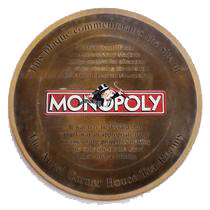
There is now a plaque on the old Angel building – which is now the Cooperative Bank – which was unveiled in October 2003 by Victor Watson’s grandson also called Victor marking the spot of that famous tea break.
The Old Kent Road is the only property on the original board south of the River. Could it be that even in 1935 cabbies were reluctant to go ‘South of the River’? Why was there an American car with whitewall tyres on Free Parking and a New York cop on Go to Jail? And as Tom Moore points out, did anyone ever bother with mortgage interest?
While rummaging through my attic by chance I came upon an old pre-war Monopoly set once owned by my parents, it wasn’t one sent to Allied prisoners, with silk maps hidden inside, prompting Get Out of Jail Free jokes among the troops. Nor was it the set used by the Great Train Robbers, who actually used real money when hiding out.
Monopoly is a redesign of an earlier game “The Landlord’s Game”, first published by the Quaker and political activist Elizabeth Magie. The purpose of that game was to teach people how monopolies end up bankrupting the many and giving extraordinary wealth to one or a few individuals; it seems rather prophetic for the world we live in nowadays.
Since the game was created in 1936, more than one billion people have played it; making it the most played board game in the world. The mascot for the game, known as Mr Monopoly or Rich Uncle Pennybags, is an elderly moustached man in morning dress with a walking cane and top hat. Here, wearing a flat hat and muffler is a London cabbie’s version on the board game.
VINE STREET
The most obscure location on the Monopoly board, in essence, a yard branching off Swallow Street, a cul-de-sac approached from the eastern end of Piccadilly.
Taking its name from a public house that stood there, the street was originally longer and is best known for the police station that once was there. It was to Vine Street nick, said to have been the busiest in the world that the Marquess of Queensbury was taken in March 1895 to be charged with criminal libel against Oscar Wilde, thus setting in train a series of events that eventually led to Wilde’s imprisonment.
EUSTON ROAD
Like London itself, the cab trade is full of interesting stories, myths and general nonsense. But one of my favourite cabbies things is trying to “ride the green wave” from King’s Cross to the Marylebone flyover.
This is when you drive that whole stretch without hitting one red light along the way. No-one is actually sure if it’s been done or not but there are plenty of, probably apocryphal, stories of cab drivers carrying on journeys all the way to the Marylebone Flyover to complete the Green Wave, despite their punters only wanting to go to Baker Street.
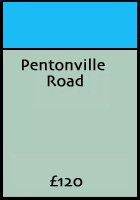
PENTONVILLE ROAD
A straight stretch of road rising up an incline once known as Islington Hill; travelling up this hill students of The Knowledge get an inkling of what a condemned man feels to ascend the steps of the gallows. For at the crest of the hill is Penton Street in that once was situated the Public Carriage Office, where those who sought to obtain a taxi licence would get a grilling from the examiner who had an interrogating technique worthy of the CIA.
Pentonville Prison nearby has been called “the most copied prison in the world”, much like The Knowledge.
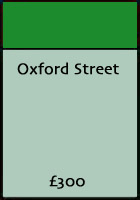
OXFORD STREET
The most pointless street in London; with its 18-hour traffic jam of mostly empty buses stretching along its entire length of 1.5 miles. Weaving between the buses can be found shoppers, so intent on the business of running from shop to shop while talking on their mobile phones they are culled on a regular basis when failing to notice a red vehicle the size of a small house approaching.
Once known as Tyburn Road the thoroughfare formed the route for the condemned from Newgate to the hanging gibbet at modern-day Marble Arch.
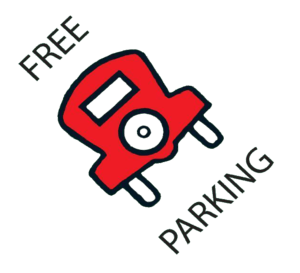
You can tell that Monopoly was devised in a more relaxed and gentler age. We find a square entitled ‘Free Parking’; for in the 21st-century free parking for cabs lasts just two minutes and one second before Westminster Council issue a ticket.
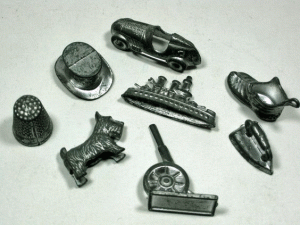
My pre-war Monopoly set has tokens comprising a thimble, hot hat and a flat iron more reminders of a bygone age; while the next four locations have changed beyond all recognition over the last 75 years.

OLD KENT ROAD
When designing the London Monopoly Board in 1936 they didn’t want to go Sarf of the River; a bit like cabbies are accused of saying these days. For the Old Kent Road is the only square on the Monopoly Board from our southern environs, and one of the cheapest. Gentrified nowadays in Southwark and Bermondsey, Old Kent Road remains stubbornly working class.
The route taken by Chaucer’s pilgrims on their journey to Canterbury, there aren’t even any decent watering holes left. The Dun Cow is now a surgery and The Thomas à Becket has become a furniture shop.
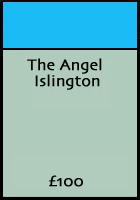
THE ANGEL, ISLINGTON
Taking its name from a coaching inn that had stood on the site from at least 1638; I have often wondered what attracts the tree-hugging, muesli munching, Guardian readers to this predominantly poor area.
So polarised is it that council tenants live cheek-by-jowl next to £¾ million terraced houses. I then learnt that the republican Thomas Paine, inspired by the French Revolution probably wrote the first part of his The Rights of Man while staying at the pub that gave its name to the area, the Angel in 1790, could the rich be trying to emulate him?
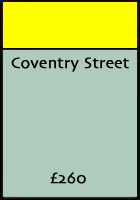
COVENTRY STREET
My first question on The Knowledge: Prince of Wales Theatre to Prince of Wales Drive? – Leave on right Coventry Street; right Whitcombe Street; right Panton Street; left Haymarket; right Pall Mall; left Marlborough Gate; forward Marlborough Road; right The Mall; left Spur Road; right Birdcage Walk; forward Buckingham Gate; forward Buckingham Palace Road; forward Ebury Bridge Road; left Chelsea Bridge Road; forward Chelsea Bridge; forward Queenstown Road; comply Queen’s Circus; Prince of Wales Drive on left – easy!
I sat there paralysed like a rabbit caught in headlights.
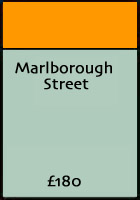
MARLBOROUGH STREET
Correctly entitled Great Marlborough Street and named in honour of John Churchill, 1st Duke of Marlborough. It is probably the slowest road in London for the pedestrian crossing outside Liberty’s is in constant use, still, it gives you the time to look at the famous store with its façade constructed from the timbers of the Navy’s last two wooden warships, HMS Impregnable and HMS Hindustan. As a footnote Marlboro cigarettes take their name from the street which in the late 19th century the Philip Morris Company’s factory was situated.

Take the punishment meted out to banker Henry Fauntleroy. Having been found guilty of defrauding the Bank of England of £250,000 (today’s Masters of the Universe wouldn’t get out of bed for that trifling amount), his public hanging on 30th November 1824 outside Newgate prison attracted 100,000 people, the largest ever crowd to watch a public execution. Unpopular, not for being a banker, but for squandering the money that he managed to steal from the English people.
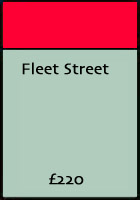
FLEET STREET
Taking its name from the river nearby, the Fleet Prison was one of the most feared penal centres in London.
The prison provided the starting point for public whipping where offenders were forced to walk the length of Fleet Street to Temple Bar attended by a constable charged with whipping sufficiently hard ‘to make the back bloody’, when the punishment was over the victim could look up at Temple Bar which provided a convenient place to display the bloody decapitated heads of traitors. To stop the head being picked clean by birds it would be boiled in brine and cumin seed.
BOW STREET
Originally built in the shape of a bow it was once an elegant street that later became notorious for its brothels; it was also the site of Will’s Coffee House, a forerunner of Starbucks, where the famous would sit around talking nonsense all day. Home to Bow Street Magistrate’s Court until 2006, Henry Fielding started the Bow Street Runners here in the 18th century and his half brother John was a magistrate who pursued crime “with vigour and success”.
Although blind John Fielding was given the improbable credit of being able to recognise 3,000 thieves by their voices.
PARK LANE
As its name alludes to, Park Lane was once just a lane alongside Hyde Park, now a six-lane dual carriageway terminating at its northern extremity with Marble Arch. Once the site of Tyburn, the gallows there would, for the economy of scale accommodate 21 men and women at a time. Convention dictated the order of precedence, highwaymen as the ‘aristocrats of crime’ were dispatched first presumably to ensure a higher number of spectators would attend before they became bored with the entertainment, next would come, common thieves, with traitors being left to bring up the rear.
WHITEHALL
Halfway down Whitehall lays Banqueting House the only remaining part of the old Whitehall Palace. It has a gallery where the King’s subjects could watch him dine. The ceiling by Rubens celebrates the benefits of the wise rule, the irony of which is not lost on historians as the painted ceiling was one of the last things King Charles I would see before being beheaded for not listening to his people. His neck vertebrae were only recovered hundreds of years later when a horrified Queen Victoria discovered that her surgeon Sir Henry Halford was using it as a salt cellar for his fish and chips.
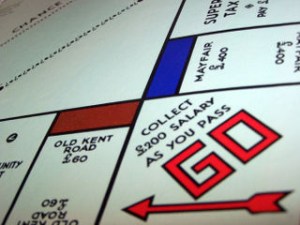
This time it’s all about money ‘Pass Go and Collect £200’, £200 doesn’t seem much today but remember you can buy Mayfair from the Duke of Westminster for only £400, what a bargain. Assuming you have collected your £200 where do you go to spend your gain, the shops of course.
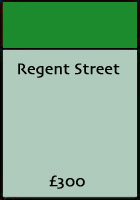
REGENT STREET
Forget Oxford Street, Regent Street is by far a more elegant place to shop. Designed by John Nash, the original construction with its elegant curves had a covered colonnade for pedestrians to walk under to protect them from the elements as they moved from shop to shop.
It proved rather popular for prostitutes to use as a cat-walk while displaying their wares so it was demolished by 1920. The shop fronts now just look like any other row of shops. Hamleys would look rather interesting for the children with the “ladies” parading outside.
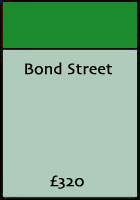
BOND STREET
Yes, you are right Bond Street doesn’t exist. Old Bond Street is only 14 years older than its newer sibling, imaginatively named New Bond Street, both acquired the aristocratic seal of approval when the Duchess of Devonshire in 1784, after a fit of pique, organised a boycott against the hitherto smarter shops of Covent Garden.
Modern Bond Streets are packed with designer label flagship stores and jewellers which have become a favourite with smash and grab thieves on motorbikes. Separating the two streets is pedestrianised and has a sculpture depicting Churchill and Roosevelt seated on a bench.
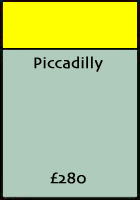
PICCADILLY
Named after the curious ruff much favoured by Elizabethans, the starched collar was called a piccadill. J. C. Cording, the suppliers of tweed and cords to the huntin’, fishin’ and shootin’ set is part-owned by “Slowhand” himself Eric Clapton. Waterstones opposite was once Simpsons of Piccadilly department store and Jeremy Lloyd, having worked as a shop assistant there based his 1970 comedy Are You Being Served on his experience. While Fortnum & Mason was started by William Fortnum Queen Anne’s footman who saved his pennies to start the store by selling cut-price candles to the palace.
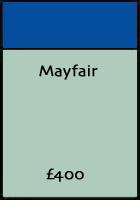
MAYFAIR
The Americans wanted to buy the freehold to build their embassy, in Grosvenor Square in the heart of Mayfair, but the Grosvenor family never sell, all are leased. When told they couldn’t buy the land they insisted and petitioned Parliament; the Grosvenor family were heavily leaned on but all to no avail. Then the Duke thought of a good compromise. He told them that if they were to return to the Grosvenor family all those lands in the United States stolen after the American War of Independence including Maine and New York he would allow them to buy their site on the west side of Grosvenor Square, they backed down.
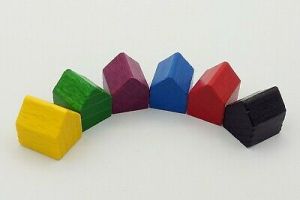
Now we have visited most streets and squares on my Cabbies’ Monopoly board, it’s time now to build a house. The houses in the true 1930s Monopoly fashion should be semi-detached with bay windows with the ubiquitous privet hedge marking their road boundary, the houses here are just a little grander than your average semi.

NORTHUMBERLAND AVENUE
Northumberland House, the London home of the Percy family; the Dukes of Northumberland demolished in 1874. Standing just south from Trafalgar Square it was the last of the great Strand mansions to succumb. His grace did have another house to fall back on though; Syon House in Isleworth and it was to this estate the giant emblematic Percy Lion – which had stood guard over the main gateway facing the Strand to Northumberland House for over 150 years – was taken. In the 17th century the house formed part of the dowry when the Earl of Suffolk’s daughter married Lord Percy.
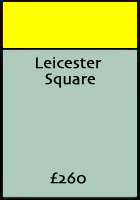
LEICESTER SQUARE
Once one of the biggest houses in London once stood on his large square. Celebrated for its rather dangerous entertainments in 1672 John Evelyn dined here and was beguiled by Richardson “the famous fire-eater, who before us devour’d Brimston on glowing coales, chewing and swallowing hem downe”.
Life here was even more dangerous 100 years later when the father of the future “Mad” King George III when still the Prince of Wales died after being hit in the throat with a cricket ball. And here’s one for the pub quiz: In 1780 the Toxophilite Society was inaugurated here.
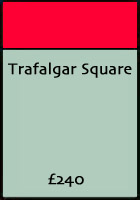
TRAFALGAR SQUARE
The site of the King’s Mews, a vast building in which the Royal Hawks were kept, falconers lodged and daily services held in the “Chapel of the Muwes”. Geoffrey Chaucer once toiled there as a clerk of works. After a fire, the mews were rebuilt as stabling during the reign of Elizabeth I. During the civil war the mews became barracks for the Parliamentary Army and after the Battle of Naseby about 4,500 Cavalier prisoners were incarcerated there. In its last years, the main building was used as a menagerie and a store for public records, demolished in 1830.
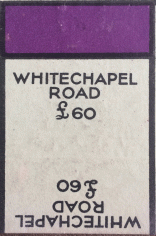
WHITECHAPEL ROAD
Henry Wainwright was in the brush making business – one of his biggest contracts happened to be with the Metropolitan police – and his factory stood at 84 Whitechapel Road. He frequented Broxbourne pleasure gardens by the River Lea and it was here in 1871 that he met and later murdered Harriet Lane, he then stuffed the body beneath the floorboards of his factory warehouse.
Henry’s finances later spiralled, forcing him to sell the warehouse the following year. This meant having to dispose of Harriet’s rotting corpse which, exactly a year to the day of the murder, he dragged up and cut into pieces. Henry then wrapped the remains in parcels and asked an unwitting acquaintance named Alfred Stokes to help him carry them. The pair lugged their grim cargo along Whitechapel Road and paused by Adler Street whilst Henry went to find a cab.
By now Alfred was suspicious of the foul-smelling bundles and decided to have a peek. He was horrified to discover a hand and an arm but before he could do anything, Henry returned with a four-wheel ‘growler’; a style of cab which, at the time, was generally considered to be slower and shoddier than the more agile Hansom cabs.
At which point Alfred made his excuses and left. Henry meanwhile told the cabbie to “Drive as fast as you can to the Borough.” Alfred now gave chase, following the cab as it trotted through Aldgate, Leadenhall Street and over London Bridge before arriving at the Hop Exchange. On the way, Alfred begged a policeman to stop the cab but was dismissed as a madman. Luckily he found another bobby patrolling St Thomas Street – Constable Turner- who believed him and arrested Henry Wainwright.
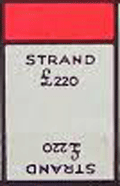
STRAND
Captain John Baily, a veteran of one of Sir Walter Raleigh’s expeditions operated the first a designated waiting place or rank for cabs. From 1634, he managed a rank of four horse-drawn carriages, available for hire from the Strand. Baily’s cabmen wore a distinctive livery and charged customers a fixed tariff depending on distance. The rank was positioned close to the Strand maypole, a prominent medieval landmark. This towered 100ft high, making it one of the tallest structures in London at the time. It must have made the cab rank very easy to find.
PALL MALL
Named after a popular game in the 17th century, Pall Mall was the first street in England to be lit by gas by the splendidly named New Patriotic Imperial and National Light and Gas Company.

 On 30 August 1572 Elizabeth I issued a decree: ‘no foteball player be used or suffered within the City of London and the liberties thereof on pain of imprisonment’
 Transport for London Byelaw 10(2): No person shall enter through any train door until any person leaving by that door has passed through it!
 Once Britain’s largest enclosed space, if measured, the air within the Albert Hall would weigh in at over 30 tons
 John St. John Long appeared at the Old Bailey on a charge of manslaughter, his victim dosing on his medicated vapours, he paid the £13,000 fine from his vast wealth accululated from selling quack remedies
 The Dorchester was seen as safe during the Blitz it is built using 2,000 miles of steel rods, a host of political and military luminaries chose it as their London residence
 St. George Church, Mayfair designed by John James, one of Sir Christopher Wren’s assistants, when completed in 1725 was the first church in London to be built with a portico
 There are three tube stations on the Monopoly board: Liverpool Street Station, King’s Cross and Marylebone
 On 30 August 1930 the first Dutchman to play in the English Football league Gerrit Keizer made his goalkeeping debut for Arsenal
 Underground’s longest tunnel is from East Finchley to Morden totalling 17.3 miles but only 45 per cent of the network is actually in tunnels
 The Daily Courant was London’s original newspaper first published in 1792 near Ludgate Circus, consisting of a single page, with advertisements on the reverse side
 The Constable of The Tower of London can extract a barrel of rum from any naval vessel plying the Thames
 Trivial Matter: London in 140 characters is taken from the daily Twitter feed @cabbieblog.