All posts by Gibson Square

A Licensed Black London Cab Driver I share my London with you . . . The Good, The Bad and The Ugly

London Trivia: Christopher Marlowe murdered

On 30 May 1593 Shakespeare’s contemporary, playwright Christopher Marlowe died at just twenty-nine in a tavern owned by the widow Eleanor Bull in Deptford in a brawl over a bar tab. After exchanging ‘malicious words’ with Ingram Frizer the two struggled over a dagger, and Marlowe was stabbed over the right eye, killing him instantly. Shakespeare born in the same year had only written 8 plays at the time.

On 30 May 1842, John Francis tried to assassinate Queen Victoria as she sat in her carriage going along Constitution Hill

Until the 1960s Marble Arch contained a fully functional police station, the arch, with views over Buckingham Palace’s garden, is open to the public

St. John’s Way N19 has adjacent Shakespearean named streets: Miranda and Prospero Roads; Lysander Grove; Cressida Road

The London Underground trains were originally steam powered, with predictable health implications. The first deep-level electric railway line opened in 1890

During World War II, Down Street station was used by Churchill and the War Cabinet before they moved to the Cabinet War Rooms in Whitehall. Churchill’s bath is still in place on one of the platforms

Cinematic horror legends Boris Karloff and Christopher Lee curiously were neighbours in Cadogan Square

Watkins Folly, London’s Eiffel Tower opened in 1894, half built, one-quarter the height, and on marshy foundations it was unstable demolished 1903

Men’s tailor, Burtons once rented out their upper floors as billiard halls as a place for customers to wait whilst their suits were adjusted

The London Underground is the third busiest metro system in Europe, every week, Underground escalators travel the equivalent distance of going twice around the world

The future President of North Vietnam worked as a cook at the Carlton Hotel in 1914, Churchill may well have eater vegetables prepared by the man who later founded the Vietnamese Communist Party

The Bank of England has so many rooms underground their combined volume is more than the whole of Tower 42 once London’s second tallest building

CabbieBlog-cab.gifTrivial Matter: London in 140 characters is taken from the daily Twitter feed @cabbieblog.
A guide to the symbols used here and source material can be found on the Trivial Matter page.

He has been here and fired a gun

For years we had a very large print on our living room wall by London’s greatest artist, and arguably Britain’s too.

But let’s go back nearly 200 years to 1832 and Somerset House, the former home of the Royal Academy. There John Constable who a decade ago had painted an image, later to adorn every biscuit tin at Christmas, with an idiot getting his waggon stuck in a pond as a boy and dog look on incredulously.

The previous year Constable had had a row with a fellow Academician over him replacing Caligula’s Palace and Bridge with his own chocolate boxy view of a large grey church.

Now, in the gallery of the Royal Academy, before the exhibition commencement, Constable was putting the finishing touches to Opening of Waterloo Bridge, a painting he had worked on for a decade.

I know little about painting, but a few rules I understand. There comes a time when a piece of work becomes overworked, the secret is knowing when to stop. Also, every painting needs a ‘hero’, a point of light, colour or interest to which the eye is drawn before examining the rest of the canvas. This hero should be positioned along the ‘golden ratio’ a point where the eye naturally alights. Numerous mathematical formulae calculate where this falls, but unless you are a master draftsman like Tracy Emin, it’s two-thirds down and one-third across to you and me.

Opening of Waterloo Bridge by John Constable

So here at the Royal Academy is Constable fiddling around with his masterpiece in the last days before public viewing when in shambles the very painter he had argued with this time last year, and whose painting now hung next to his own.

Joseph Mallord William Turner was the antithesis of John Constable. At 56 and only a year older, not that you’d know it, his personal hygiene needed attention, wearing a battered stovepipe hat, an old shiny black coat, and holding a umbrella-cum-swordstick. A large nose, protruding chin and remarkably short, this irascible old man, born in Covent Garden had lost none of his Cockney accent, but he was so confident of his genius he had proclaimed: “I am the great lion of the day”, modesty certainly wasn’t his forte.

Turner stood behind Constable for a time, walked away and returned with his palette and brushes. Walking up to his simple grey seascape, without hesitation added a daub of red, slightly bigger than a coin in the middle of the grey sea, and then left.


Helvoetsluys by JMW Turner

Fellow Academician, C. R. Leslie entered the room and observed how ‘the intensity of the red lead, was made more vivid by the coolness of Turner’s picture…causing Constable’s to look weak’.

Constable exclaimed, “He has been here, and fired a gun”.

Turner didn’t bother to come back for nearly two days, and then, in the last moments that were allowed for painting, shaped the red blob into a buoy.

That simple blob of paint was a bullet across his rival’s bows, showing that less is more. It also goes to explain why every year we have the Turner Prize awarded to the most innovative artists of the day, and not the Constable Prize.

Featured image: Keelmen Heaving in Coals by Moonlight, 1835 by Joseph Mallord William Turner


Ringing the changes

Atraditional red phone box is to be auctioned tomorrow with a guide price of £45,000. The K2 Kiosk is located at the west end of Austin Friars on its junction with Cophall Avenue and Throgmorton Avenue. It is outside the offices of BlackRock who once had George Osborne as a director, as his colleague David Cameron bought a shepherd’s hut to write his memoirs, George might require its nine square feet.

Between 1926 and 1935 1,700 examples of the K2 were installed with the total number of surviving K2 kiosks being only about 224 in the UK.

In addition to this one, there are four more in Central London, all expected to go for around £40,000 – £45,000.

As iconic as my black cab, the K2 telephone boxes have since 1936 been an intrinsic part of London’s urban landscape. But who actually uses telephone boxes these days or even notices them? With almost universal mobile phone ownership, you could say that red telephone boxes are hidden in plain sight. Their original function has been overtaken by several uses its designer couldn’t have imagined possible.

Their use as a rather well-designed notice booth for call-girls (or boys) is now falling by the wayside as they find more effective ways of advertising their services and using it as a public urinal has its limitations, not least that its cramped compartment renders the user in danger of watering their shoes.

With brilliant originality they named it K2 for Kiosk No. 2, it was, of course, preceded by K1 which was constructed in concrete. The new design – this time in cast iron – by Sir Giles Gilbert Scott had won a Post Office competition three years earlier and started a whole series of similar-looking telephone boxes.

Its distinctive domed roof and all-over red make it the prototype of the classic K6, which was introduced nearly ten years later. Ventilation was provided via the crown in the roof section – it was made up of small, round holes!

Legend has it that the dome was Scott’s homage to the 18th Century architect Sir John Soane, R.A. (1753-1837) whose family tomb is surmounted by a very similar feature. Unlike the tops of modern British phone booths, Scott’s Soanian dome is a proper roof, dealing effectively with rain and litter while also being aesthetically pleasing.
But what makes K2 special is that it was mostly restricted to the London area and considerably bigger than its successors.

In London kiosks positioned by tourist locations have survived BT’s desire to replace them with utility ‘shower cabinets’ and stand as an iconic feature of London, for many kiosks, their purpose now would seem only to be as a photo opportunity for visitors and Japanese girls modelling bridal wear.

Many entrepreneurs have found a new use for these beautiful structures, and for the remaining unsold kiosks, the London Tourist Board should come to an arrangement with BT to pay for their maintenance and cleaning, covered in grime they’re a disgrace.

I am indebted to wallyg at Flickr for permission to use his photo of K2; his pages contain a wealth of images and background information on London.

London in Quotations: Charles Dickens

If the parks be “the lungs of London” we wonder what Greenwich Fair is – a periodical breaking out, we suppose — a sort of spring rash.

Charles Dickens (1812-1870), Greenwich Fair

London Trivia: It’s, it’s Monty Python

On 23 May 1969, the BBC commissioned an initial series of 6 episodes of Monty Python’s Flying Circus. Its members unusually had complete creative control, allowing them to experiment wildly, disregarding the conventional rules of television comedy. Two of its trademark images are a large foot taken from a 16th-century Italian painting squashing the title and everything around it, and a naked man playing the piano.

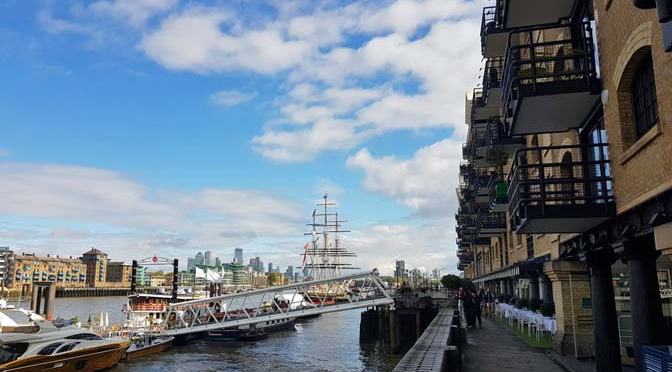
On 23 May 1701 the Scottish pirate Captain Kidd was executed at Wapping despite having been promised a Royal Pardon if he gave himself up

In 1415 following the Battle of Agincourt the Duke of Orleans, prisoner in the Tower of London, sent his wife the first ever valentine card

Baker Street is named after Sir Edward Baker of Dorset who was responsible for building a number of streets and squares in 18th century London

Approximately 50 passengers a year kill themselves on the Underground, the worst-affected station is King’s Cross St. Pancras

St. Stephen’s Chapel in the old Palace of Westminster was the chamber of the House of Commons from late 18th century to 1834

At 58,000 sq ft Bermondsey Street’s White Cube Gallery is Europe’s largest commercial art space displaying Damien Hirst, Antony Gormley etc

The Apple Store on Regent Street near Oxford Circus, makes more profit per square foot than any shop in the world

The first purpose-built ‘model baths’ were on Old Castle Street opening in 1847, a year late after the foundations sank into an old cesspool

The Underground’s deepest station is Hampstead which runs down to 58.5 metres. In Central London, it’s the DLR at Bank at 41.4 metres below

Coming 4th on the global list for the number of billionaires London generates 20 per cent of the UK’s gross domestic product

In the 19th century Windsor Castle could be seen from the Windsor Castle public house on Campden Hill Road, hence its name

CabbieBlog-cab.gifTrivial Matter: London in 140 characters is taken from the daily Twitter feed @cabbieblog.
A guide to the symbols used here and source material can be found on the Trivial Matter page.