
We challenge our contributors to reply to ten devilishly probing questions about their London and we don’t take “Sorry Gov” for an answer. Everyone sitting in the hot seat they will face the same questions ranging from their favourite way to spend a day out in the capital to their most hated building on London’s skyline to find out what Londoners think about their city. The questions are the same but the answers vary wildly.
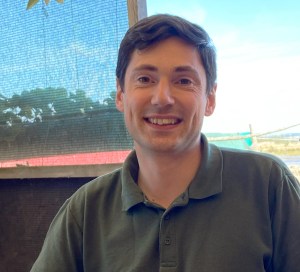
I am a London-based graphic designer working for an architectural engineering practice. At 18, I moved from a tiny village in Portugal to come to study in the U.K. I have lived in Cambridge and Norwich, two beautiful cities which I completely took for granted. When I moved to London, I said to myself “Right, I am now in one of the world’s most incredible cities, and I am going to make the most of it.” I love all things London and, despite my best efforts, it feels like I have hardly scratched the surface. I am the creator of the London Underground Depth diagrams.
What’s your secret London tip?
Cycle everywhere. An unpopular answer for the CabbieBlog I am sure, but for years I only used public transport, and I hardly knew London. When cycling you can explore all the side streets, enjoy the parks much more often, and take your journey at your own pace. It makes travelling an enjoyable experience and it gives you a much better understanding of the rich fabric of the city.
What’s your secret London place?
Near the Museum of the Order of St John, just by the church, there is a quiet monastic garden that is open during the day. It is a little haven where every flower, herb and tree in there has a medicinal use – very much my sort of garden.
What’s your biggest gripe about London?
The vanishing independent shops that build communities and add charm to their immediate area. It’s increasingly rarer to find somewhere that is “just lovely” amidst all the chains and the curated brand experiences.
What’s your favourite building?
There are so many choices, it feels cruel to state just one. Away from the mainstream, I really enjoy The Standard Hotel, opposite St Pancras. It was Camden Town Hall’s annexe, and it’s an incredible Retrofit project that has brought new life into this tired old building. The bars are great fun, from the ground-floor library-style laid-back lounge area to the double standard bar, as well as the rooftop bar which has stunning views across London – right next to St Pancras.
What’s your most hated building?
The Strata Tower in Elephant and Castle. It looks like a villain’s HQ and the gimmicky wind turbines never worked. The whole of SE Zone 1 and 2 is seeing a huge change for the better, and this thing, which won’t age gracefully, is an embarrassment amidst it all.
What’s the best view in London?
The London Eye, seen from the bridge in St James’ Park, especially at nighttime when the lights are reflecting on the lake, and all is tranquil.
What’s your personal London landmark?
London’s first skyscraper, 55 Broadway. Working for London Transport’s art deco headquarters must have been so thrilling, the sort of “in the right place at the right time” experience – the speeding pace of life, the glamour of the building, the buzz of the crowded offices, the engineering marvel of transport running underneath. It’s such a shame that it is being turned into a hotel.
What’s London’s best film, book or documentary?
I enjoy watching films, but I’m not the world’s greatest cinephile – so please don’t judge me. I thought of a few: One of Our Dinosaurs is Missing, The Ladykillers, Legend, Paddington and Harry Potter are all films I enjoy, and 28 Days Later came close. But my pick goes to Fast & Furious 6 (groan). As a lover of cars I like the series, but what leads me to pick this one is the scenes shot in Coal Drops Yard and Battersea Power Station before these were restored into the exciting landmarks they are today. King’s Cross gas holders also feature in The Ladykillers.
What’s your favourite restaurant?
There are so many incredible establishments in London, it’s very difficult to pick. A current favourite is Casa do Frango. They specialise in Portuguese-style chargrilled chicken, and it always hits the spot. Their restaurants are nicely designed, and the experience is always relaxing and enjoyable – great to wind down at any time of the week, especially if you start with one of their cocktails.
How would you spend your ideal day off in London?
It depends on what I am in the mood for. If I am in the mood for culture, I’ll be heading into the V&A or the National Gallery. If I am looking to unwind, I’ll pack a sandwich or two and cycle to Kew Gardens. The most realistic is shopping at Borough Market (early, to avoid tourists!) and then spending the day cooking at home, or meeting up with friends at the pub.


 On 4 February 1962 printed at its Gray’s Inn works the Sunday Times published Britain’s first newspaper colour supplement
 During World War One a baker on Chapman Street, Shadwell was jailed for three days after being caught selling fresh bread
 There’s an extensive military citadel beneath the streets of Whitehall one entrance via a lift is in the telephone exchange in Craig’s Court
 Patrick Fraher and William Cummins died plunging from Barrington House cutting a hole in a concrete block forgetting they were standing in the middle, they’d been due to take part in a safety course next day
 In February 1894 in Greenwich Park anarchist Martial Bourdin accidentally blew himself on route to blow up the Royal Observatory
 Ronnie Scott’s Jazz Club on Frith Street was the site of Jimi Hendrix’s last public performance in 1970, he would die on 18 September of that year
 The rhyme Pop Goes the Weasel refers to the pawning of a suit to pay for drink; ‘Up and down the City Road, in and out the Eagle’ the public house
 Oscar winning movie Chariots of Fire was filmed in Hurlingham Park, Fulham, the title was inspired by the line, “Bring me my chariot of fire,” from the William Blake poem
 Farringdon underground station is the only station from which passengers exited en masse on their way to a public hanging
 Until 1910 you could walk across the walkway at the top of Tower Bridge it was shut because it started to become popular with prostitutes
 Diarist Samuel Pepys buried his parmesan cheese and wine in his garden to protect them from the Great Fire of London in 1666


