

For those new to CabbieBlog or readers who are slightly forgetful, on Saturdays I’m republishing posts, many going back over a decade. Some will still be very relevant while others have become dated over time. Just think of this post as your weekend paper supplement.
A tale of two cities (23.02.2010)
Our first city is at the cutting edge of information technology providing multi-lingual customer services to the world, while the second is struggling to provide high speed broadband access for its customers. One is taking its population out of poverty with the Globalization and World Cities Study Group ranking it as an “Alpha world city”, while its counterpart has a rising unemployment rate of 9.4 per cent of the workforce with increasing numbers are reliant on the State.
The first city was placed seventh in the list of “Top Ten Cities for Billionaires” by Forbes magazine and first in terms of those billionaires’ average wealth. The other’s economy is not so rosy with the government forecasting its debt will soar to an eye-watering £1.1 trillion by 2011.
The emerging city’s transport has 11 million passenger movements a day on its rail and bus services, in comparison with about half of that number who have to endure delay and breakdowns with the other city’s aged transport infrastructure.
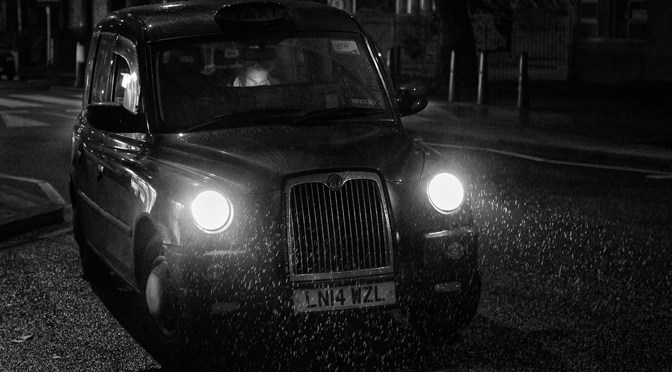
With 24,000 cabs providing transport for the older city’s 7 million population the emerging city’s population of 14 million inhabitants are having their aging fleet of 55,000 cabs replaced, unfortunately in the older city, whose cabbies have been licensed for over 350 years, they have to provide a service with much older vehicles due to their extortionate replacement prices.
Similarly both provide a rickshaw mode of transport. One regulated by price and service provided by operators who know their city like the back of their hand, the other’s rickshaws are vastly overpriced, unregulated (charging what they think they can get away with) and, driven by foreign “students” who’s inability to speak the native tongue is match by their navigational skills around a city founded by the Romans.
Drivers in the city of the sub-continent sound their horn at every opportunity and in some ways this is where there are similarities with drivers in the older city following suit.
As the excellent Channel 4 series of programmes entitled Indian Winter showed, Bombay (or as the BBC insists on calling it, contrary to what it’s known to the inhabitants, Mumbai) has many lessons which we Londoner’s could learn. Could it be that Bombay’s emerging dynamism has positioned it in a far more advantageous place in the world’s economy?
With London appearing in a downward spiral and Bombay’s pulling itself up by their bootstraps it’s only a matter of time until the former colonial power is overtaken by its former colony.
We Londoners consider ourselves to be citizens of the world’s most influential city, true it still has a lot to offer its residents but is now under threat from emerging economies as never before, but at least we have recently adopted the curry as our favourite meal.


 CabbieBlog