We challenge our contributors to reply to ten devilishly probing questions about their London and we don’t take “Sorry Gov” for an answer. Everyone sitting in the hot seat they will face the same questions ranging from their favourite way to spend a day out in the capital to their most hated building on London’s skyline to find out what Londoners really think about their city. The questions are the same but the answers vary wildly.
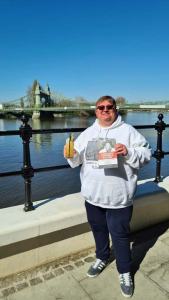
Born and raised in Barnes, SW London, I started in the print industry back in 1982, retrained as a journalist in the mid-1990s doing gig reviews for the Birmingham Post & Mail, freelancing for BBC MOTD magazine and BBC Radio 5. I then worked on a print & paper sector magazine and spent 6 years with Haymarket Publishing, travelling all over Europe and USA & Canada. I formed my own PR Consultancy in 2006, and have been dealing with clients across a vast array of sectors, most latterly as PR & Communications for London Taxi PR, promoting and organising media campaigns on behalf of the London Taxi profession.
I’ve written 2 books. London’s Loveable Villain is about my great uncle, Chick Cocky Knight. Son of a London Taxi driver, one of the first British Wrestlers on TV in 1938, he was also the only British sportsperson to be a triple lifesaver.

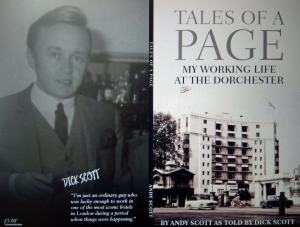
Tales of a Page tells the first part of my late father’s working life as a Page at London’s Dorchester Hotel in the early 1950s.
What’s your secret London tip?
I’ve walked 8 London Bridges in a day, from Battersea upwards, across and back and along the Thames. It’s a fascinating Thameside combination of views, architecture and scenery. Well worth doing if you have the time and see how The Thames snakes through London and the architecture changes. Look up and look around. It’s amazing what you will see.
What’s your secret London place?
Mount Street Gardens off Mount Street in Mayfair and close to the Church of the Immaculate Conception. A tranquil and serene place where you can sit and ponder as the world passes by. It has its own unique history too, being the site of a former burial ground and workhouse.
What’s your biggest gripe about London?
Too many people all in a rush to get nowhere fast, be they on foot, bike or car!
What’s your favourite building?
Stationers Hall on Ava Maria Lane. A wonderful building steeped in history that I have been fortunate enough to visit and dine in on many occasions as a Liveryman and Freeman of the City of London. Its library is also one of the best in terms of ancient and rare manuscripts.
What’s your most hated building?
City Hall, for far too many reasons. Having been a visitor on many occasions it irks me in so many ways. The design, the wastage of space, the people, I could go on but I won’t!
What’s the best view in London?
I’m lucky enough to have been inside Tower Bridge, and the views from the top, up and down the Thames are simply superb. An amazing piece of historic London architecture.
What’s your personal London landmark?
St. Peter’s Italian Church in Clerkenwell. Opened in 1863, as an apprentice in the print at Back Hill, I often used to pass by and wander in. It’s rightly described as one of the most beautiful churches in London. One visit and you will see why.
What’s London’s best film, book or documentary?
Film: The Long Good Friday. A classic depiction of pre-developed Docklands and the vision portrayed by Harold Shand (Bob Hoskins) of a thriving business area that would go on to host the Olympic Games in 2012 was the frighteningly realistic prediction of what was to come.
What’s your favourite restaurant?
Used to be (Pierre) Koffmann’s in Knightsbridge, now sadly closed. I’d have to say for food, service, ambience and value The Goring is now a personal favourite.
How would you spend your ideal day off in London?
Breakfast at Pellicci’s in Bethnal Green, followed by a visit to Wapping and the fabulous old pubs of Turner’s Old Star and Captain Kidd. Pie and Mash at G. Kelly’s on the Roman Road, I’d then head to St. Katherine’s Dock for drinks and people watching, a cigar in C.Gars at Jermyn Street culminating with a meal at Sam’s Riverside Restaurant in Hammersmith and a Haymaker Cocktail, named in tribute to my great uncle Chick to round off the day whilst looking out over The Thames.




 On 5 December 1766 thirty-six-year-old James Christie held his first auction sale in London
 Thief-Taker General Jonathan Wild sent more than 120 men to the gallows but was hanged at Tyburn for running gangs of thieves
 When Camden’s Egyptian style cigarette factory opened in 1927 the road was filled with sand and opera singers performed Aida
 In 1907 William Whiteley was shot dead in his Bayswater store by a young man claiming to be his illegitimate son
 When Napoleon was thinking of invading England his failed attempt was mocked by an unusual ale house sign: ‘My Arse in a Bandbox’
 The Grapes, Limehouse was the inspiration for Charles Dickens’ ‘Six Jolly Fellowship Porters’ in Our Mutual Friend
 On 5 December 1863 at Freemasons Arms, Great Queen Street modern footy was codified, Freemasons Arms, Long Acre displays old football boots
 Queen Victoria’s husband, Albert, saved the Oval cricket ground from closure only six years after it opened, desperate for funds they had considered adding poultry shows to the venue’s activities
 Before CrossRail was named the Elizabeth line, Belsize Park was the only part of the London Underground to use a Z in its name
 Wall’s Sausages used to be located at 113 Jermyn Street, where the meat for their products was ground by a donkey operating a treadmill
 ‘Hobson’s Choice’ comes from the livery stable owner Thomas Hobson who would drive from Cambridge to the Bull Inn, Bishopsgate Street


