

At the beginning of this year, TfL introduced a new regulation that requires all new cabs to be “zero-emissions capable”, i.e. hybrid or electric. But, as the (paywalled) Times reports, even though, “more than 40 per cent of private hire cars and black cabs in the city are now electric,” drivers are still finding it hard to charge them because London only has an average of 131 public charging points per 100,000 people.
Monthly Archives: June 2023

Johnson’s London Dictionary: Horse Guards Parade
HORSE GUARDS PARADE (n.) Large open space that doth display horses and those bedecked men who guard the equine animals against peril.
Dr. Johnson’s London Dictionary for publick consumption in the twenty-first century avail yourself on Twitter @JohnsonsLondon
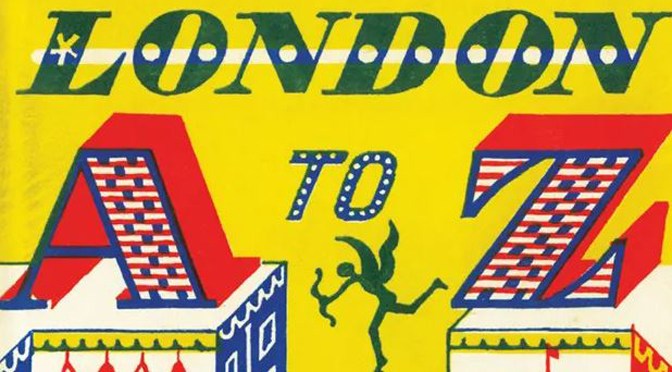
London A to Z
Anticipating a substantial increase of tourists to London for the late Queen’s Coronation, former Spitfire ace and respected literary critic, John Metcalf, wrote a witty London guide. On this 70th anniversary, I bought a copy of this pocket-sized paperback, then priced at a reasonable 2/6d.
The book is a barometer of how much has changed in London during these seven decades. In the coming weeks, CabbieBlog will feature some of the best excerpts and starting with cabs.
TAXIS. London’s taxicabs range from rickety old puffing-billies which seem (and their drivers) to be of pre-World War I vintage, to purring smoothies smelling of leather and metal polish. Cheapest ride (the first mile for 1/3d) has gone up a bit since the pre-war 6d for the first mile; but still remains good value.
A recent innovation is the fleet of a hundred or more Radio Taxis…You telephone TER 8800, give your name and address, and they will ring you back, if you ask them, when your driver reports that he is nearing your door.
London has certainly changed these last 70 years. More of these nostalgic snippets to come from the recently republished paperback.
Adorned throughout with Edward Bawden’s beautiful and distinctive illustrations, John Metcalf’s charmingly idiosyncratic pocket guide brings to life with a dry humour the London and Londoners of the day, and available on Amazon.
London in Quotations: Frederick Engels

A town, such as London, where a man may wander for hours together without reaching the beginning of the end, without meeting the slightest hint which could lead to the inference that there is open country within reach, is a strange thing. This colossal centralisation, this heaping together of two and a half millions of human beings at one point, has multiplied the power of this two and a half millions a hundredfold; has raised London to the commercial capital of the world . . .

Frederick Engels (1820-1895), Condition of the Working Class in England, 1845
London Trivia: Amorous intrigue
On 11 June 1763 the world’s most famous lover arrived in London. Thirty-eight year-old Giacomo Girolamo Casanova from Venice came to rekindle his friendship with Mrs. Cornelys. Unfortunately an assignation with a Livonian Baron’s mistress 9 months later caused him to leave abruptly on 11 March 1764. His subsequent autobiography Story of My Life is regarded as one of the most authentic sources of the customs and norms of European social life during the 18th century.
 On 11 June 1819 a Mr. Mortimer sent a girl to collect two of his other children from school popping into a grocer’s in Rathbone Place she returned to find this children gone along with the woman caring for them
 Marc Isambard Brunel came up with his idea on how to dig the Thames Tunnel whilst in debtors’ prison watching a shipworm bore through wood
 18th century writer Samuel Johnson’s cat Hodge has a statue in Gough Square. Next to Hodge are oysters, his favourite food
 Nell Gywnn, orange seller and mistress to Charles II was born in the Coal Yard, now Stukeley Street off Drury Lane in 1650
 In June 1815 Major Henry Percy interrupted a ball at 16 St James Sq. to announce that 3 days earlier we had defeated the French at Waterloo
 Starring Hugh Jackman, Ian McShane and Scarlett Johansson Woody Allen’s romantic comedy Scoop wasn’t given a London cinema release
 In Regency times Bond Street was more popular with male shoppers such as royal fashion adviser Beau Brummell
 The colour scheme at Boston Manor Tube station was inspired by local team Brentford FC’s nickname – ‘The Bees’
 The longest journey without change is on the Central line from West Ruislip to Epping, and is a total of 34.1 miles
 Hoare’s Bank, Fleet Street first operated from the Golden Bottle in Cheapside in 1672. Customers have included Samuel Pepys and John Dryden
 Byward Street near the Tower of London takes its name from the word ‘byword’, meaning password, which was used at the Tower each evening
 Trivial Matter: London in 140 characters is taken from the daily Twitter feed @cabbieblog.
A guide to the symbols used here and source material can be found on the Trivial Matter page.
 CabbieBlog