We challenge our contributors to reply to ten devilishly probing questions about their London and we don’t take “Sorry Gov” for an answer. Everyone sitting in the hot seat they will face the same questions ranging from their favourite way to spend a day out in the capital to their most hated building on London’s skyline to find out what Londoners think about their city. The questions are the same but the answers vary wildly.

Dan Simpson is a writer, facilitator, and creativity coach. An accomplished poet, he has been Poet-in-Residence at Glastonbury Festival, Waterloo Station, National Trust Stowe, Imperial College London, and St Albans Cathedral. His work has been featured at Southbank Centre, the Royal Academy of Arts, and on the BBC. In 2022 he created On the Cotton, a project pairing poets with London’s black cab drivers and writing poems about the historic trade. His other work can be found here.
What’s your secret London tip?
Don’t stare at your phone whilst travelling around. London is a city of architectural oddities, interesting pieces of history, and semi-hidden goings on all just there for the keen observer. I’d go so far as to say this even applies on the Underground – you never know who you might spot, or what stories you might overhear.
What’s your secret London place?
Postman’s Park. Though made a little more famous by the play and film Closer, every time I’ve visited it’s very quiet. It’s a little shrine dedicated to those who lost their lives saving others, tucked away near St Paul’s. A sombre place to reflect on the best of the human spirit – something that sometimes feels lacking in our city.
What’s your biggest gripe about London?
The seemingly never-ending knocking down of council estates and iconic places for expensive flats that force communities and local people out. That, and the cost of a pint.
What’s your favourite building?
The Natural History Museum – a Victorian cathedral to science and the natural world. Going inside and my eyes are drawn upwards, noticing the details of stone monkeys climbing the pillars, painted plant adorning the ceilings, the sheer volume of stuff from around the globe. As a building, it’s incredibly of its time, but the atmosphere is contemporary: understandable, given it’s also a research institution, and full of excited children discovering the wonders of nature!
What’s your most hated building?
The Old War Office (or The OWO, as it’s styled now). Every time I cycle past I cringe a bit at the tagline ‘The home of legends’. I can’t imagine how much it would cost to buy a place there, and who will be doing so – given the location in the heart of Westminster and political power.
What’s the best view in London?
Sky Garden. That it’s free – in this expensive city! – to go up 43 floors to look at the view is surely a mistake. Fantastic cocktails too – though those will set you back a few pounds.
What’s your personal London landmark?
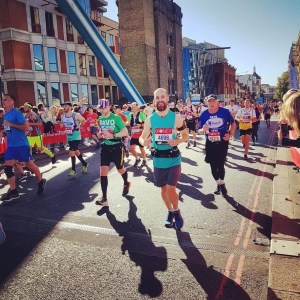
Tower Bridge. During lockdowns, my partner and I (on our one legal outdoor activity per day) often jogged from her place in Stepney Green, over London Bridge, and back via Tower Bridge. We’d barely see a soul – a strange thing for the middle of a usually busy city, and a lockdown experience I’ll never forget. I also have a wonderful memory and photo of me crossing Tower Bridge – almost the halfway point – during the London Marathon.
What’s London’s best film, book or documentary?
Kraken, by China Miéville. A page-turning jaunt through the recognisable surface of London – and the weird mystical forces that are happening under the perception of the everyday. It’s a fun mash-up of London and the occult – and to me, speaks to the fact that London really works in ways most of us don’t consider.
What’s your favourite restaurant?
Mildred’s – the first one in Soho. One of the original and best dedicated vegetarian places, it felt like a treat as a veggie in the days before vegan food became available everywhere. I like that they don’t make that their selling point – they simply make excellent food (and cocktails!). They’ve quietly switched to a full vegan menu too, and I’ve never had a bad experience there. Shout out to Naifs in my area of Peckham too – it’s incredible.
How would you spend your ideal day off in London?
On a fresh and sunny Spring day, I’d start with a jog around Peckham Rye Common. Then onto my bike, off to the Tate Modern and a wander round wondering about the art. A quick dip into Borough Market for the free cheese samples before lunch at Mildred’s Soho. Then a pedal over to Cambridge Circus and Orc’s Nest to look at boardgames – probably via the huge Brewdog for a beer. Then on to Brick Lane to look at the graffiti and pick up a bag of bagels (Beigel Bake is the better of the two bakeries here!). Then the Old Hackney Baths for a dance before the Overground back to Peckham – stopping for a swift nightcap at Brick Brewery’s taproom.
On The Cotton, celebrating the 200th anniversary of the first licensed Hackney Cab service in London. This short film documents a project that saw seven Black Cab drivers and seven London-based poets co-create poetry that celebrates the iconic Black Cab, London’s cabbies, passengers, and the Knowledge. The film will be introduced by Dan Simpson, who pioneered the On The Cotton project, working in partnership with London Transport Museum. After the film, enjoy a poetry performance and a Q&A with some of the poets, cabbies, and filmmaker Bilal Bounit. Performers will include Duane Colman and Abstract Benna, Adam Gaunt, and Mick O’Flynn with a voiceover by Arji Manuelpillai. Poet Shirine Shah and former cabbie Les Simpson will join the Q&A. Black Cab drivers are eligible for a concession ticket price for this event: simply show your yellow or green badge on the door. Saturday 11th March 2023, tickets are available at The London Transport Museum.



 CabbieBlog