Category Archives: Thinking allowed

Lazy Days

This has just been the longest March I can ever remember. It just went on … and on …

Perhaps like me, you’ve sorted out photographs, lists, cupboards, drawers etc, while sorting out the computer was a bit like the wardrobe – deciding what to delete from years gone by and now forgotten like bell-bottom jeans and kipper ties … they all come back given time, but not thousands of old emails and long unsupported programs.

While I was there I’ve also updated the blog’s sidebars, and sent off a few book proposals, and received some more don’t call us, we’ll call you replies.

This England requested a piece for next year’s annual, marking 125 years of the black cab. I obliged, noting they also publish Beano and Dandy magazines, which seems to sum up the extent of my fine prose.

All this makes for a rather laid back approach to life these days. This lethargy also manifests in writing, you know how it is, one day ideas are popping out of your ears, then you relax and … nothing.

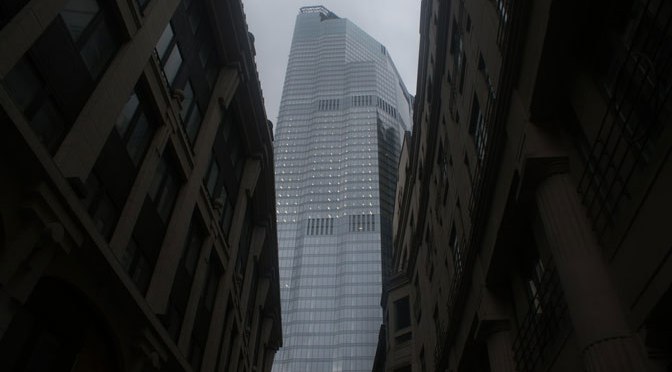
So I’ve been thinking about a nickname for the new skyscraper nearing completion at 22 Bishopsgate, a gargantuan office building that will utterly dwarf all that has gone before, trumping every property developer’s wildest fantasy. Other huge erections have been given monikers: the Cheesegrater, the Walkie-Talkie and my favourite considering it is the home of the London Assembly – The Testicle.

Now with a combined bulk of all those three combined comes 22 Bishopsgate containing 32 acres of floor space heaped in a 250-yard-wide hulk, rising to just below the height of the Shard and built after consuming the 7-storey lift shaft stump of the abandoned Helter Skelter.

With the City deserted its streets only populated by the occasional Deliveroo driver and empty cab, it seems a strange time to be completing the largest office building the capital has ever seen.

A large lump, having swallowed up the previous development with steam rising from its air-conditioning and glistening glazing panels, surplus to our needs, there can be only one moniker – I give you The Turd.

Featured image: 22 Bishopsgate from Whittington Avenue looking northeast by © Robert Lamb (CC BY-SA 2.0).

Women in the workplace

Close your eyes. Have you got them closed? Now, imagine you’re standing at the side of the road hailing a cab.

The cab pulls up, it’s black obviously. But what of the driver? In BBC TV’s Sherlock: A Study in Pink, Benedict Cumberbatch’s Holmes poses the question: “Who do we trust, even if we don’t know him?”

Do you have an image of the cabbie in your mind? In all probability the driver is white, a man over fifty wearing a flat cap and a scarf around his neck.

You get in and commence your journey, the conversation soon turns to football. Yes, he follows a London team, possibly Arsenal, lives in Essex, and is not the biggest fan of the London Mayor.

You can open your eyes now because you are right. The person imagined by Sherlock Holmes and yourself is your atypical cabbie, for women make up fewer than 2.5 per cent of London cab driving fraternity.

Surprisingly in today’s world, according to Transport for London, in 2019 there was only 519 women amongst 23,301 drivers with licences to cover All London and Suburban areas, even though today’s applications to attain The Knowledge are not reliant on race, religion, gender or sexual orientation.

Women have always played a part in the London cab trade. At one time a widow could inherit her husband’s Hackney Carriage (but not drive it, just hire it out). A list from 1664 reveals that 19 widows had inherited licences.

Much later during the Great War, with many drivers away on the Western Front, who had had the understanding that their licence was protected at the cessation of hostilities, women’s role was questioned. Although the ability to ply for hire rested upon successful completion of The Knowledge, Sir Henry Norman MP asked the Home Secretary, if a refusal to license women was based on “statutory disqualification of a woman or in a decision of the Home Office”. The Home Secretary passed the buck stating “the Commissioner of Police informs me that he cannot in the present circumstances recommend the grant of a licence to a woman”. Sean Farrell writing in Abstracts of Black Cab Lore opines: “With thousands of men dying daily, the women filling the manpower gap up and down the country, it’s hard to imagine just what extra circumstances the Commissioner of Police envisaged.
Eventually, the authorities were forced to license women to drive buses, trams and taxis, although a union official stated driving a taxi was “not a moral occupation for a woman to follow”.

By 1917 four women held taxi licences, although they could hardly be described as your average Londoner. Susan Dudley Ryder (Badge 1366) was the cousin to The Earl of Harrowby and sister of champion women’s golfer Mrs Gavin.

After the Great War, a Select Committee looked into transport problems within London. Much of the evidence submitted for excluding women from driving cabs was the practice by prostitutes of using the passenger compartment to conduct their business, something the upper-class witnesses to the committee seemed to be very knowledgeable. Not so the cabbie, as at the time the driver had no rear-view mirror.
In 1922 the London and Provincial Union of Licensed Vehicle Workers balloted its members in strike action should a woman appear on the road working as a cab driver.

Even after World War II, despite their valiant work in keeping Britain’s factories and farms in production, they were unlikely to attain a licence, let alone a vehicle to drive.

Remarkably the first woman to have completed the modern Knowledge of London to become an All London Green Badge driver was not until 1977 when Marie White (badge 25292) passed. She would regularly be seen on the St. Pancras rank with her little dog in the luggage compartment.

Featured image: Stella Wood who has been a black cab driver for 20 years.

Much of the research into this post has been gleaned from Abstracts of Black Cab Lore: A History of the London Cab Driver by Sean Farrell and From Manor House Station to Gibson Square and back again: Secrets from the London Taxi Trade by Chris Ackrill.