
Category Archives: Puppydog tails

Hearse cab
Lee-Hobson Funeral Service in West Sussex recently contacted CabbieBlog to show us their newly prepared 2005 London Taxi TX2 Bronze Hearse. The vehicle has been prepared with great care and attention, ensuring everything was kept as original as possible – apart from the provision for passengers!
The coffin deck is a plywood base covered over with high-quality artificial grass, the vehicle’s original colour made it eminently suitable for a hearse. The ribbons can be changed to any colour to suit your needs.
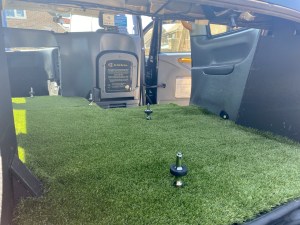
This has to be the best ever way to send a Londoner, an ex-cabbie, or just anyone with an interest in iconic vehicles to the cab rank in the sky.

This immaculate vehicle is now available to hire either directly via their Facebook page, email or telephone or ask your local funeral director to contact them on your behalf.
The hearse can is also available for film or TV work by request.
Lee-Hobson Funeral Service
77-79 High Street, Selsey, Chichester,
West Sussex PO20 0QL – 01243 601747
7-8 The Parade, Pagham, Bognor Regis,
West Sussex PO21 4TW – 01243 820020
http://www.lee-hobsonfunerals.co.uk.
This is a sponsored guest post. Proceeds from these articles help keep the wheels turning on this site offering free content for anybody with an interest in London. All links here conform with guidelines set out in Write a Post.

Test Your Knowledge: July
This month’s quiz turns to above our heads and London’s air. As before the correct answer will turn green when it’s clicked upon and expanded to give more information. The incorrect answers will turn red giving the correct explanation.
1. Heathrow’s first passenger terminal was opened by the Queen in which year?
1955
CORRECT On 16th December 1955 unveiled The Queen’s Building at London Airport, its name only revealed at the end of Her Majesty’s speech. Later renamed Heathrow, the original site was opened on 31st May 1946, with its first arrival a BOAC Lancastrian from Australia.
1957
WRONG On 16th December 1955 unveiled The Queen’s Building at London Airport, its name only revealed at the end of Her Majesty’s speech. Later renamed Heathrow, the original site was opened on 31st May 1946, with its first arrival a BOAC Lancastrian from Australia.
1959
WRONG On 16th December 1955 unveiled The Queen’s Building at London Airport, its name only revealed at the end of Her Majesty’s speech. Later renamed Heathrow, the original site was opened on 31st May 1946, with its first arrival a BOAC Lancastrian from Australia.
2. England’s first manned balloon flight by Vincenzo Lunardi on 15th September 1784 took off from which London location?
St. James’s Park beside what is now Buckingham Palace
WRONG Taking off in an impressive red-and-white silk balloon from Moorfields Artillery Ground, now the Honourable Artillery Company in City Road, Lunardi was lauded as the ‘idol of the whole nation’. Later balloons became a fashionable addition to London’s pleasure grounds, Charles Green’s party trick was to ascend from Vauxhall Gardens on horseback.
The Artillery Ground in Moorfields
CORRECT Taking off in an impressive red-and-white silk balloon from Moorfields Artillery Ground, now the Honourable Artillery Company in City Road, Lunardi was lauded as the ‘idol of the whole nation’. Later balloons became a fashionable addition to London’s pleasure grounds, Charles Green’s party trick was to ascend from Vauxhall Gardens on horseback.
Outside St. Paul’s Cathedral
WRONG Taking off in an impressive red-and-white silk balloon from Moorfields Artillery Ground, now the Honourable Artillery Company in City Road, Lunardi was lauded as the ‘idol of the whole nation’. Later balloons became a fashionable addition to London’s pleasure grounds, Charles Green’s party trick was to ascend from Vauxhall Gardens on horseback.
3. What was ‘The Skylon’ which once stood on the South Bank between Waterloo Bridge and Hungerford Bridge?
A sculpture
CORRECT A futuristic, 300ft high cigar-shaped aluminium sculpture with, as people joked at the time, ‘no visible means of support’, the Skylon was constructed as part of the Festival of Britain in 1951. Dismantled the following year, it was made into commemorative paper-knives and artefacts.
An aeroplane
WRONG A futuristic, 300ft high cigar-shaped aluminium sculpture with, as people joked at the time, ‘no visible means of support’, the Skylon was constructed as part of the Festival of Britain in 1951. Dismantled the following year, it was made into commemorative paper-knives and artefacts.
A skyscraper
WRONG A futuristic, 300ft high cigar-shaped aluminium sculpture with, as people joked at the time, ‘no visible means of support’, the Skylon was constructed as part of the Festival of Britain in 1951. Dismantled the following year, it was made into commemorative paper-knives and artefacts.
4. From where in London did A. V. Roe launch the first powered flight in Britain by a British citizen in a British plane?
Green Park
WRONG In 1909 Alliott Verdon Roe, who had been inspired by watching albatrosses in flight during his time in the merchant navy, constructed an early aeroplane under a viaduct and flew his Avro Triplane for 306 yards across the Walthamstow Marshes. A blue plaque marks the arches that he used as a workshop.
Hyde Park
WRONG In 1909 Alliott Verdon Roe, who had been inspired by watching albatrosses in flight during his time in the merchant navy, constructed an early aeroplane under a viaduct and flew his Avro Triplane for 306 yards across the Walthamstow Marshes. A blue plaque marks the arches that he used as a workshop.
Walthamstow Marshes
CORRECT In 1909 Alliott Verdon Roe, who had been inspired by watching albatrosses in flight during his time in the merchant navy, constructed an early aeroplane under a viaduct and flew his Avro Triplane for 306 yards across the Walthamstow Marshes. A blue plaque marks the arches that he used as a workshop.
5. Why did a performance of La Traviata at Sadler’s Wells Theatre have to be abandoned in December 1952?
Smog drifting into the theatre was so thick that the audience could scarcely see the performers
CORRECT The Great Smog of 1952 was the worst in the twentieth century, caused mainly by coal fire smoke, visibility in the city was reduced to inches. Several thousand would die from associated bronchial and cardiovascular illnesses associated with its inhalation. The reduction in air quality would bring about the Clean Air Act of 1956, and the imposition of the use of smokeless fuels.
A burst of hailstones brought down part of the ceiling
WRONG The Great Smog of 1952 was the worst in the twentieth century, caused mainly by coal fire smoke, visibility in the city was reduced to inches. Several thousand would die from associated bronchial and cardiovascular illnesses associated with its inhalation. The reduction in air quality would bring about the Clean Air Act of 1956, and the imposition of the use of smokeless fuels.
Rain caused the nearby New River Head to flood the area
WRONG The Great Smog of 1952 was the worst in the twentieth century, caused mainly by coal fire smoke, visibility in the city was reduced to inches. Several thousand would die from associated bronchial and cardiovascular illnesses associated with its inhalation. The reduction in air quality would bring about the Clean Air Act of 1956, and the imposition of the use of smokeless fuels.
6. Much like during the coronavirus, in December 1976 all planes at Heathrow were grounded. For what reason?
Intelligence that the IRA were to hijack a passenger plane
WRONG A pink pig had been strung between the chimneys of Battersea Power Station for the cover shoot of Pink Floyd’s album Animals. When the pig broke its moorings and floated away, all planes were grounded and the RAF was scrambled to chase it to ground in Kent.
A flying pig
CORRECT A pink pig had been strung between the chimneys of Battersea Power Station for the cover shoot of Pink Floyd’s album Animals. When the pig broke its moorings and floated away, all planes were grounded and the RAF was scrambled to chase it to ground in Kent.
A freak electrical thunderstorm
WRONG A pink pig had been strung between the chimneys of Battersea Power Station for the cover shoot of Pink Floyd’s album Animals. When the pig broke its moorings and floated away, all planes were grounded and the RAF was scrambled to chase it to ground in Kent.
7. The weathervane of Liberty department store depicts what?
The Statue of Liberty
WRONG The weathervane has a detailed replica of The Mayflower, the ship that carried the Pilgrim Fathers to North America. The shop itself is made of ships: its mock Tudor facade was fashioned from the timbers of HMS Hindustan and HMS Impregnable (formerly known as HMS Howe and once the largest ship in the world). Liberty is also the size of a ship: The Great Marlborough Street frontage is the same length as the Hindustan.
Hermes the Greek God of Merchants
WRONG The weathervane has a detailed replica of The Mayflower, the ship that carried the Pilgrim Fathers to North America. The shop itself is made of ships: its mock Tudor facade was fashioned from the timbers of HMS Hindustan and HMS Impregnable (formerly known as HMS Howe and once the largest ship in the world). Liberty is also the size of a ship: The Great Marlborough Street frontage is the same length as the Hindustan.
The Pilgrim Fathers’ ship the Mayflower
CORRECT The weathervane has a detailed replica of The Mayflower, the ship that carried the Pilgrim Fathers to North America. The shop itself is made of ships: its mock Tudor facade was fashioned from the timbers of HMS Hindustan and HMS Impregnable (formerly known as HMS Howe and once the largest ship in the world). Liberty is also the size of a ship: The Great Marlborough Street frontage is the same length as the Hindustan.
8. Bruce Grove was the last home of Luke Howard, but for what is he known?
He deduced why the sky is blue
WRONG Luke Howard died on 21st March 1864 at 7 Bruce Grove, Tottenham. He proposed the nomenclature system that we still use today to identify clouds. He was also the first person to observe and measure the fact that London is warmer than the surrounding countryside. His Blue Plaque at Bruce Grove states: ‘Luke Howard 1772-1864 Namer of Clouds Lived and Died here’.
He invented the modern weather station
WRONG Luke Howard died on 21st March 1864 at 7 Bruce Grove, Tottenham. He proposed the nomenclature system that we still use today to identify clouds. He was also the first person to observe and measure the fact that London is warmer than the surrounding countryside. His Blue Plaque at Bruce Grove states: ‘Luke Howard 1772-1864 Namer of Clouds Lived and Died here’.
He is known as the namer of clouds
CORRECT Luke Howard died on 21st March 1864 at 7 Bruce Grove, Tottenham. He proposed the nomenclature system that we still use today to identify clouds. He was also the first person to observe and measure the fact that London is warmer than the surrounding countryside. His Blue Plaque at Bruce Grove states: ‘Luke Howard 1772-1864 Namer of Clouds Lived and Died here’.
9. . In the film Mary Poppins, how much money does it cost to acquire ‘paper and strings’ to Go Fly a Kite?
Tuppence
CORRECT Bert (Dick Van Dyke) sings: With tuppence for paper and strings/You can have your own set of wings/With your feet on the ground/You’re a bird in flight/ With your fist holding tight/To the string of your kite.
One penny
WRONG Bert (Dick Van Dyke) sings: With tuppence for paper and strings/You can have your own set of wings/With your feet on the ground/You’re a bird in flight/ With your fist holding tight/To the string of your kite.
Thrupence
WRONG Bert (Dick Van Dyke) sings: With tuppence for paper and strings/You can have your own set of wings/With your feet on the ground/You’re a bird in flight/ With your fist holding tight/To the string of your kite.
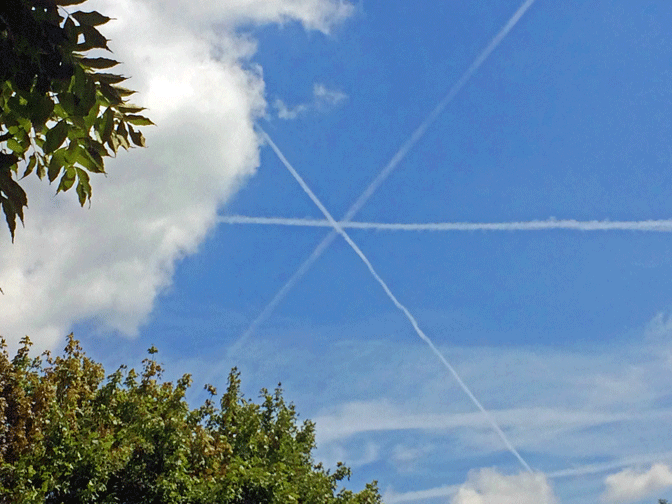
10. As my picture, taken above Romford, shows, plane contrails are a familiar sight above London, as these ephemeral trails mark flight paths that criss-cross the city. The planes causing these vapour trails are held in holding stacks, but how many stacks does Heathrow have?
Twelve
WRONG Forming a web across its six international airports, the routes that planes take into, out of, and across London are designed to cause the least disturbance to the fewest number of people. Heathrow has four holding stacks above Bovingdon, Ockham, Biggin and Lambourne. Incoming planes circle above navigation beacons until they get the green light from air traffic control to begin their final approach.
Four
CORRECT Forming a web across its six international airports, the routes that planes take into, out of, and across London are designed to cause the least disturbance to the fewest number of people. Heathrow has four holding stacks above Bovingdon, Ockham, Biggin and Lambourne. Incoming planes circle above navigation beacons until they get the green light from air traffic control to begin their final approach.
Eight
WRONG Forming a web across its six international airports, the routes that planes take into, out of, and across London are designed to cause the least disturbance to the fewest number of people. Heathrow has four holding stacks above Bovingdon, Ockham, Biggin and Lambourne. Incoming planes circle above navigation beacons until they get the green light from air traffic control to begin their final approach.
Essex Man halts ice advance
With climate change at the top of the news agenda, it’s a question on everyone’s lips: Just where did the last ice age stop its advance?
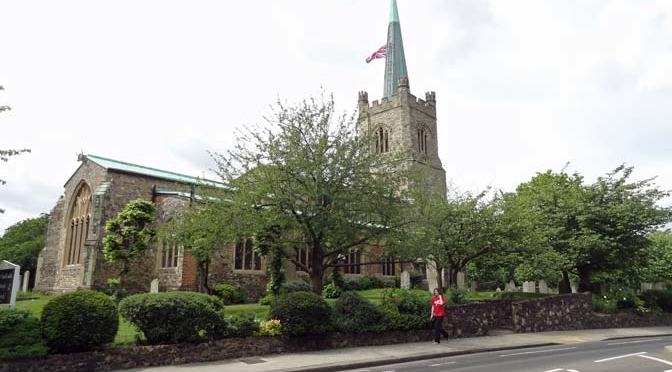
Now thanks to Diamond Geezer we have the definite answer – Hornchurch or more precisely Maywin Drive, just north of St. Andrews Church.
In 1892 the Romford to Upminster branch line was constructed which involved digging the 25ft deep Hornchurch Cutting, in so doing an unexpected seam of boulder clay overlaid by sand and gravel was exposed.
The Essex Field Club investigated the excavations (presumably trains weren’t yet in operation) and discovered several Jurassic fossils that could only have been carried from the Midlands by an ice sheet.
Since then, with all of the construction taking place in London, no such glacial deposition has been found further south than Hornchurch, which has led geologists to conclude that Maywin Drive was the ultimate limit of advancing ice during the last 2 million years.
It wasn’t so much the glacial deposits as the gravel on top of them, because normally that’s found underneath. This was evidence that the Thames was younger than the fossils, confirming that the Thames was diverted to its present course after the arrival of the ice sheet. Hornchurch is the only place this layering of Thames gravel and boulder clay has been seen, hence the only location that confirms precisely when the big shift took place.
Confirming the ice sheet hypothesis, in the 1970s a new electricity sub-station was built in a former gravel pit behind St. Andrew’s Church and quarter-of-a-mile to the south of the Hornchurch railway cutting.
Here more boulder clay was found but no further glacial deposits could be found confirming that the sub-station was further south than the ice sheet had advanced.
St. Andrew’s has a further claim to scientific fame, Rev. William Derham was rector of Upminster from 1689-1735 and a friend of Sir Isac Newton (he of gravity fame) and Dr Edmund Hailey (his meteor). The Rev. concluded death-watch beetles, apart from infesting his church, could eat their way out of a wooden box.
But his greatest achievement was calculating the speed of sound. Standing on St. Andrew’s Church tower he observed the difference in time the flash from a gun fired in Aveley and the sound reaching him. Repeating the experiment from several locations he calculated the speed of sound at 768mph, only 8mph out from the actual speed of 760mph, not bad for 1705.
Featured image: St Andrew’s Church Hornchurch, London, location of just south of the furthest that any ice sheet in Britain reached during the Anglian glaciation 450,000 years ago by Dudley Miles (CC BY-SA 3.0).
Test Your Knowledge: June
Today’s quiz is about cabs and cabbies. If you have been diligent when reading CabbieBlog’s regular missives most shouldn’t present a problem. As before the correct answer will turn green when it’s clicked upon and expanded to give more information. The incorrect answers will turn red giving the correct explanation.
1. All licensed taxi drivers in London need to pass a comprehensive test before they can ply for hire. What is the test called?
The Knowledge
CORRECT It can take between 3 and 5 years to complete The Knowledge, to gain the coveted Green Badge that allows cabbies to work anywhere in Greater London, all cabbies must learn 320 routes and everything in between.
The Knack
WRONG It can take between 3 and 5 years to complete The Knowledge, to gain the coveted Green Badge that allows cabbies to work anywhere in Greater London, all cabbies must learn 320 routes and everything in between.
The Opinionated
WRONG It can take between 3 and 5 years to complete The Knowledge, to gain the coveted Green Badge that allows cabbies to work anywhere in Greater London, all cabbies must learn 320 routes and everything in between.
2. Where was London’s first cab rank??
In Piccadilly
WRONG In 1635 Charles Bailey, a retired mariner, placed four hackney coaches for hire at the Maypole in the Strand where St. Mary’s Church now stands. Later, blue posts denoted cab ranks, hence several pubs by that name.
In the Strand
CORRECT In 1635 Charles Bailey, a retired mariner, placed four hackney coaches for hire at the Maypole in the Strand where St. Mary’s Church now stands. Later, blue posts denoted cab ranks, hence several pubs by that name.
In Oxford Street
WRONG In 1635 Charles Bailey, a retired mariner, placed four hackney coaches for hire at the Maypole in the Strand where St. Mary’s Church now stands. Later, blue posts denoted cab ranks, hence several pubs by that name.
3. When a cabbie is awarded a licence, he is given a Bill and Badge. His badge is then displayed whenever he is working, but what is his Bill?
His licence
CORRECT Who would guess that a cab driver’s licence, referred to as his ‘bill’, it is short for ‘bill of health’? This is ironic considering that most Victorian cabbies worked until they died, or ended in the workhouse if they couldn’t continue working, despite the efforts of the Cabmen’s Benevolent Association.
An invoice detailing his expenses up to that date
WRONG Who would guess that a cab driver’s licence, referred to as his ‘bill’, it is short for ‘bill of health’? This is ironic considering that most Victorian cabbies worked until they died, or ended in the workhouse if they couldn’t continue working, despite the efforts of the Cabmen’s Benevolent Association.
A police mentor, as in the nickname ‘old bill’
WRONG Who would guess that a cab driver’s licence, referred to as his ‘bill’, it is short for ‘bill of health’? This is ironic considering that most Victorian cabbies worked until they died, or ended in the workhouse if they couldn’t continue working, despite the efforts of the Cabmen’s Benevolent Association.
4. Frederick Hitch was once London’s most famous cabbie, but for what?
He was also King George V’s chauffeur
WRONG Most would not know of the Anglo-Zulu war of 1879 if it wasn’t for the Battle of Rorke’s Drift, and its popularisation by Michael Caine’s first major film, where 155 British soldiers repulsed 4,000 Zulus warriors, resulting in 32 British killed or wounded against nearly 900 Zulus. After the conflict medals which everybody would have heard of – the Victoria Cross – were awarded to 11 men one of which was Frederick Hitch. It was the largest number of gallantry medals ever given to a single regiment, for actions on a single day.
He was a music hall entertainer
WRONG Most would not know of the Anglo-Zulu war of 1879 if it wasn’t for the Battle of Rorke’s Drift, and its popularisation by Michael Caine’s first major film, where 155 British soldiers repulsed 4,000 Zulus warriors, resulting in 32 British killed or wounded against nearly 900 Zulus. After the conflict medals which everybody would have heard of – the Victoria Cross – were awarded to 11 men one of which was Frederick Hitch. It was the largest number of gallantry medals ever given to a single regiment, for actions on a single day.
He was awarded the Victoria Cross
CORRECT Most would not know of the Anglo-Zulu war of 1879 if it wasn’t for the Battle of Rorke’s Drift, and its popularisation by Michael Caine’s first major film, where 155 British soldiers repulsed 4,000 Zulus warriors, resulting in 32 British killed or wounded against nearly 900 Zulus. After the conflict medals which everybody would have heard of – the Victoria Cross – were awarded to 11 men one of which was Frederick Hitch. It was the largest number of gallantry medals ever given to a single regiment, for actions on a single day.
5. Who or what was The Resistance?
Harley Street
CORRECT The Resistance was a derogatory nickname given to Harley Street as it was populated by doctors opposed the formation of the NHS after the War.
Cabbies who once fought alongside the Partisans in German-occupied France
WRONG The Resistance was a derogatory nickname given to Harley Street as it was populated by doctors opposed the formation of the NHS after the War.
Spoken ironically about poor brakes on early cabs
WRONG The Resistance was a derogatory nickname given to Harley Street as it was populated by doctors opposed the formation of the NHS after the War.
6. When were licences first issued to London cabbies?
1754
WRONG In 1654 Oliver Cromwell ordered the Court of Aldermen of the City of London to grant licences to 200 hackney coachmen. A 6-mile limit was imposed as London’s chain of defences, that had been erected during the Civil War in 1642, only extended to that perimeter and beyond it was considered unsafe.
1654
CORRECT In 1654 Oliver Cromwell ordered the Court of Aldermen of the City of London to grant licences to 200 hackney coachmen. A 6-mile limit was imposed as London’s chain of defences, that had been erected during the Civil War in 1642, only extended to that perimeter and beyond it was considered unsafe.
1854
WRONG In 1654 Oliver Cromwell ordered the Court of Aldermen of the City of London to grant licences to 200 hackney coachmen. A 6-mile limit was imposed as London’s chain of defences, that had been erected during the Civil War in 1642, only extended to that perimeter and beyond it was considered unsafe.
7. The passenger compartment is jolly spacious, but what are the origins of the roof height?
With any lower head height, passengers would hit their heads on the roof when the vehicle hit potholes
WRONG By law, taxicabs had to be tall enough for a passenger to sit comfortably while wearing a top hat, especially important during Ascot. Additionally, at one time, hackney carriages were required to carry a bale of hay for the horse. This law was held over for a time even after motorised cabs began to operate.
So that up to three hay bales could be stacked inside to feed horses
WRONG By law, taxicabs had to be tall enough for a passenger to sit comfortably while wearing a top hat, especially important during Ascot. Additionally, at one time, hackney carriages were required to carry a bale of hay for the horse. This law was held over for a time even after motorised cabs began to operate.
A gentleman didn’t have the inconvenience of removing his top hat when boarding
CORRECT By law, taxicabs had to be tall enough for a passenger to sit comfortably while wearing a top hat, especially important during Ascot. Additionally, at one time, hackney carriages were required to carry a bale of hay for the horse. This law was held over for a time even after motorised cabs began to operate.
8. How, or where should you not hire a cab?
Poking your head into the nearside window of a stationary cab at traffic lights
WRONG Technically, it’s against the law for you to yell “Taxi!” to get their attention. If you see a cab with a lit sign, just hold out your arm to signal them, and if you’re not drunk he will stop.
Outside one of those cabbies’ green shelters
WRONG Technically, it’s against the law for you to yell “Taxi!” to get their attention. If you see a cab with a lit sign, just hold out your arm to signal them, and if you’re not drunk he will stop.
Emulating a scene from your favourite black and white film by shouting “TAXI” while simultaneously waving in a frantic fashion
CORRECT Technically, it’s against the law for you to yell “Taxi!” to get their attention. If you see a cab with a lit sign, just hold out your arm to signal them, and if you’re not drunk he will stop.
9. What is the entomology of the word taxi?
It comes from the taximeter now found on all legal cabs
CORRECT The term ‘taxi’ comes from taximeter, the counter used to measure miles travelled and fare. ‘Cab’ was short for ‘cabriolet’, a French verb for ‘to leap’, which was a type of taxi and what one did to exit them.
The word comes from the penal rates once charged to the proprietors of vehicles
WRONG The term ‘taxi’ comes from taximeter, the counter used to measure miles travelled and fare. ‘Cab’ was short for ‘cabriolet’, a French verb for ‘to leap’, which was a type of taxi and what one did to exit them.
Queen Victoria didn’t like Joseph Hansom the inventor of the famous Hansom cab and always referred the classic horse-drawn vehicles as ‘taxites’, her term for unaccountable
WRONG The term ‘taxi’ comes from taximeter, the counter used to measure miles travelled and fare. ‘Cab’ was short for ‘cabriolet’, a French verb for ‘to leap’, which was a type of taxi and what one did to exit them.
10. When boarding a licensed London cab, apart from your destination, what must you tell the driver?
If you are registered disabled
WRONG It was also once supposedly illegal for people to hail a cab while suffering from the bubonic plague. This is still partly true, as the Public Health (Control of Disease) Act of 1984 requires a person suffering from a notifiable disease to inform the cab driver, who may then decide whether to ferry the passenger. If he does so, he is then required to notify the authorities and disinfect the cab before taking another fare.
If you have the bubonic plague
CORRECT It was also once supposedly illegal for people to hail a cab while suffering from the bubonic plague. This is still partly true, as the Public Health (Control of Disease) Act of 1984 requires a person suffering from a notifiable disease to inform the cab driver, who may then decide whether to ferry the passenger. If he does so, he is then required to notify the authorities and disinfect the cab before taking another fare.
That you might change your mind as to the destination
WRONG It was also once supposedly illegal for people to hail a cab while suffering from the bubonic plague. This is still partly true, as the Public Health (Control of Disease) Act of 1984 requires a person suffering from a notifiable disease to inform the cab driver, who may then decide whether to ferry the passenger. If he does so, he is then required to notify the authorities and disinfect the cab before taking another fare.
 CabbieBlog