On 8 May 1854, The Times reported of a rebellion at the Athenaeum Club in Pall Mall, who boasted among its luminaries the Duke of Wellington, the price of meals would rise to 1/- and be served by an official carverer. The dissenters would win a small victory: dinner rose to 1/- but lunch remained at 6d and would be carved by an amateur.
 On 8 May 1984 the Thames Flood Barrier, the northern bank is in Silvertown and the southern is in the New Charlton area
 At the end of the 19th century George Brown was given 7 days’ hard labour after treading on a constable’s foot and corn on Poplar High Street
 Putney is named after the Anglo-Saxon chief, Putta. It means ‘Putta’s landing’
 Nelson’s coffin is made of wood taken from a captured French ship. He used to keep the coffin in his cabin
 In 1798 Prime Minister William Pitt the Younger and George Tierney MP fought a duel with pistols on Putney Heath, neither were injured
 The Oscar winning movie Chariots of Fire was filmed in Hurlingham Park, Fulham
 Frith Street, Soho was referred to as Froth Street due to the number of milk bars and cafes located there in the 1950s
 India is 5.5 hours ahead of GMT. This means to get the time there you turn your (non-digital) watch upside down. (One for the cricket fans)
 Harry Beck designed the Tube map while working as an engineering draughtsman at London Underground’s Signals Office. He was only paid £10.50
 Whilst studying law Mahatma Ghandi lived at 20 Baron’s Court Road, West Kensington
 In 1790 Upminster Rev. William Derham measured the speed of sound accurately by watching a gun fired 2 miles distant and timing the delay
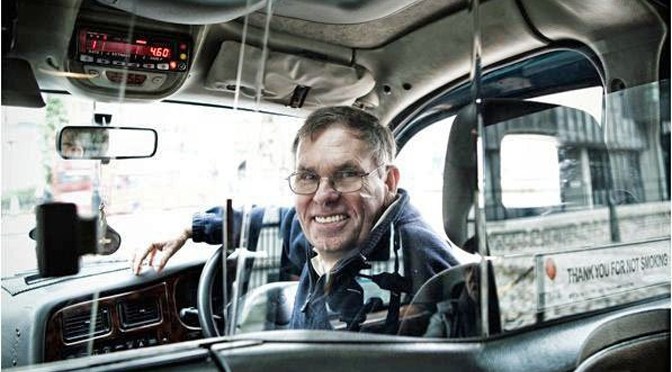
 Trivial Matter: London in 140 characters is taken from the daily Twitter feed @cabbieblog.
A guide to the symbols used here and source material can be found on the Trivial Matter page.






 CabbieBlog