London in Quotations: Joseph Fort Newton

London, with its monotonous and melancholy houses, seems like an inharmonious patchwork, as if pieced together without design. Yet it is lovable in its sprawling confusion.

Joseph Fort Newton (1876-1950), Preaching in London: A Diary of Anglo-American Friendship

London Trivia: Waterstone’s spared

On 8 August 2011, there were London-wide riots, shops were looted, unsurprisingly Waterstone’s in Battersea was spared. At least 1,000 were arrested in London. There were two deaths and this was the first use of mobile phones to organise looting and rioting activities – and the first time mobile logs were used to make arrests.

On 8 August 1969 photographer Iain MacMillan shot the cover of Abbey Road, the last studio LP in which all four Beatles took part

After execution at Tyburn Highwayman Jack Sheppard was buried at St-Martin-in-the-Fields in front of 200,000, some protecting his corpse

Kensington Olympia’s Grand Hall famed for its barrel-roof made of iron and glass was the largest building in the country covering 4 acres

Rule, Britannia! composer, Thomas Arne, is buried in St Paul’s, Covent Garden, he also wrote a version of God Save the King, and the song A-Hunting We Will Go

Women’s Rights Campaigner Sylvia Pankhurst once lived at 120 Cheyne Walk, Chelsea it was little more than a rest stop between her numerous countrywide tours for the Women’s Social and Political Union

Wimpole Street was once home to poet Elizabeth Barrett, author Arthur Conan Doyle and Paul McCartney who wrote Yesterday there

The Palace Theatre opened in 1891 as the Royal English Opera House by Richard D’Oyly Carte wanting it to be the home of English grand opera

Old English skittles, once popular in pubs across the South East, is confined to a single alley at the Freemasons’ Arms in Downshire Hill is thought to be played in London and nowhere else

According to Transport for London Underground trains travel a total of 1,735 times around the world (or 90 trips to the moon and back) each year

In the 1800s London prostitutes were sometimes referred to as ‘Fulham virgins’ during this time there were probably about 30,000 street sellers

Kew Gardens holds the largest and most diverse botanical collection in the world, including around 7 million dried plant specimens and a living collection of over 19,000 plant species spanning two sites

CabbieBlog-cab.gifTrivial Matter: London in 140 characters is taken from the daily Twitter feed @cabbieblog.
A guide to the symbols used here and source material can be found on the Trivial Matter page.

Test Your Knowledge: August

Death is the subject today, something that comes to all of us sooner or later. As before the correct answer will turn green when it’s clicked upon and expanded to give more information. The incorrect answers will turn red giving the correct explanation.

1. Even in death, Steve Marsh received a parking ticket. Why?
He was buried beneath a replica marble headstone of a BMW
CORRECT In May 2010 Steve Marsh, a BMW fanatic was buried beneath a £50,000 1-tonne life-sized marble replica M3 convertible in Manor Park Cemetery and a parking ticket was affixed to the windscreen.
He was a funeral director and his hearse was double-parked
WRONG In May 2010 Steve Marsh, a BMW fanatic was buried beneath a £50,000 1-tonne life-sized marble replica M3 convertible in Manor Park Cemetery and a parking ticket was affixed to the windscreen.
The night he died his car had been stolen and parked on a red route
WRONG In May 2010 Steve Marsh, a BMW fanatic was buried beneath a £50,000 1-tonne life-sized marble replica M3 convertible in Manor Park Cemetery and a parking ticket was affixed to the windscreen.
2. Why did Pawel Modzelewski’s demise go unnoticed?
Tradition has it that anyone sleeping in Polish Club is left undisturbed
WRONG On 19 January 2009 Pawel Modzelewski travelled the 19 bus for six hours unnoticed after dying the previous day and was left in the garage overnight.
He died on a bus and was found the next day in the bus garage
CORRECT On 19 January 2009 Pawel Modzelewski travelled the 19 bus for six hours unnoticed after dying the previous day and was left in the garage overnight.
Before the Underground changed he lay undisturbed going around the Circle Line for a whole day
WRONG On 19 January 2009 Pawel Modzelewski travelled the 19 bus for six hours unnoticed after dying the previous day and was left in the garage overnight.
3. Why did the death of Martial Bourdin start a riot?
He blew himself up
CORRECT In February 1894 in Greenwich Park anarchist, Martial Bourdin accidentally blew himself en route to blowing up the Royal Observatory. His funeral sparked riots by 15,000 near the Autonomie Anarchist Club, 6 Windmill Street.
He was killed by the police
WRONG In February 1894 in Greenwich Park anarchist, Martial Bourdin accidentally blew himself en route to blowing up the Royal Observatory. His funeral sparked riots by 15,000 near the Autonomie Anarchist Club, 6 Windmill Street.
He was assassinated on the Government’s order
WRONG In February 1894 in Greenwich Park anarchist, Martial Bourdin accidentally blew himself en route to blowing up the Royal Observatory. His funeral sparked riots by 15,000 near the Autonomie Anarchist Club, 6 Windmill Street.
4. Why does 9 Curzon Place, Mayfair hold a curious London reputation for death?
Ghosts who reputedly committed suicide to haunt the premises
WRONG Flat 12, 9 Curzon Place was where Cass Elliot of Mamas and Papas died in 1974 of a heart attack. The flat was on loan from singer-songwriter Harry Nilsson. Four years later, The Who’s drummer Keith Moon died in the same room. They were both aged 32 years.
It was the scene of a gangland massacre in the 1950s
WRONG Flat 12, 9 Curzon Place was where Cass Elliot of Mamas and Papas died in 1974 of a heart attack. The flat was on loan from singer-songwriter Harry Nilsson. Four years later, The Who’s drummer Keith Moon died in the same room. They were both aged 32 years.
Two rock stars have met their demise here
CORRECT Flat 12, 9 Curzon Place was where Cass Elliot of Mamas and Papas died in 1974 of a heart attack. The flat was on loan from singer-songwriter Harry Nilsson. Four years later, The Who’s drummer Keith Moon died in the same room. They were both aged 32 years.
5. How did the Necropolis Railway Company offer to transport the dead?
It offered first, second and third class one-way tickets
CORRECT The Necropolis Railway Company transported coffins from Waterloo to Brockwood Cemetery customers could choose between first, second and third class.
It offered viewing windows in its carriages for mourners to pay their respects as the train passed by
WRONG The Necropolis Railway Company transported coffins from Waterloo to Brockwood Cemetery customers could choose between first, second and third class.
The train driver wore a dark suit along with black gloves, a hatband and cravat
WRONG The Necropolis Railway Company transported coffins from Waterloo to Brockwood Cemetery customers could choose between first, second and third class.
6. On 17th October 1814 eight people met an untimely and unusual end, but what was the cause of their demise?
The Great London Earthquake
WRONG Beer was the drink of choice as the water was often unsafe. The demand led to brewers constructing huge vats as an economical way of producing the beverage. One such vat burst its hoops which in turn ruptured nearby vats. Eventually, more than 323,000 gallons became a tsunami drowning 8 people. The Dominion Theatre stands on the site of the ill-fated Horseshoe Brewery.
The Great Beer Flood
CORRECT Beer was the drink of choice as the water was often unsafe. The demand led to brewers constructing huge vats as an economical way of producing the beverage. One such vat burst its hoops which in turn ruptured nearby vats. Eventually, more than 323,000 gallons became a tsunami drowning 8 people. The Dominion Theatre stands on the site of the ill-fated Horseshoe Brewery.
The Great London Fireworks Display
WRONG Beer was the drink of choice as the water was often unsafe. The demand led to brewers constructing huge vats as an economical way of producing the beverage. One such vat burst its hoops which in turn ruptured nearby vats. Eventually, more than 323,000 gallons became a tsunami drowning 8 people. The Dominion Theatre stands on the site of the ill-fated Horseshoe Brewery.
7. Which London cemetery is divided into a western half and an eastern half by Swains Lane?
Kensal Green
WRONG Perhaps the best-known cemetery in London, Highgate is the final resting place for many famous people, including Karl Marx, George Eliot and Michael Faraday.
Brompton
WRONG Perhaps the best-known cemetery in London, Highgate is the final resting place for many famous people, including Karl Marx, George Eliot and Michael Faraday.
Highgate
CORRECT Perhaps the best-known cemetery in London, Highgate is the final resting place for many famous people, including Karl Marx, George Eliot and Michael Faraday.
8. What is unusual about the memorial in Kensal Green Cemetery to the 19th-century circus performer Andrew Ducrow?
There is a marble elephant on the top of it
WRONG Originally decorated with stone sphinxes painted in bright colours that have since faded, Ducrow who was an equestrian performer and the proprietor of the famous Astley’s Amphitheatre in the middle of the 19th-century, has one of the most elaborate of all the mausoleums in Kensal Green Cemetery.
The inscription on it is written in Sanskrit
WRONG Originally decorated with stone sphinxes painted in bright colours that have since faded, Ducrow who was an equestrian performer and the proprietor of the famous Astley’s Amphitheatre in the middle of the 19th-century, has one of the most elaborate of all the mausoleums in Kensal Green Cemetery.
It is decorated with stone sphinxes
CORRECT Originally decorated with stone sphinxes painted in bright colours that have since faded, Ducrow who was an equestrian performer and the proprietor of the famous Astley’s Amphitheatre in the middle of the 19th-century, has one of the most elaborate of all the mausoleums in Kensal Green Cemetery.
9. Whose ‘auto-icon’ still sits in a glass-fronted case in University College, London, more than a century-and-a-half after he died?
Jeremy Bentham’s
CORRECT When moral philosopher Jeremy Bentham died in 1832, he left a will with specific instructions on the ‘disposal and preservation of the several parts of my bodily frame’. His skeleton was to be ‘clad in one of the suits of black occasionally worn by me’ and seated upright on a chair, under a placard reading ‘Auto Icon’. Bentham further suggested that his corpse might then be able to preside over regular meetings of his utilitarian followers. He attends every UCL Council meeting and is always recorded as ‘present but not voting’, except when the Council is split on a motion. On those rare occasions, he gets a vote, and always votes in favour of the motion, due to his mischievous personality.
John Stuart Mill’s
WRONG When moral philosopher Jeremy Bentham died in 1832, he left a will with specific instructions on the ‘disposal and preservation of the several parts of my bodily frame’. His skeleton was to be ‘clad in one of the suits of black occasionally worn by me’ and seated upright on a chair, under a placard reading ‘Auto Icon’. Bentham further suggested that his corpse might then be able to preside over regular meetings of his utilitarian followers. He attends every UCL Council meeting and is always recorded as ‘present but not voting’, except when the Council is split on a motion. On those rare occasions, he gets a vote, and always votes in favour of the motion, due to his mischievous personality.
Benjamin Disraeli’s
WRONG When moral philosopher Jeremy Bentham died in 1832, he left a will with specific instructions on the ‘disposal and preservation of the several parts of my bodily frame’. His skeleton was to be ‘clad in one of the suits of black occasionally worn by me’ and seated upright on a chair, under a placard reading ‘Auto Icon’. Bentham further suggested that his corpse might then be able to preside over regular meetings of his utilitarian followers. He attends every UCL Council meeting and is always recorded as ‘present but not voting’, except when the Council is split on a motion. On those rare occasions, he gets a vote, and always votes in favour of the motion, due to his mischievous personality.
10. What ‘first’ did Colonel Pierpoint admire before he died?
The first pedestrian crossing
WRONG At his expense in 1864 Colonel Pierpoint had London’s first traffic island constructed in St. James’s Street opposite his club in Pall Mall. On its completion, his excitement (and possible inebriation) encouraged him to dash across the road to admire his contribution to society. Alas, he was knocked down and killed by a passing cab.
The world’s first traffic island
CORRECT At his expense in 1864 Colonel Pierpoint had London’s first traffic island constructed in St. James’s Street opposite his club in Pall Mall. On its completion, his excitement (and possible inebriation) encouraged him to dash across the road to admire his contribution to society. Alas, he was knocked down and killed by a passing cab.
The first traffic light
WRONG At his expense in 1864 Colonel Pierpoint had London’s first traffic island constructed in St. James’s Street opposite his club in Pall Mall. On its completion, his excitement (and possible inebriation) encouraged him to dash across the road to admire his contribution to society. Alas, he was knocked down and killed by a passing cab.

The London Grill: Charley Harrison

We challenge our contributors to reply to ten devilishly probing questions about their London and we don’t take “Sorry Gov” for an answer. Everyone sitting in the hot seat they will face the same questions ranging from their favourite way to spend a day out in the capital to their most hated building on London’s skyline to find out what Londoners really think about their city. The questions are the same but the answers vary wildly.


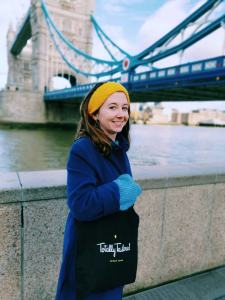
Charley is a London tour guide, life-long Londoner and founder of Totally Tailored – an award-winning private tour company providing premium experiences in the UK (and soon the rest of Europe!). Once a week she Live-streams a tour from the top of a different London public bus. To keep up to date with this, join the private Facebook group – https://www.facebook.com/groups/livefromalondonbus

What’s your secret London tip?

Get to know London’s public buses – the best way to see the city is from the top deck.

What’s your secret London place?

Octavia’s Hill’s garden (Redcross Gardens in Borough).

What’s your biggest gripe about London?

That so many people have to work such long hours to live here.

What’s your favourite building?

The Tower of London – 1,000 years of history and still standing!

What’s your most hated building?

Strata Tower, Elephant and Castle. The three wind turbines at the top were intended to power the building. However, due to a fault (too noisy), they have never been switched on. An example of Green-washing (green credentials that are just for show and do nothing to help).

What’s the best view in London?

From the Duck and Waffle Restaurant, Heron Tower at night.

What’s your personal London landmark?

I have a favourite piece of Ben Wilson’s chewing gum art on Millenium Bridge. It’s St Pauls’ and the bridge in miniature.

What’s London’s best film, book or documentary?

Craig Taylor’s Londoners each chapter is from the perspective of a different Londoner, from a dominatrix to an Oligarch. It really sums up the diverse people that make this city.

What’s your favourite bar, pub or restaurant?

Jumi – Iraqi food stall, now do seated evening meals within Borough Market. Great people, great food, great atmosphere.

How would you spend your ideal day off in London?

Cycling to a new cafe to people-watching in a residential area I’ve not been to before. Jumping on a friend’s canal boat from Camden, doing a few locks, jumping off a local park to feed the birds (parroquets if we’re lucky). Posh dinner at Annabel’s or the Duck and Waffle before a film at an independent cinema like Notting Hill’s Electric or Bermondsey’s Kino. Cycle home via my local pub for a swift hello and pint.


London in Quotations: Ambrose Bierce

Respirator, n. An apparatus fitted over the nose and mouth of an inhabitant of London, whereby to filter the visible universe in its passage to the lungs.

Ambrose Bierce (1843-1914), The Devil’s Dictionary