This month’s quiz turns to above our heads and London’s air. As before the correct answer will turn green when it’s clicked upon and expanded to give more information. The incorrect answers will turn red giving the correct explanation.
1. Heathrow’s first passenger terminal was opened by the Queen in which year?
1955
CORRECT On 16th December 1955 unveiled The Queen’s Building at London Airport, its name only revealed at the end of Her Majesty’s speech. Later renamed Heathrow, the original site was opened on 31st May 1946, with its first arrival a BOAC Lancastrian from Australia.
1957
WRONG On 16th December 1955 unveiled The Queen’s Building at London Airport, its name only revealed at the end of Her Majesty’s speech. Later renamed Heathrow, the original site was opened on 31st May 1946, with its first arrival a BOAC Lancastrian from Australia.
1959
WRONG On 16th December 1955 unveiled The Queen’s Building at London Airport, its name only revealed at the end of Her Majesty’s speech. Later renamed Heathrow, the original site was opened on 31st May 1946, with its first arrival a BOAC Lancastrian from Australia.
2. England’s first manned balloon flight by Vincenzo Lunardi on 15th September 1784 took off from which London location?
St. James’s Park beside what is now Buckingham Palace
WRONG Taking off in an impressive red-and-white silk balloon from Moorfields Artillery Ground, now the Honourable Artillery Company in City Road, Lunardi was lauded as the ‘idol of the whole nation’. Later balloons became a fashionable addition to London’s pleasure grounds, Charles Green’s party trick was to ascend from Vauxhall Gardens on horseback.
The Artillery Ground in Moorfields
CORRECT Taking off in an impressive red-and-white silk balloon from Moorfields Artillery Ground, now the Honourable Artillery Company in City Road, Lunardi was lauded as the ‘idol of the whole nation’. Later balloons became a fashionable addition to London’s pleasure grounds, Charles Green’s party trick was to ascend from Vauxhall Gardens on horseback.
Outside St. Paul’s Cathedral
WRONG Taking off in an impressive red-and-white silk balloon from Moorfields Artillery Ground, now the Honourable Artillery Company in City Road, Lunardi was lauded as the ‘idol of the whole nation’. Later balloons became a fashionable addition to London’s pleasure grounds, Charles Green’s party trick was to ascend from Vauxhall Gardens on horseback.
3. What was ‘The Skylon’ which once stood on the South Bank between Waterloo Bridge and Hungerford Bridge?
A sculpture
CORRECT A futuristic, 300ft high cigar-shaped aluminium sculpture with, as people joked at the time, ‘no visible means of support’, the Skylon was constructed as part of the Festival of Britain in 1951. Dismantled the following year, it was made into commemorative paper-knives and artefacts.
An aeroplane
WRONG A futuristic, 300ft high cigar-shaped aluminium sculpture with, as people joked at the time, ‘no visible means of support’, the Skylon was constructed as part of the Festival of Britain in 1951. Dismantled the following year, it was made into commemorative paper-knives and artefacts.
A skyscraper
WRONG A futuristic, 300ft high cigar-shaped aluminium sculpture with, as people joked at the time, ‘no visible means of support’, the Skylon was constructed as part of the Festival of Britain in 1951. Dismantled the following year, it was made into commemorative paper-knives and artefacts.
4. From where in London did A. V. Roe launch the first powered flight in Britain by a British citizen in a British plane?
Green Park
WRONG In 1909 Alliott Verdon Roe, who had been inspired by watching albatrosses in flight during his time in the merchant navy, constructed an early aeroplane under a viaduct and flew his Avro Triplane for 306 yards across the Walthamstow Marshes. A blue plaque marks the arches that he used as a workshop.
Hyde Park
WRONG In 1909 Alliott Verdon Roe, who had been inspired by watching albatrosses in flight during his time in the merchant navy, constructed an early aeroplane under a viaduct and flew his Avro Triplane for 306 yards across the Walthamstow Marshes. A blue plaque marks the arches that he used as a workshop.
Walthamstow Marshes
CORRECT In 1909 Alliott Verdon Roe, who had been inspired by watching albatrosses in flight during his time in the merchant navy, constructed an early aeroplane under a viaduct and flew his Avro Triplane for 306 yards across the Walthamstow Marshes. A blue plaque marks the arches that he used as a workshop.
5. Why did a performance of La Traviata at Sadler’s Wells Theatre have to be abandoned in December 1952?
Smog drifting into the theatre was so thick that the audience could scarcely see the performers
CORRECT The Great Smog of 1952 was the worst in the twentieth century, caused mainly by coal fire smoke, visibility in the city was reduced to inches. Several thousand would die from associated bronchial and cardiovascular illnesses associated with its inhalation. The reduction in air quality would bring about the Clean Air Act of 1956, and the imposition of the use of smokeless fuels.
A burst of hailstones brought down part of the ceiling
WRONG The Great Smog of 1952 was the worst in the twentieth century, caused mainly by coal fire smoke, visibility in the city was reduced to inches. Several thousand would die from associated bronchial and cardiovascular illnesses associated with its inhalation. The reduction in air quality would bring about the Clean Air Act of 1956, and the imposition of the use of smokeless fuels.
Rain caused the nearby New River Head to flood the area
WRONG The Great Smog of 1952 was the worst in the twentieth century, caused mainly by coal fire smoke, visibility in the city was reduced to inches. Several thousand would die from associated bronchial and cardiovascular illnesses associated with its inhalation. The reduction in air quality would bring about the Clean Air Act of 1956, and the imposition of the use of smokeless fuels.
6. Much like during the coronavirus, in December 1976 all planes at Heathrow were grounded. For what reason?
Intelligence that the IRA were to hijack a passenger plane
WRONG A pink pig had been strung between the chimneys of Battersea Power Station for the cover shoot of Pink Floyd’s album Animals. When the pig broke its moorings and floated away, all planes were grounded and the RAF was scrambled to chase it to ground in Kent.
A flying pig
CORRECT A pink pig had been strung between the chimneys of Battersea Power Station for the cover shoot of Pink Floyd’s album Animals. When the pig broke its moorings and floated away, all planes were grounded and the RAF was scrambled to chase it to ground in Kent.
A freak electrical thunderstorm
WRONG A pink pig had been strung between the chimneys of Battersea Power Station for the cover shoot of Pink Floyd’s album Animals. When the pig broke its moorings and floated away, all planes were grounded and the RAF was scrambled to chase it to ground in Kent.
7. The weathervane of Liberty department store depicts what?
The Statue of Liberty
WRONG The weathervane has a detailed replica of The Mayflower, the ship that carried the Pilgrim Fathers to North America. The shop itself is made of ships: its mock Tudor facade was fashioned from the timbers of HMS Hindustan and HMS Impregnable (formerly known as HMS Howe and once the largest ship in the world). Liberty is also the size of a ship: The Great Marlborough Street frontage is the same length as the Hindustan.
Hermes the Greek God of Merchants
WRONG The weathervane has a detailed replica of The Mayflower, the ship that carried the Pilgrim Fathers to North America. The shop itself is made of ships: its mock Tudor facade was fashioned from the timbers of HMS Hindustan and HMS Impregnable (formerly known as HMS Howe and once the largest ship in the world). Liberty is also the size of a ship: The Great Marlborough Street frontage is the same length as the Hindustan.
The Pilgrim Fathers’ ship the Mayflower
CORRECT The weathervane has a detailed replica of The Mayflower, the ship that carried the Pilgrim Fathers to North America. The shop itself is made of ships: its mock Tudor facade was fashioned from the timbers of HMS Hindustan and HMS Impregnable (formerly known as HMS Howe and once the largest ship in the world). Liberty is also the size of a ship: The Great Marlborough Street frontage is the same length as the Hindustan.
8. Bruce Grove was the last home of Luke Howard, but for what is he known?
He deduced why the sky is blue
WRONG Luke Howard died on 21st March 1864 at 7 Bruce Grove, Tottenham. He proposed the nomenclature system that we still use today to identify clouds. He was also the first person to observe and measure the fact that London is warmer than the surrounding countryside. His Blue Plaque at Bruce Grove states: ‘Luke Howard 1772-1864 Namer of Clouds Lived and Died here’.
He invented the modern weather station
WRONG Luke Howard died on 21st March 1864 at 7 Bruce Grove, Tottenham. He proposed the nomenclature system that we still use today to identify clouds. He was also the first person to observe and measure the fact that London is warmer than the surrounding countryside. His Blue Plaque at Bruce Grove states: ‘Luke Howard 1772-1864 Namer of Clouds Lived and Died here’.
He is known as the namer of clouds
CORRECT Luke Howard died on 21st March 1864 at 7 Bruce Grove, Tottenham. He proposed the nomenclature system that we still use today to identify clouds. He was also the first person to observe and measure the fact that London is warmer than the surrounding countryside. His Blue Plaque at Bruce Grove states: ‘Luke Howard 1772-1864 Namer of Clouds Lived and Died here’.
9. . In the film Mary Poppins, how much money does it cost to acquire ‘paper and strings’ to Go Fly a Kite?
Tuppence
CORRECT Bert (Dick Van Dyke) sings: With tuppence for paper and strings/You can have your own set of wings/With your feet on the ground/You’re a bird in flight/ With your fist holding tight/To the string of your kite.
One penny
WRONG Bert (Dick Van Dyke) sings: With tuppence for paper and strings/You can have your own set of wings/With your feet on the ground/You’re a bird in flight/ With your fist holding tight/To the string of your kite.
Thrupence
WRONG Bert (Dick Van Dyke) sings: With tuppence for paper and strings/You can have your own set of wings/With your feet on the ground/You’re a bird in flight/ With your fist holding tight/To the string of your kite.
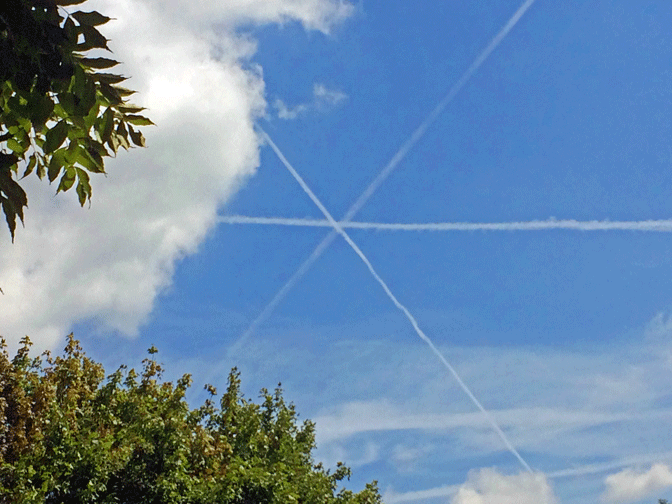
10. As my picture, taken above Romford, shows, plane contrails are a familiar sight above London, as these ephemeral trails mark flight paths that criss-cross the city. The planes causing these vapour trails are held in holding stacks, but how many stacks does Heathrow have?
Twelve
WRONG Forming a web across its six international airports, the routes that planes take into, out of, and across London are designed to cause the least disturbance to the fewest number of people. Heathrow has four holding stacks above Bovingdon, Ockham, Biggin and Lambourne. Incoming planes circle above navigation beacons until they get the green light from air traffic control to begin their final approach.
Four
CORRECT Forming a web across its six international airports, the routes that planes take into, out of, and across London are designed to cause the least disturbance to the fewest number of people. Heathrow has four holding stacks above Bovingdon, Ockham, Biggin and Lambourne. Incoming planes circle above navigation beacons until they get the green light from air traffic control to begin their final approach.
Eight
WRONG Forming a web across its six international airports, the routes that planes take into, out of, and across London are designed to cause the least disturbance to the fewest number of people. Heathrow has four holding stacks above Bovingdon, Ockham, Biggin and Lambourne. Incoming planes circle above navigation beacons until they get the green light from air traffic control to begin their final approach.
Today’s quiz is about cabs and cabbies. If you have been diligent when reading CabbieBlog’s regular missives most shouldn’t present a problem. As before the correct answer will turn green when it’s clicked upon and expanded to give more information. The incorrect answers will turn red giving the correct explanation.
1. All licensed taxi drivers in London need to pass a comprehensive test before they can ply for hire. What is the test called?
The Knowledge
CORRECT It can take between 3 and 5 years to complete The Knowledge, to gain the coveted Green Badge that allows cabbies to work anywhere in Greater London, all cabbies must learn 320 routes and everything in between.
The Knack
WRONG It can take between 3 and 5 years to complete The Knowledge, to gain the coveted Green Badge that allows cabbies to work anywhere in Greater London, all cabbies must learn 320 routes and everything in between.
The Opinionated
WRONG It can take between 3 and 5 years to complete The Knowledge, to gain the coveted Green Badge that allows cabbies to work anywhere in Greater London, all cabbies must learn 320 routes and everything in between.
2. Where was London’s first cab rank??
In Piccadilly
WRONG In 1635 Charles Bailey, a retired mariner, placed four hackney coaches for hire at the Maypole in the Strand where St. Mary’s Church now stands. Later, blue posts denoted cab ranks, hence several pubs by that name.
In the Strand
CORRECT In 1635 Charles Bailey, a retired mariner, placed four hackney coaches for hire at the Maypole in the Strand where St. Mary’s Church now stands. Later, blue posts denoted cab ranks, hence several pubs by that name.
In Oxford Street
WRONG In 1635 Charles Bailey, a retired mariner, placed four hackney coaches for hire at the Maypole in the Strand where St. Mary’s Church now stands. Later, blue posts denoted cab ranks, hence several pubs by that name.
3. When a cabbie is awarded a licence, he is given a Bill and Badge. His badge is then displayed whenever he is working, but what is his Bill?
His licence
CORRECT Who would guess that a cab driver’s licence, referred to as his ‘bill’, it is short for ‘bill of health’? This is ironic considering that most Victorian cabbies worked until they died, or ended in the workhouse if they couldn’t continue working, despite the efforts of the Cabmen’s Benevolent Association.
An invoice detailing his expenses up to that date
WRONG Who would guess that a cab driver’s licence, referred to as his ‘bill’, it is short for ‘bill of health’? This is ironic considering that most Victorian cabbies worked until they died, or ended in the workhouse if they couldn’t continue working, despite the efforts of the Cabmen’s Benevolent Association.
A police mentor, as in the nickname ‘old bill’
WRONG Who would guess that a cab driver’s licence, referred to as his ‘bill’, it is short for ‘bill of health’? This is ironic considering that most Victorian cabbies worked until they died, or ended in the workhouse if they couldn’t continue working, despite the efforts of the Cabmen’s Benevolent Association.
4. Frederick Hitch was once London’s most famous cabbie, but for what?
He was also King George V’s chauffeur
WRONG Most would not know of the Anglo-Zulu war of 1879 if it wasn’t for the Battle of Rorke’s Drift, and its popularisation by Michael Caine’s first major film, where 155 British soldiers repulsed 4,000 Zulus warriors, resulting in 32 British killed or wounded against nearly 900 Zulus. After the conflict medals which everybody would have heard of – the Victoria Cross – were awarded to 11 men one of which was Frederick Hitch. It was the largest number of gallantry medals ever given to a single regiment, for actions on a single day.
He was a music hall entertainer
WRONG Most would not know of the Anglo-Zulu war of 1879 if it wasn’t for the Battle of Rorke’s Drift, and its popularisation by Michael Caine’s first major film, where 155 British soldiers repulsed 4,000 Zulus warriors, resulting in 32 British killed or wounded against nearly 900 Zulus. After the conflict medals which everybody would have heard of – the Victoria Cross – were awarded to 11 men one of which was Frederick Hitch. It was the largest number of gallantry medals ever given to a single regiment, for actions on a single day.
He was awarded the Victoria Cross
CORRECT Most would not know of the Anglo-Zulu war of 1879 if it wasn’t for the Battle of Rorke’s Drift, and its popularisation by Michael Caine’s first major film, where 155 British soldiers repulsed 4,000 Zulus warriors, resulting in 32 British killed or wounded against nearly 900 Zulus. After the conflict medals which everybody would have heard of – the Victoria Cross – were awarded to 11 men one of which was Frederick Hitch. It was the largest number of gallantry medals ever given to a single regiment, for actions on a single day.
5. Who or what was The Resistance?
Harley Street
CORRECT The Resistance was a derogatory nickname given to Harley Street as it was populated by doctors opposed the formation of the NHS after the War.
Cabbies who once fought alongside the Partisans in German-occupied France
WRONG The Resistance was a derogatory nickname given to Harley Street as it was populated by doctors opposed the formation of the NHS after the War.
Spoken ironically about poor brakes on early cabs
WRONG The Resistance was a derogatory nickname given to Harley Street as it was populated by doctors opposed the formation of the NHS after the War.
6. When were licences first issued to London cabbies?
1754
WRONG In 1654 Oliver Cromwell ordered the Court of Aldermen of the City of London to grant licences to 200 hackney coachmen. A 6-mile limit was imposed as London’s chain of defences, that had been erected during the Civil War in 1642, only extended to that perimeter and beyond it was considered unsafe.
1654
CORRECT In 1654 Oliver Cromwell ordered the Court of Aldermen of the City of London to grant licences to 200 hackney coachmen. A 6-mile limit was imposed as London’s chain of defences, that had been erected during the Civil War in 1642, only extended to that perimeter and beyond it was considered unsafe.
1854
WRONG In 1654 Oliver Cromwell ordered the Court of Aldermen of the City of London to grant licences to 200 hackney coachmen. A 6-mile limit was imposed as London’s chain of defences, that had been erected during the Civil War in 1642, only extended to that perimeter and beyond it was considered unsafe.
7. The passenger compartment is jolly spacious, but what are the origins of the roof height?
With any lower head height, passengers would hit their heads on the roof when the vehicle hit potholes
WRONG By law, taxicabs had to be tall enough for a passenger to sit comfortably while wearing a top hat, especially important during Ascot. Additionally, at one time, hackney carriages were required to carry a bale of hay for the horse. This law was held over for a time even after motorised cabs began to operate.
So that up to three hay bales could be stacked inside to feed horses
WRONG By law, taxicabs had to be tall enough for a passenger to sit comfortably while wearing a top hat, especially important during Ascot. Additionally, at one time, hackney carriages were required to carry a bale of hay for the horse. This law was held over for a time even after motorised cabs began to operate.
A gentleman didn’t have the inconvenience of removing his top hat when boarding
CORRECT By law, taxicabs had to be tall enough for a passenger to sit comfortably while wearing a top hat, especially important during Ascot. Additionally, at one time, hackney carriages were required to carry a bale of hay for the horse. This law was held over for a time even after motorised cabs began to operate.
8. How, or where should you not hire a cab?
Poking your head into the nearside window of a stationary cab at traffic lights
WRONG Technically, it’s against the law for you to yell “Taxi!” to get their attention. If you see a cab with a lit sign, just hold out your arm to signal them, and if you’re not drunk he will stop.
Outside one of those cabbies’ green shelters
WRONG Technically, it’s against the law for you to yell “Taxi!” to get their attention. If you see a cab with a lit sign, just hold out your arm to signal them, and if you’re not drunk he will stop.
Emulating a scene from your favourite black and white film by shouting “TAXI” while simultaneously waving in a frantic fashion
CORRECT Technically, it’s against the law for you to yell “Taxi!” to get their attention. If you see a cab with a lit sign, just hold out your arm to signal them, and if you’re not drunk he will stop.
9. What is the entomology of the word taxi?
It comes from the taximeter now found on all legal cabs
CORRECT The term ‘taxi’ comes from taximeter, the counter used to measure miles travelled and fare. ‘Cab’ was short for ‘cabriolet’, a French verb for ‘to leap’, which was a type of taxi and what one did to exit them.
The word comes from the penal rates once charged to the proprietors of vehicles
WRONG The term ‘taxi’ comes from taximeter, the counter used to measure miles travelled and fare. ‘Cab’ was short for ‘cabriolet’, a French verb for ‘to leap’, which was a type of taxi and what one did to exit them.
Queen Victoria didn’t like Joseph Hansom the inventor of the famous Hansom cab and always referred the classic horse-drawn vehicles as ‘taxites’, her term for unaccountable
WRONG The term ‘taxi’ comes from taximeter, the counter used to measure miles travelled and fare. ‘Cab’ was short for ‘cabriolet’, a French verb for ‘to leap’, which was a type of taxi and what one did to exit them.
10. When boarding a licensed London cab, apart from your destination, what must you tell the driver?
If you are registered disabled
WRONG It was also once supposedly illegal for people to hail a cab while suffering from the bubonic plague. This is still partly true, as the Public Health (Control of Disease) Act of 1984 requires a person suffering from a notifiable disease to inform the cab driver, who may then decide whether to ferry the passenger. If he does so, he is then required to notify the authorities and disinfect the cab before taking another fare.
If you have the bubonic plague
CORRECT It was also once supposedly illegal for people to hail a cab while suffering from the bubonic plague. This is still partly true, as the Public Health (Control of Disease) Act of 1984 requires a person suffering from a notifiable disease to inform the cab driver, who may then decide whether to ferry the passenger. If he does so, he is then required to notify the authorities and disinfect the cab before taking another fare.
That you might change your mind as to the destination
WRONG It was also once supposedly illegal for people to hail a cab while suffering from the bubonic plague. This is still partly true, as the Public Health (Control of Disease) Act of 1984 requires a person suffering from a notifiable disease to inform the cab driver, who may then decide whether to ferry the passenger. If he does so, he is then required to notify the authorities and disinfect the cab before taking another fare.
This month’s quiz is rather eclectic. I’ve posed these questions before so that should give you a fighting chance. As before the correct answer will turn green when it’s clicked upon and expanded to give more information. The incorrect answers will turn red giving the correct explanation.
1. A performance of La Traviata at Sadler’s Wells theatre in 1952 had to be abandoned, but what was the reason?
Smog drifting into the theatre obscured the stage from the audience
CORRECT It was The Great Smog of 1952, coal fires and industrial emissions had reduced visibility in London to inches, lasting from Friday 5th December to Tuesday, 9th December in those few days over 4,000 would die.
The tenor in mid-aria collapsed with a heart attack
WRONG It was The Great Smog of 1952, coal fires and industrial emissions had reduced visibility in London to inches, lasting from Friday 5th December to Tuesday, 9th December in those few days over 4,000 would die.
The Sadler’s Well overflowed flooding the auditorium
WRONG It was The Great Smog of 1952, coal fires and industrial emissions had reduced visibility in London to inches, lasting from Friday 5th December to Tuesday, 9th December in those few days over 4,000 would die.
2. At the junction of Kensington Gore and Exhibition Road is known by cabbies as ‘Hot and Cold Corner’. Why?
Either you are inundated with work or there’s nothing
WRONG The Royal Geographical Society building has a statute of Shackleton looking towards Exhibition Road by Charles Jagger, a sculptor best known for war memorials and Livingstone setting his sights on Kensington Gore by Thomas Bayliss Huxley-Jones.
The statutes of David Livingstone, explorer of Africa and Ernest Shackleton hero of the Antarctic is to be found there
CORRECT The Royal Geographical Society building has a statute of Shackleton looking towards Exhibition Road by Charles Jagger, a sculptor best known for war memorials and Livingstone setting his sights on Kensington Gore by Thomas Bayliss Huxley-Jones.
Cold air rolls off Hyde Park, while the Albert Hall shelters you from the icy blast
WRONG The Royal Geographical Society building has a statute of Shackleton looking towards Exhibition Road by Charles Jagger, a sculptor best known for war memorials and Livingstone setting his sights on Kensington Gore by Thomas Bayliss Huxley-Jones.
3. You probably see it every day, but what is Johnston Sans?
The typeface used on London Underground
CORRECT Edward Johnston took the popular Gill Sans and re-designed it for all signage on the Underground, apart from slight changes it has remained the same since it was first used in 1916.
The design of a street waste paper bin
WRONG Edward Johnston took the popular Gill Sans and re-designed it for all signage on the Underground, apart from slight changes it has remained the same since it was first used in 1916.
French for an Oyster card
WRONG Edward Johnston took the popular Gill Sans and re-designed it for all signage on the Underground, apart from slight changes it has remained the same since it was first used in 1916.
4. In a little courtyard off St. James’s Street lays Pickering Place, it once housed an embassy, but which short-lived nation-state was represented?
The Republic of Crimea
WRONG Britain was one of the first nations to recognise the Republic of Texas when it broke away from Mexico in the 1830s, it would later become the twenty-eighth state of the United States.
The State of Somaliland
WRONG Britain was one of the first nations to recognise the Republic of Texas when it broke away from Mexico in the 1830s, it would later become the twenty-eighth state of the United States.
Texas
CORRECT Britain was one of the first nations to recognise the Republic of Texas when it broke away from Mexico in the 1830s, it would later become the twenty-eighth state of the United States.
5. The Russian word for a railway station is also the mainline terminal in London, which one?
Vauxhall
CORRECT One theory is that a Russian parliamentary delegation visited London to view a fabulous new invention, the railway. Their hosts from the House of Commons took them over the river to the nearest station, Vauxhall in South London. When the Russians asked what it was called, meaning the type of building, they got the reply ‘Vauxhall’. So vokzal to this day means railway station in Russian.
Waterloo
WRONG One theory is that a Russian parliamentary delegation visited London to view a fabulous new invention, the railway. Their hosts from the House of Commons took them over the river to the nearest station, Vauxhall in South London. When the Russians asked what it was called, meaning the type of building, they got the reply ‘Vauxhall’. So vokzal to this day means railway station in Russian.
Marylebone
WRONG One theory is that a Russian parliamentary delegation visited London to view a fabulous new invention, the railway. Their hosts from the House of Commons took them over the river to the nearest station, Vauxhall in South London. When the Russians asked what it was called, meaning the type of building, they got the reply ‘Vauxhall’. So vokzal to this day means railway station in Russian.
6. London has experienced many ‘Great Storms’, but one in 1703 dislodged a well-known icon, what was it?
The lantern on the roof of St. Paul’s just recently completed
WRONG Upon the restoration of the Monarchy Cromwell’s body was disinterred from its tomb in Westminster Abbey, given a posthumous trial and subsequent execution. His head was then placed on a long spike upon the roof of Westminster Hall. It remained there for over 40 years before the storm dislodged the gruesome remains.
Oliver Cromwell’s head
CORRECT Upon the restoration of the Monarchy Cromwell’s body was disinterred from its tomb in Westminster Abbey, given a posthumous trial and subsequent execution. His head was then placed on a long spike upon the roof of Westminster Hall. It remained there for over 40 years before the storm dislodged the gruesome remains.
The plaque commemorating the beheading of King Charles on Whitehall Palace
WRONG Upon the restoration of the Monarchy Cromwell’s body was disinterred from its tomb in Westminster Abbey, given a posthumous trial and subsequent execution. His head was then placed on a long spike upon the roof of Westminster Hall. It remained there for over 40 years before the storm dislodged the gruesome remains.
7. What is the connection between Dirty Dick’s pub opposite Liverpool Street Station and Charles Dickens?
The famous novelist’s father drank himself to death there
WRONG The original Dirty Dick was a young dandy called Nathaniel Bentley who owned a warehouse on Leadenhall Street. On the eve of his wedding his bride-to-be died, grief-stricken, he gave up washing, neglected his appearance, and rarely would be seen in public for the rest of his days. Charles Dickens edited Household Words, a magazine in which a poem based on Bentley’s squalid life appeared.
The pub’s collection of stuffed cats inspired the novelist to write The Old Curiosity Shop
WRONG The original Dirty Dick was a young dandy called Nathaniel Bentley who owned a warehouse on Leadenhall Street. On the eve of his wedding his bride-to-be died, grief-stricken, he gave up washing, neglected his appearance, and rarely would be seen in public for the rest of his days. Charles Dickens edited Household Words, a magazine in which a poem based on Bentley’s squalid life appeared.
Its namesake provided the basis for Miss Havisham in Great Expectations
CORRECT The original Dirty Dick was a young dandy called Nathaniel Bentley who owned a warehouse on Leadenhall Street. On the eve of his wedding his bride-to-be died, grief-stricken, he gave up washing, neglected his appearance, and rarely would be seen in public for the rest of his days. Charles Dickens edited Household Words, a magazine in which a poem based on Bentley’s squalid life appeared.
8. Norman Balon, the proprietor of Soho’s Coach and Horses for over 60 years, was celebrated as ‘the rudest landlord in London’. Under what name did he often appear in the satirical magazine Private Eye?
Bally Balon, the benign friend of the boozer
WRONG Private Eye’s journalists would lunch regularly in the upstairs room of the pub. At Balon’s retirement, Private Eye’s editor paid tribute to the landlord as: “The only man grumpier than me.” Balon’s autobiography, fittingly, was entitled You’re Barred, You Bastards!
Norman Nice, the kindly landlord
WRONG Private Eye’s journalists would lunch regularly in the upstairs room of the pub. At Balon’s retirement, Private Eye’s editor paid tribute to the landlord as: “The only man grumpier than me.” Balon’s autobiography, fittingly, was entitled You’re Barred, You Bastards!
Monty Balon, the genial mine host
CORRECT Private Eye’s journalists would lunch regularly in the upstairs room of the pub. At Balon’s retirement, Private Eye’s editor paid tribute to the landlord as: “The only man grumpier than me.” Balon’s autobiography, fittingly, was entitled You’re Barred, You Bastards!
9. Since 1820, what has a sailor done each Good Friday at the Widow’s Son pub in Bow?
Placed a hot cross bun in a basket hanging from the ceiling
CORRECT A widow lived in a cottage which once stood on the site. Her sailor son was due to arrive home on Good Friday. She put a hot cross bun aside for him on his return. Each year she kept a bun, but he never returned. The ritual was subsequently taken up by the pub after her death.
Rung the Bow Bell kept behind the bar
WRONG A widow lived in a cottage which once stood on the site. Her sailor son was due to arrive home on Good Friday. She put a hot cross bun aside for him on his return. Each year she kept a bun, but he never returned. The ritual was subsequently taken up by the pub after her death.
Poured a pint to celebrate Christ’s resurrection
WRONG A widow lived in a cottage which once stood on the site. Her sailor son was due to arrive home on Good Friday. She put a hot cross bun aside for him on his return. Each year she kept a bun, but he never returned. The ritual was subsequently taken up by the pub after her death.
10. The Prospect of Whitby in Wapping is London’s oldest remaining riverside inn. What was it originally named?
The Smuggler’s Rest
WRONG Built-in 1520, the Devil’s Tavern was a popular haunt of smugglers. Its current name derives from a ship that traded between London and the North Yorkshire fishing town of Whitby.
The Devil’s Tavern
CORRECT Built-in 1520, the Devil’s Tavern was a popular haunt of smugglers. Its current name derives from a ship that traded between London and the North Yorkshire fishing town of Whitby.
The Damn Your Eyes
WRONG Built-in 1520, the Devil’s Tavern was a popular haunt of smugglers. Its current name derives from a ship that traded between London and the North Yorkshire fishing town of Whitby.
Ihope you enjoyed March’s questions and even managed to answer a few. This month’s quiz is mostly about the bizarre of London. As before the correct answer will turn green when it’s clicked upon and expanded to give more information. The incorrect answers will turn red giving the correct explanation.
1. Which toilets in one Victorian pub are of such historical interest they have a protection order slapped upon them?
The Princess Louise, High Holborn
CORRECT At Princess Louise in High Holborn, the inebriated would at one time have been surprised to find the sight of live goldfish swimming majestically around the glass cisterns in the gent’s toilets. Built-in 1872, named after Queen Victoria’s fourth daughter it boasts original interior decorative tile work by the firm of W. B. Simpson of Clapham. The building (including the loos) are Grade II listed.
The Red Lion, St. James’s
WRONG At Princess Louise in High Holborn, the inebriated would at one time have been surprised to find the sight of live goldfish swimming majestically around the glass cisterns in the gent’s toilets. Built-in 1872, named after Queen Victoria’s fourth daughter it boasts original interior decorative tile work by the firm of W. B. Simpson of Clapham. The building (including the loos) are Grade II listed.
The Flask, Hampstead
WRONG At Princess Louise in High Holborn, the inebriated would at one time have been surprised to find the sight of live goldfish swimming majestically around the glass cisterns in the gent’s toilets. Built-in 1872, named after Queen Victoria’s fourth daughter it boasts original interior decorative tile work by the firm of W. B. Simpson of Clapham. The building (including the loos) are Grade II listed.
2. In Waterloo Place there stands the 124-foot tall Duke of York’s Column. Standing majestically on top is a statute of Prince Frederick, the second son of George III. When it was built, why did wits say the column was so high?
So onlookers would not notice his large nose
WRONG Remembered as the ‘Grand Old Duke of York’ he of marching them up the hill and down again, was the Commander-in-Chief of the British Army. Not only upon his death was he in debt to the tune of £2 million, but every soldier also had 1/- (5p) deducted from his pay to pay for the monument.
So that he could escape his creditors
CORRECT Remembered as the ‘Grand Old Duke of York’ he of marching them up the hill and down again, was the Commander-in-Chief of the British Army. Not only upon his death was he in debt to the tune of £2 million, but every soldier also had 1/- (5p) deducted from his pay to pay for the monument.
It gave him a sense of superiority, looking down upon common folk
WRONG Remembered as the ‘Grand Old Duke of York’ he of marching them up the hill and down again, was the Commander-in-Chief of the British Army. Not only upon his death was he in debt to the tune of £2 million, but every soldier also had 1/- (5p) deducted from his pay to pay for the monument.
3. The Museum of London has many exhibits worthy of your perusal, but which type of World War II gas mask is on display?
A Mickey Mouse gas mask for a child
CORRECT Mickey Mouse gas masks were manufactured in bright primary colours intended to be less distressing to wear for young children.
One suitable to protect a horse from breathing noxious gases
WRONG Mickey Mouse gas masks were manufactured in bright primary colours intended to be less distressing to wear for young children.
A walking stick with a mask hidden within its ferrule
WRONG Mickey Mouse gas masks were manufactured in bright primary colours intended to be less distressing to wear for young children.
4. In attending a service at St. Dunstan-in-the-West, Samuel Pepys would record in his famous diary that on the 18th August 1667 he was not as attentive to the sermon as he should have been. What distracted him?
He eats some oysters
WRONG The young woman responded to his advances by taking several pins out of her pocket and threatened to jab the old reprobate.
He decided to write up his diary for the day
WRONG The young woman responded to his advances by taking several pins out of her pocket and threatened to jab the old reprobate.
He was distracted by a comely woman
CORRECT The young woman responded to his advances by taking several pins out of her pocket and threatened to jab the old reprobate.
5. Brown’s Hotel in Dover Street bore witness to a London first which took place in a ground-floor room in 1876. What groundbreaking event happened?
The first telephone call
CORRECT Alexander Graham Bell visited London in 1876 to tell the Government about his latest invention. He chose to stay at Brown’s during his trip — and made the first-ever telephone call from the hotel to the family home of the hotel’s owner in Ravenscourt Park.
Roller skates were first demonstrated by its inventor
WRONG Alexander Graham Bell visited London in 1876 to tell the Government about his latest invention. He chose to stay at Brown’s during his trip — and made the first-ever telephone call from the hotel to the family home of the hotel’s owner in Ravenscourt Park.
HP Brown Sauce was invented
WRONG Alexander Graham Bell visited London in 1876 to tell the Government about his latest invention. He chose to stay at Brown’s during his trip — and made the first-ever telephone call from the hotel to the family home of the hotel’s owner in Ravenscourt Park.
6. In the 19th century Radcliffe Highway – now just The Highway – was a dangerous part of London. Nevertheless, Charles Jamrach made a living selling what from his store?
Opium supplied by Chinese seamen
WRONG At Tobacco Dock, there is a statue of a small boy in front of a tiger. It commemorates the incident when a fully grown Bengal tiger escaped from Charles Jamrach’s shop which supplied exotic creatures for the circus. Seizing a small boy in its mouth the tiger was persuaded by the shop’s proprietor himself to release the boy unharmed.
Exotic animals
CORRECT At Tobacco Dock, there is a statue of a small boy in front of a tiger. It commemorates the incident when a fully grown Bengal tiger escaped from Charles Jamrach’s shop which supplied exotic creatures for the circus. Seizing a small boy in its mouth the tiger was persuaded by the shop’s proprietor himself to release the boy unharmed.
Sex aids
WRONG At Tobacco Dock, there is a statue of a small boy in front of a tiger. It commemorates the incident when a fully grown Bengal tiger escaped from Charles Jamrach’s shop which supplied exotic creatures for the circus. Seizing a small boy in its mouth the tiger was persuaded by the shop’s proprietor himself to release the boy unharmed.
7. What did Sir Richard Whittington (Dick of Lord Mayor fame) in the 15th-century pay to have built by the Thames near to modern-day Southwark Bridge?
A church
WRONG ‘Whittington’s Longhouse’ used the outgoing tide to flush away the effluent discharged by the users of the toilet.
A memorial celebrating his benevolence
WRONG ‘Whittington’s Longhouse’ used the outgoing tide to flush away the effluent discharged by the users of the toilet.
A public lavatory seating dozens at a time
CORRECT ‘Whittington’s Longhouse’ used the outgoing tide to flush away the effluent discharged by the users of the toilet.
8. Playwright and poet Ben Jonson as one might expect is interned in Westminster Abbey’s poets’ corner. But what was unusual about his burial?
He was buried at 6 pm on 6th June 1666 – all the sixes
WRONGHe told the Dean of Westminster that ‘six feet long by two feet wide is too much for me: two feet by two feet will do for all I want’. The small grave also, of course, reduced the cost of internment.
His burial was attended by all members of the Royal family
WRONG He told the Dean of Westminster that ‘six feet long by two feet wide is too much for me: two feet by two feet will do for all I want’. The small grave also, of course, reduced the cost of internment.
He was buried standing up
CORRECT He told the Dean of Westminster that ‘six feet long by two feet wide is too much for me: two feet by two feet will do for all I want’. The small grave also, of course, reduced the cost of internment.
9. By Victoria Gate in Kensington Gardens away from prying eyes is a cemetery. But what lies entombed there in the unconsecrated ground?
Dogs
CORRECT The Dogs’ Cemetery was started in 1881 by the gatekeeper at Victoria Lodge, a Mr Winbridge, who started burying dogs in the lodge’s garden. The first dog to be buried was called Cherry, a Maltese Terrier, who died of old age. Cherry’s owners used to visit the park regularly and were friends of Mr Winbridge, so when Cherry died they thought it would be a fitting tribute to be buried in Hyde Park. By the time the cemetery closed in 1903, three-hundred tiny burials dotted the grounds.
Suicide victims
WRONG The Dogs’ Cemetery was started in 1881 by the gatekeeper at Victoria Lodge, a Mr Winbridge, who started burying dogs in the lodge’s garden. The first dog to be buried was called Cherry, a Maltese Terrier, who died of old age. Cherry’s owners used to visit the park regularly and were friends of Mr Winbridge, so when Cherry died they thought it would be a fitting tribute to be buried in Hyde Park. By the time the cemetery closed in 1903, three-hundred tiny burials dotted the grounds.
Slaves
WRONG The Dogs’ Cemetery was started in 1881 by the gatekeeper at Victoria Lodge, a Mr Winbridge, who started burying dogs in the lodge’s garden. The first dog to be buried was called Cherry, a Maltese Terrier, who died of old age. Cherry’s owners used to visit the park regularly and were friends of Mr Winbridge, so when Cherry died they thought it would be a fitting tribute to be buried in Hyde Park. By the time the cemetery closed in 1903, three-hundred tiny burials dotted the grounds.
10. On 17th October 1814 eight people met an untimely and unusual end, but what was the cause of their demise?
The Great London Earthquake
WRONG Beer was the drink of choice as the water was often unsafe. The demand led to brewers constructing huge vats as an economical way of producing the beverage. One such vat burst its hoops which in turn ruptured nearby vats. Eventually, more than 323,000 gallons became a tsunami drowning 8 people. The Dominion Theatre stands on the site of the ill-fated Horseshoe Brewery.
The Great Beer Flood
CORRECT Beer was the drink of choice as the water was often unsafe. The demand led to brewers constructing huge vats as an economical way of producing the beverage. One such vat burst its hoops which in turn ruptured nearby vats. Eventually, more than 323,000 gallons became a tsunami drowning 8 people. The Dominion Theatre stands on the site of the ill-fated Horseshoe Brewery.
The Great London Fireworks Display
WRONG Beer was the drink of choice as the water was often unsafe. The demand led to brewers constructing huge vats as an economical way of producing the beverage. One such vat burst its hoops which in turn ruptured nearby vats. Eventually, more than 323,000 gallons became a tsunami drowning 8 people. The Dominion Theatre stands on the site of the ill-fated Horseshoe Brewery.
Ihope you enjoyed February’s questions and even managed to answer a few. This month’s quiz is about firsts in London I’ve posed these questions before so that should give you a fighting chance. As before the correct answer will turn green when it’s clicked upon and expanded to give more information. The incorrect answers will turn red giving the correct explanation.
1. What was invented in a workshop in Hatton Garden in the 1880s?
The world’s first machine gun
CORRECT Hiram Maxim was an American who moved to London, opened a workshop in Hatton Garden, near the junction with Clerkenwell Road and eventually became a naturalised Briton and a knight of the realm. His Maxim Gun invented in 1881 was the first fully automatic machine gun. At Shangari River in 1893 Cecil Rhodes’ troops, armed with a Maxim Gun, only lost four men and killed 1,500 natives. Not content with killing native Africans he went on to invent the first auto-resetting mousetrap.
The world’s first tank
WRONG Hiram Maxim was an American who moved to London, opened a workshop in Hatton Garden, near the junction with Clerkenwell Road and eventually became a naturalised Briton and a knight of the realm. His Maxim Gun invented in 1881 was the first fully automatic machine gun. At Shangari River in 1893 Cecil Rhodes’ troops, armed with a Maxim Gun, only lost four men and killed 1,500 natives. Not content with killing native Africans he went on to invent the first auto-resetting mousetrap.
The world’s first flame thrower
WRONG Hiram Maxim was an American who moved to London, opened a workshop in Hatton Garden, near the junction with Clerkenwell Road and eventually became a naturalised Briton and a knight of the realm. His Maxim Gun invented in 1881 was the first fully automatic machine gun. At Shangari River in 1893 Cecil Rhodes’ troops, armed with a Maxim Gun, only lost four men and killed 1,500 natives. Not content with killing native Africans he went on to invent the first auto-resetting mousetrap.
2. What ‘first’ did Colonel Pierpoint admire before he died?
The first pedestrian crossing
WRONG At his expense in 1864 Colonel Pierpoint had London’s first traffic island constructed in St. James’s Street opposite his club in Pall Mall. On its completion, his excitement (and possible inebriation) encouraged him to dash across the road to admire his contribution to society. Alas, he was knocked down and killed by a passing cab.
The world’s first traffic island
CORRECT At his expense in 1864 Colonel Pierpoint had London’s first traffic island constructed in St. James’s Street opposite his club in Pall Mall. On its completion, his excitement (and possible inebriation) encouraged him to dash across the road to admire his contribution to society. Alas, he was knocked down and killed by a passing cab.
The first traffic light
WRONG At his expense in 1864 Colonel Pierpoint had London’s first traffic island constructed in St. James’s Street opposite his club in Pall Mall. On its completion, his excitement (and possible inebriation) encouraged him to dash across the road to admire his contribution to society. Alas, he was knocked down and killed by a passing cab.
3. Coram’s Fields commemorates a London first that revolutionised the world. But what?
Charity
CORRECT In 1739 Captain Thomas Coram, a London merchant was appalled by the number of abandoned babies he saw, he set up the Foundling Hospital, the world’s first charity, Handel and Hogarth were among the benefactors of the world’s first incorporated charity. Coram’s Fields are unique in only allowing adults if accompanied by a child.
Vaccine
WRONG In 1739 Captain Thomas Coram, a London merchant was appalled by the number of abandoned babies he saw, he set up the Foundling Hospital, the world’s first charity, Handel and Hogarth were among the benefactors of the world’s first incorporated charity. Coram’s Fields are unique in only allowing adults if accompanied by a child.
Statistics
WRONG In 1739 Captain Thomas Coram, a London merchant was appalled by the number of abandoned babies he saw, he set up the Foundling Hospital, the world’s first charity, Handel and Hogarth were among the benefactors of the world’s first incorporated charity. Coram’s Fields are unique in only allowing adults if accompanied by a child.
4. On 10th January 1946, the first meeting took place of what international organisation?
World Health Organisation
WRONG The First General Assembly of the United Nations, with 51 nations represented, was held in the Methodist Central Hall, Westminster, a successor to the League of Nations, which was thought to have been ineffective in preventing World War II.
Oxfam
WRONG The First General Assembly of the United Nations, with 51 nations represented, was held in the Methodist Central Hall, Westminster, a successor to the League of Nations, which was thought to have been ineffective in preventing World War II.
United Nations
CORRECT The First General Assembly of the United Nations, with 51 nations represented, was held in the Methodist Central Hall, Westminster, a successor to the League of Nations, which was thought to have been ineffective in preventing World War II.
5. Five years before the last public hanging at Newgate, what was the world’s first when completed?
The first urban underground
CORRECT Opening in 1863, the Metropolitan Railway between Paddington (then called Bishop’s Road) and Farringdon was the world’s first urban underground passenger-carrying railway. Confusingly, the original platform now serves the Hammersmith & City Line.
The first tramline
WRONG Opening in 1863, the Metropolitan Railway between Paddington (then called Bishop’s Road) and Farringdon was the world’s first urban underground passenger-carrying railway. Confusingly, the original platform now serves the Hammersmith & City Line.
The first scheduled bus service
WRONG Opening in 1863, the Metropolitan Railway between Paddington (then called Bishop’s Road) and Farringdon was the world’s first urban underground passenger-carrying railway. Confusingly, the original platform now serves the Hammersmith & City Line.
6. Nearly every country now has one, but Croydon saw the world’s first. But what was it that is now commonplace?
A radio station
WRONG In 1920 the world’s first international airport opened in Croydon, offering flights to Europe. A remodelling 8 years saw the world’s first purpose-built airport terminal and airport hotel.
An international airport
CORRECT In 1920 the world’s first international airport opened in Croydon, offering flights to Europe. A remodelling 8 years saw the world’s first purpose-built airport terminal and airport hotel.
A department store
WRONG In 1920 the world’s first international airport opened in Croydon, offering flights to Europe. A remodelling 8 years saw the world’s first purpose-built airport terminal and airport hotel.
7. Today we take it for granted, but what world’s first was constructed near Holborn Viaduct?
The world’s first water pumping station
WRONG The world’s first public electricity generating station was opened in 1882 to light the lamps on the bridge. Designed by Thomas Edison, it was steam-powered and supplied DC current, and predated New York’s power station by some months.
The world’s first sewage treatment works
WRONG The world’s first public electricity generating station was opened in 1882 to light the lamps on the bridge. Designed by Thomas Edison, it was steam-powered and supplied DC current, and predated New York’s power station by some months.
The world’s first public electricity generating station
CORRECT The world’s first public electricity generating station was opened in 1882 to light the lamps on the bridge. Designed by Thomas Edison, it was steam-powered and supplied DC current, and predated New York’s power station by some months.
8. What invention was first demonstrated in a room above what is now the Bar Italia coffee lounge in Frith Street, Soho?
The espresso coffee machine
WRONG John Logie Baird began his research into the transmission of visual images in Hastings in the early 1920s, but in 1924 rented an attic room at 22 Frith Street to use as a workshop. On 26th January 1926 members of the Royal Institution made up the first television audience. A blue plaque is displayed above Bar Italia commemorating that day.
The vacuum cleaner
WRONG John Logie Baird began his research into the transmission of visual images in Hastings in the early 1920s, but in 1924 rented an attic room at 22 Frith Street to use as a workshop. On 26th January 1926 members of the Royal Institution made up the first television audience. A blue plaque is displayed above Bar Italia commemorating that day.
The television
CORRECT John Logie Baird began his research into the transmission of visual images in Hastings in the early 1920s, but in 1924 rented an attic room at 22 Frith Street to use as a workshop. On 26th January 1926 members of the Royal Institution made up the first television audience. A blue plaque is displayed above Bar Italia commemorating that day.
9. What did Joseph Merlin demonstrate for the first time at a masquerade party in Soho in 1760?
Roller skates
CORRECT Roller skates were first demonstrated at famous society hostess’ Mrs Cornelys Soho Square house by clock and instrument maker John Joseph Merlin. Making an appearance at the party gliding across the floor on boots that he had adapted by fitting them with wheels, unfortunately, he had failed to devise a method of stopping himself and he crashed into a large mirror.
The kaleidoscope
WRONG Roller skates were first demonstrated at famous society hostess’ Mrs Cornelys Soho Square house by clock and instrument maker John Joseph Merlin. Making an appearance at the party gliding across the floor on boots that he had adapted by fitting them with wheels, unfortunately, he had failed to devise a method of stopping himself and he crashed into a large mirror.
The penny-farthing bicycle
WRONG Roller skates were first demonstrated at famous society hostess’ Mrs Cornelys Soho Square house by clock and instrument maker John Joseph Merlin. Making an appearance at the party gliding across the floor on boots that he had adapted by fitting them with wheels, unfortunately, he had failed to devise a method of stopping himself and he crashed into a large mirror.
10. In 1905 two brothers named Stratton were convicted of robbery and murder at a paint shop in Deptford High Street. What methodology was used to secure convictions?
The first identikit portrait from a witness, the local milkman
WRONG On 27th March 1905, Chapman’s Oil and Paint Shop was raided and the shopkeeper murdered. A thumb mark was left on the emptied cash box. Using a method of identification that had been in use for a couple of years, it was the first time the Crown achieved a murder conviction and one of the first in the world to use the methodology still in use today.
The first case in which fingerprints were successfully used to convict
CORRECT On 27th March 1905, Chapman’s Oil and Paint Shop was raided and the shopkeeper murdered. A thumb mark was left on the emptied cash box. Using a method of identification that had been in use for a couple of years, it was the first time the Crown achieved a murder conviction and one of the first in the world to use the methodology still in use today.
Their getaway car, which had an early number plate was identified leading to the police tracking them down
WRONG On 27th March 1905, Chapman’s Oil and Paint Shop was raided and the shopkeeper murdered. A thumb mark was left on the emptied cash box. Using a method of identification that had been in use for a couple of years, it was the first time the Crown achieved a murder conviction and one of the first in the world to use the methodology still in use today.


 CabbieBlog