

Last weekend it was the longest day, I had anticipated writing a post about London’s ‘longest’. You know the sort of thing: London’s longest one-word street name – Straightsmouth; London’s longest-serving male MP – Jeremy Corbyn (since 9 June 1983); London’s longest drought – 73 days (Mile End, spring 1893); London’s longest period of continuous rain – 59 hours (13-15 June 1903).
That was until a request from Adelaide arrived in my inbox
A competition was held in London and Sydney to select a cabbie from each country, with a new Fairway cab donated by Manganese Bronze with the aim of raising money for children’s charities by driving from London to Sydney. Guy Smith was selected in London and Kanelli Tsiros selected in Sydney.
 Guy Smith
On 27th October 1988 London cabbie, Guy Smith and Kanelli Tsiros arrived outside the Sydney Opera House after completing a 14,148-mile journey which had started outside Buckingham Palace on 19th August.
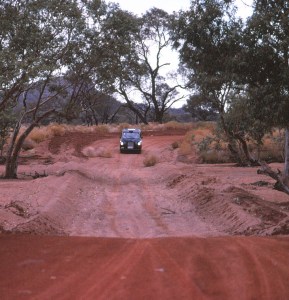
Driving a black cab (with two meters running, one calibrated for London cabs, the other calibrated for Sydney’s cabs ) they travelled through Europe, Turkey, Iran, Pakistan, India, Thailand, Malaysia and Singapore before crossing into Australia.
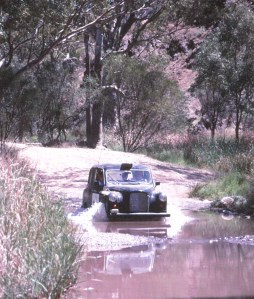
The 69-day odyssey titled the Canon Great Taxi Ride propelled them into the record books, the pair had been visited by Prime Ministers, seen the Taj Mahal and had 59-year-old Guy claiming to have had half an elephant as a passenger, which sounds a fair description of some of my customers.

The whole trip was the brainchild of John Morgan, a Welshman living in Sydney. He first had the idea in 1968 while watching the London to Sydney marathon cars leaving the UK. He had to wait until 1987/8 to make it happen. The journey had been timed to coincide with Australia’s bicentenary, it was at the time, the longest and most expensive London cab ride in history, having raised AS$320,000 for children’s charities, with the sponsors having to guess the final metered fare.
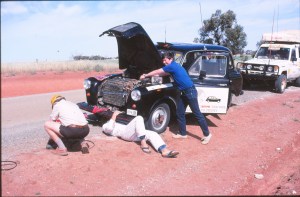
The cab is still in Australia (clearly Guy had no intention of driving home after the job) and although the trek was recorded on celluloid at the time, plans are now for a new film to be made to feature at Australia’s National Motor Museum.
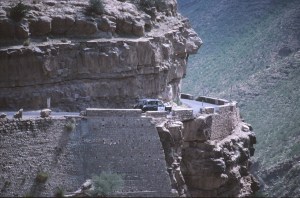
The purpose of the email was to try and contact Guy Smith or anyone with knowledge of his achievement, so if anyone can shine a light on this journey over 30 years ago, please contact me.
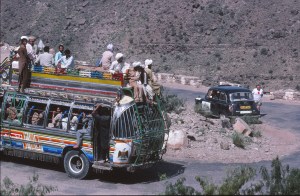
And the final fare? A$53,346, with the London final price, double the Aussie amount!
©All images courtesy of Mike Bennett who is working on a plan to put the cab and the film of the journey on display in the Australian National Motor Museum.



 On 20 June 1955 at the Old Bailey the trial began of Ruth Ellis, accused of the murder of David Blakely, found guilty and sentenced to be hanged
  Marc Isambard Brunel got his idea on how to dig the Thames Tunnel whilst in debtors’ prison watching a shipworm bore through wood
 18th century writer Samuel Johnson’s cat Hodge has a statue in Gough Square. Next to Hodge are oysters, his favourite food
 Nell Gywnn, orange seller and mistress to Charles II was born in the Coal Yard, now Stukeley Street off Drury Lane in 1650
 In June 1815 Major Henry Percy interrupted a ball at 16 St James Sq. to announce that 3 days earlier we had defeated the French at Waterloo
 Starring Hugh Jackman, Ian McShane and Scarlett Johansson Woody Allen’s romantic comedy Scoop wasn’t given a London cinema release
 In Regency times Bond Street was more popular with male shoppers such as royal fashion adviser Beau Brummell
 The colour scheme at Boston Manor Tube station was inspired by local team Brentford FC’s nickname – ‘The Bees’
 The longest journey without change is on the Central line from West Ruislip to Epping, and is a total of 34.1 miles
 Hoare’s Bank, Fleet Street first operated from the Golden Bottle, Cheapside in 1672. Customers have included Pepys and John Dryden
 Byward Street near the Tower of London takes its name from the word ‘byword’, meaning password, which was used at the Tower each evening

