
Category Archives: Thinking allowed
Ringing the changes
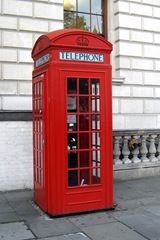
Atraditional red phone box is to be auctioned tomorrow with a guide price of £45,000. The K2 Kiosk is located at the west end of Austin Friars on its junction with Cophall Avenue and Throgmorton Avenue. It is outside the offices of BlackRock who once had George Osborne as a director, as his colleague David Cameron bought a shepherd’s hut to write his memoirs, George might require its nine square feet.
Between 1926 and 1935 1,700 examples of the K2 were installed with the total number of surviving K2 kiosks being only about 224 in the UK.
In addition to this one, there are four more in Central London, all expected to go for around £40,000 – £45,000.
As iconic as my black cab, the K2 telephone boxes have since 1936 been an intrinsic part of London’s urban landscape. But who actually uses telephone boxes these days or even notices them? With almost universal mobile phone ownership, you could say that red telephone boxes are hidden in plain sight. Their original function has been overtaken by several uses its designer couldn’t have imagined possible.
Their use as a rather well-designed notice booth for call-girls (or boys) is now falling by the wayside as they find more effective ways of advertising their services and using it as a public urinal has its limitations, not least that its cramped compartment renders the user in danger of watering their shoes.
With brilliant originality they named it K2 for Kiosk No. 2, it was, of course, preceded by K1 which was constructed in concrete. The new design – this time in cast iron – by Sir Giles Gilbert Scott had won a Post Office competition three years earlier and started a whole series of similar-looking telephone boxes.
Its distinctive domed roof and all-over red make it the prototype of the classic K6, which was introduced nearly ten years later. Ventilation was provided via the crown in the roof section – it was made up of small, round holes!
Legend has it that the dome was Scott’s homage to the 18th Century architect Sir John Soane, R.A. (1753-1837) whose family tomb is surmounted by a very similar feature. Unlike the tops of modern British phone booths, Scott’s Soanian dome is a proper roof, dealing effectively with rain and litter while also being aesthetically pleasing.
But what makes K2 special is that it was mostly restricted to the London area and considerably bigger than its successors.
In London kiosks positioned by tourist locations have survived BT’s desire to replace them with utility ‘shower cabinets’ and stand as an iconic feature of London, for many kiosks, their purpose now would seem only to be as a photo opportunity for visitors and Japanese girls modelling bridal wear.
Many entrepreneurs have found a new use for these beautiful structures, and for the remaining unsold kiosks, the London Tourist Board should come to an arrangement with BT to pay for their maintenance and cleaning, covered in grime they’re a disgrace.
I am indebted to wallyg at Flickr for permission to use his photo of K2; his pages contain a wealth of images and background information on London.
Giant deserves a watery grave
The Hunterian Museum in Lincoln’s Inn Fields holds collections of human and non-human anatomical things as varied from a pig’s penis to the oesophagus of a whale, the museum also owns the skeleton of a famous giant. The skeleton once on display stood seven foot seven inches tall in its display case and towered over the rest of the museum’s collection. This is, or was, Charles Byrne, a genetic giant who suffered from the growth disorder now known as acromegaly.
The Hunterian Museum, currently undergoing renovation, and not set to reopen until 2022 has announced that “plans for all the displays in the new museum will be issued in due course”.
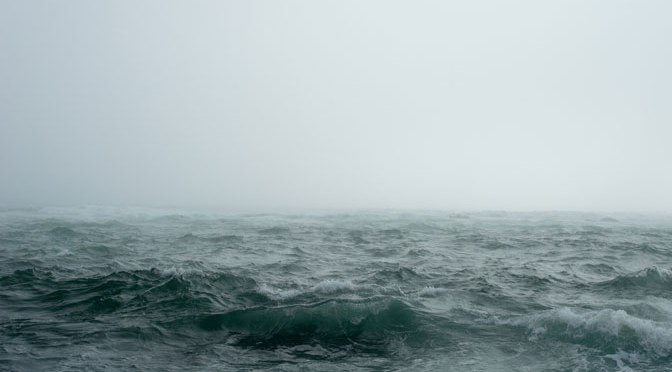
Which begs the question as to the museum’s giant who wasn’t meant to be there at all. Byrne didn’t want to spend an eternity on public display. From the rural Ireland of his upbringing to the streets of London, he had spent his whole life exhibiting himself. People paid to visit him in his London lodgings and he performed tricks in public, like using street lamps to light his pipe. After years of making a living from his remarkable height, he was desperate that his bones did not endure the same indignity. Byrne’s Will explicitly stated that he wished to be buried at sea in a heavy lead coffin.
The Hunterian has made no secret of the fact that they’d come by the skeleton illegally and against the man’s last wishes. The museum’s founder, the surgeon John Hunter, had followed Byrne closely when he moved to London. As the giant’s health deteriorated and he began to drink, Hunter moved in like a vulture. When Byrne contracted tuberculosis and died aged just twenty-two, it was Hunter’s men who waylaid the giant’s coffin on its way from London to Margate. The undertaker was bribed and the body returned to the surgeon.
Instead of the anonymity of the North Sea, the giant ended up immersed in Hunter’s grim cauldron, where the flesh was literally boiled off his bones. Once reduced, the skeleton was pinned together and put on display, black numerals stamped on it like a prisoner’s identification printed on bone. Byrne has endured the ignominy of his glass cabinet for over two hundred years.
Any scientific value the body once possessed has long since been quarried, DNA from the teeth analysed, and countless photographs and X-rays were then taken to document every inch of the skeleton. Even if the museum one day honours Byrne’s final wishes, you could say the damage has already been done.
Featured image: Choppy cold grey sea by coolwallpapers (CC BY-SA)
 CabbieBlog