Tag Archives: London’s buildings

Lazy Days

This has just been the longest March I can ever remember. It just went on … and on …

Perhaps like me, you’ve sorted out photographs, lists, cupboards, drawers etc, while sorting out the computer was a bit like the wardrobe – deciding what to delete from years gone by and now forgotten like bell-bottom jeans and kipper ties … they all come back given time, but not thousands of old emails and long unsupported programs.

While I was there I’ve also updated the blog’s sidebars, and sent off a few book proposals, and received some more don’t call us, we’ll call you replies.

This England requested a piece for next year’s annual, marking 125 years of the black cab. I obliged, noting they also publish Beano and Dandy magazines, which seems to sum up the extent of my fine prose.

All this makes for a rather laid back approach to life these days. This lethargy also manifests in writing, you know how it is, one day ideas are popping out of your ears, then you relax and … nothing.

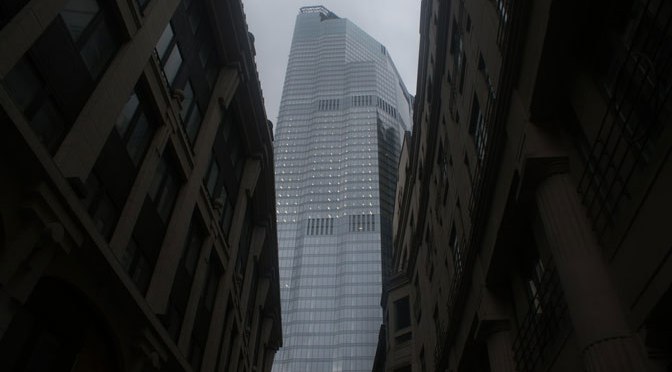
So I’ve been thinking about a nickname for the new skyscraper nearing completion at 22 Bishopsgate, a gargantuan office building that will utterly dwarf all that has gone before, trumping every property developer’s wildest fantasy. Other huge erections have been given monikers: the Cheesegrater, the Walkie-Talkie and my favourite considering it is the home of the London Assembly – The Testicle.

Now with a combined bulk of all those three combined comes 22 Bishopsgate containing 32 acres of floor space heaped in a 250-yard-wide hulk, rising to just below the height of the Shard and built after consuming the 7-storey lift shaft stump of the abandoned Helter Skelter.

With the City deserted its streets only populated by the occasional Deliveroo driver and empty cab, it seems a strange time to be completing the largest office building the capital has ever seen.

A large lump, having swallowed up the previous development with steam rising from its air-conditioning and glistening glazing panels, surplus to our needs, there can be only one moniker – I give you The Turd.

Featured image: 22 Bishopsgate from Whittington Avenue looking northeast by © Robert Lamb (CC BY-SA 2.0).

Mary Ward House in Euston

Running parallel to Euston Road, Tavistock Place is used by cabbies heading west towards Euston Station or Tottenham Court Road. Camden Council in an effort to protect the many cyclists using the route has constructed dedicated cycle lanes. The result of which has been to narrow the road producing a perpetual traffic jam, soon to get worse with the advent of HS2.

While sitting stationary you get to notice on the north side of Tavistock Place the stunning Grade I listed 1898 building – Mary Ward House. But who was Mary Ward, and what was her ‘House’ for?

Mary Ward was known in her lifetime as Mrs Humphry Ward, a prolific Victorian novelist, who died in March 1920, at the age of 68. Her novels are not much read now but were successful in their time and tackled the social subjects and issues of faith and doubt that were beloved of the Victorians.

She was also a noted philanthropist and socialist, she helped open up university education to women. She promoted the education of the working classes through the ‘settlement’ movement (which settled students in working-class areas where they worked among the poor). Curiously, she also became a leader of the anti-suffragist movement, campaigning against giving women the vote.

One of her most inspired initiatives was founding Passmore Edwards House in Tavistock Place. This building, funded by publisher and philanthropist John Passmore Edwards, was part of the University Hall Settlement.

Passmore Edwards House had the first properly equipped classrooms for children with disabilities and was also home to a centre where children could come to play in a safe, warm, bully-free environment. A hall, gym, library, and other communal rooms were provided, and there were also residential rooms for those living in the settlement.

Gustav Holst was for a while the settlement’s director of music.

Mary Ward doorThe building’s young architects, Dunbar Smith and Cecil Brewer, themselves lived in the settlement, so knew the background to the settlement movement and grasped the building’s purpose and potential.

They would go on to design the Welsh National Museum in Cardiff, they proved a good choice. The style the adopted for the building was that fruitful blend of Arts and Crafts with Art Nouveau that proved successful in London buildings for education and the arts at around this time. They brought together segmental arches, a variety of window shapes, fine stone detailing, and other features to make an arresting façade. The lettering over the entrances is also delightful.

In 1921, a year after Mary Ward died; the house was renamed in her honour. There is more information about this building and its current use here.

Picture of Mary Ward House by Mike Quinn

A version of this post was published by CabbieBlog on 1st February 2013