
I journeyed to London, to the timekept City, / Where the River flows, with foreign flotations. / There I was told: we have too many churches, / And too few chop-houses.

T. S. Eliot (1888-1965), The Rock

I journeyed to London, to the timekept City, / Where the River flows, with foreign flotations. / There I was told: we have too many churches, / And too few chop-houses.
T. S. Eliot (1888-1965), The Rock
On 4 May 2008, Boris Johnson beat his rival Ken Livingstone and assumed control at City Hall. His candidacy was the object of national and international scrutiny. David Cameron had commented, ‘I don’t always agree with him, but I respect the fact that he’s absolutely his own man’.
 On 4 May 1913 the annual exhibition of flowers by the Royal Horticultural Society was held for the first time in the grounds of the Royal Hospital Chelsea
 Forty Elephants were a gang of prolific female shoplifters from the 1920s who stashed stolen goods in specially adapted bloomers
 London’s railings used to be brightly coloured. On the death of Prince Albert, Queen Victoria decreed that they all be painted black
 In his will Dickens stipulated that no monuments be erected to his memory, that’s why London has no statues of one of its greatest writers
 The American Declaration of Independence was printed in Caslon typeface designed in Chiswell Street by William Caslon, it’s now a Tesco
 In 17th century London antics in St. James’s Park were put to verse: ‘Nightly now beneath their shade/Are buggeries, rapes and incests made’
 Opening in 1910 with 2,286 seats the London Palladium had its own telephone system, so patrons could talk to each other
 A white strip near BBC White City marks the finish of the world’s first modern marathon in 1908 originally 25 miles extended to 26 miles 385 yards
 Traffic congestion in 18th century led to a law being passed to make all traffic on London Bridge keep to the left in order to reduce collisions, it was incorporated into the Highway Act of 1835
 On 4 May 1896 the Daily Mail, at 1⁄2d a copy, devised by Alfred and Harold Harmsworth, was first published, the planned print run of 100,000 for the first day became 397,215!
 Elephant & Castle Shopping Centre dubbed ‘Piccadilly Circus of South London’, Europe’s first covered mall was voted London’s biggest eyesore
 Trivial Matter: London in 140 characters is taken from the daily Twitter feed @cabbieblog.
A guide to the symbols used here and source material can be found on the Trivial Matter page.
For those new to CabbieBlog or readers who are slightly forgetful, on Saturdays I’m republishing posts, many going back over a decade. Some will still be very relevant while others have become dated over time. Just think of this post as your weekend paper supplement.
Ask any London schoolboy when the Great Fire of London occurred and he will tell you 1666 when 80 per cent of the mediaeval city was consumed in the conflagration.
Over the years with very little, we have managed to reduce many of London’s important buildings to ash.
The Crystal Palace In 1851 the world’s first expo was staged in Hyde Park beneath a glass structure so massive mature elm trees were incorporated within its structure. Following its success when 6 million people visited, the prefabricated building was re-assembled in Sydenham on a hill that has since adopted its name. An amusement park, concert hall, and theatre were incorporated within the grounds. Even the FA Cup Final was played there until 1923 when the old Wembley Stadium was built. Then on 11th November 1936, it burnt down, so fierce was the inferno witnessed its glow from north London over 20 miles away.
Palace of Westminster The modern Houses of Parliament replaced the earlier one which had been built over a long period of time. Following the Dissolution, the Commons found a permanent home in the Chapel of St. Stephen, the speakers sitting on where the altar had been, which then started the tradition of bowing in his direction. Tally sticks which were once used to keep records of accounts had become so numerous that in 1834 it was agreed they should be burnt in the furnace in the Palace’s cellars. In the resulting fire only Westminster Hall built by William Rufus survived. The building started by Edward the Confessor in the 11th century had to be rebuilt in the Victorian Gothic style we see today.
Whitehall Palace On the road that took the name when Henry VIII was King there stood Whitehall Palace one of Europe’s largest royal palaces. The area we now know as Horseguards Parade was the tiltyard used for jousting and Henry’s indoor tennis courts are now incorporated within the Cabinet Office, the only survivors of that once great wooden building. One of its last additions was Banqueting Hall built of brick by Inigo Jones and is the only complete survivor when in 1698 a Dutch laundry maid had a careless accident and burnt down most of its 1,500 rooms.
London Bridge The medieval London Bridge had 19 small arches and was crowded with buildings of up to seven stories in height. The narrowness of the arches meant that it acted as a partial barrage over the Thames, restricting water flow and producing ferocious rapids between the piers of the bridge, as the difference between the water levels on each side could be as much as six feet. Only the brave or foolhardy attempted to steer a boat between the piers and many were drowned trying to do so. As the saying went, the bridge was “for wise men to pass over, and for fools to pass under.” On the night of 10th July 1212, only three years after the bridge’s completion a fire broke out on the south side of the river. People ran across the bridge to help quench the flames, but this action was to be regretted, a strong wind fanned the flames and sent sparks across the river causing the north end to ignite, trapping the people in the middle of the bridge. There was only one way out over the side into the Thames where a large number of boats had gathered hoping to be of assistance, some of which were sunk by the number attempting to board. The number of bodies recovered was around 3,000, but this did not include the people incinerated in the fire, their bodies were never found.
Whilst clearing out the attic I came across this receipt for my wedding suit.
 The bespoke 3-piece cost £39, about the price of a man’s suit nowadays in Primark! Little did I realise in 1968, that 25 years later, I’d use the same suit for my appearances on The Knowledge.
I’m trying out the Cornell method of organising notes. Devised by Walter Pauk at Cornell University, the method is a ‘two-column’ notes style. The paper is divided into two columns: the note-taking column on the right is twice the size of the questions/keyword column, which is on the left. Four lines are left at the bottom of the page for the summary and one at the top for the page number and heading.
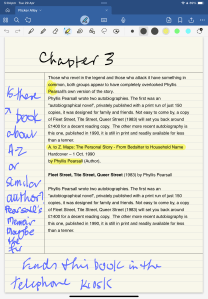
My post, Driving my droschky over The River, for reasons known only to Substack’s algorithms, has had over a thousand views and since posting, generated a couple of dozen new subscribers to my site – Unblogged London, and more likes than you could shake a stick at. Why some missives take off while others languish in cyberspace awaiting discovery I’ve yet to discover.
Shakespeare. The Man who Pays the Rent – Judi Dench’s memoir. This delightful book has anecdotes galore, more remarkable is Judi’s ability to recount so much of her acting life.
I’ve recently received an email from FeedSpot informing me: ‘I would like to personally congratulate you as your blog Cabbie Blog has been selected by our panelist as one of the Top 100 London Blogs on the web.’ All very nice including the badge now displayed on my sidebar. So I checked out the site above me at number 24 in FeedSpot’s popularity rating. The site, London Is Cool, is now defunct. So how is it more popular than many other London blogs? Stop press: Number 24 has been replaced by the excellent A London Inheritance.
Why do Havering’s foxes insist on consuming inedible piping? My neighbour’s fountain in their water feature was regularly sabotaged with foxes eating through the electricity feed. Now recently I’ve discovered a nibble in my hosepipe. There was a time when discarded McDonald’s take-aways were sufficient.


 CabbieBlog