
Welcome to the Shelter Sleuths Investigations page. Here you can find more background about the book’s characters, the sources of the stories, and the London locations featured in the novels.
If you have found any mistakes, inconsistencies or have any theories, pop them in the comments box below, I won’t hold it against you.
Colin Chaucer
A London cabbie for decades: middle-aged, slim, tall, with dishevelled greying hair. Of all the characters created, I’m proud of this one with his obsession with data and statistics in his pursuit of knowledge. A compulsive diarist who lives on his own. He is loosely based on a famous London blogger, and if truth be told, he’s a little bit like me.
Frank Belzoni
The cabbie of Italian extraction is a composite of the proprietor whom I rented a cab from in my early days. Mediterranean good looks, which are slightly fading, gregarious, knowledgeable and an all-round nice guy. I was apprenticed in Little Italy, so the experience of six years with Clerkenwell’s residents has probably percolated into the manuscript.
Donna Constable
Detective constable/sergeant, lives with her parents in a house overlooking Ealing Common. I’ve made an error here for unless her father was a corrupt senior police officer (he’s not portrayed as such), they couldn’t afford to live in the multi-million pound house. She has the classic beauty of young women of Indian descent – fairly short stature, flawless olive complexion, and long straight raven-black shiny hair.
Tom Farquharson
As a young journalist, I’ve struggled with this character. Not knowing any newspaper hacks and being over half a century older than him. I visualised a tallish, slim guy, wearing a jacket, but no tie, with shortish hair and with a naive countenance disguising a forensic brain.
Nigel
I’ve deliberately refrained from giving the lecturer a surname as his students would never refer to him as such. Wearing clothing firmly stuck in the 80s with printed t-shirts, Levi 501s and sporting a thinning ponytail, he epitomises so many of his academic generation. His Jack Russell cross terrier, Spencer, is named predictably after Herbert Spencer, the Victorian philosopher and polymath, who originated the expression ‘survival of the fittest, ‘ which rather sums up much of the arc of my novels.
The Green Shelter
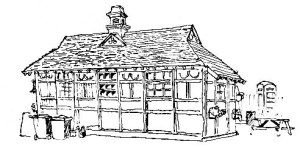
The ‘meeting place’, aka ‘incident room’, is based on a green shelter, close to Acacia Road in St. John’s Wood, where in February 1875 the first shelter was opened. Near Lord’s Cricket Ground in Wellington Place, it is nicknamed ‘The Chapel’ or ‘Nursery End’, and recently, a new proprietor has taken over the Shelter. Incidentally, The Chapel was the finishing line for ten cabbies calling themselves The Green Hut Run Club, who on Wednesday, 24th September, 2025, raising money for the charity maintaining the shelters, ran 16 miles across the capital, visiting all 13 of the city’s historic green taxi shelters in one go. The description of the internal layout is accurately described in the Shelter Sleuths Investigations, as is the adjacent toilet and small park. Herbert Spencer, the proprietor’s dog is fiction, as the shelter’s kitchen is adjacent to the dining area, less than 10ft away, strictly speaking, having a dog in the vicinity would contravene the Food Hygiene Regulations 2013, that rules that restaurant owners mustn’t allow dogs into places where food is prepared, handled or stored.
Taxi meters
Currently, no plans exist to incorporate cameras into taxi meters (if there were, On The Meter would be a work of non-fiction). Although many cabs today have CCTV installed in the vehicle’s interior, the cabbie has no access to the images.
Canal Walk Apartments
A new fictional development near Paddington Station. The adjacent canal exists; in the 1800s, Paddington became the gateway to London, connecting the city to the growing industrial world beyond. When the waterways opened in 1801, Paddington stood at the junction of two major canals – the Grand Union Canal and the Regent’s Canal – which terminated at the Paddington Basin. There is a huge number of apartments being built here, the flat visited by Tom and Colin, the sales office and Peter the salesman are all fictional.
Pinner Park Farm (derelict)
The isolated 18th century building of Pinner Park Farm certainly exists, and is situated in the middle of a large area of farmland, once the exclusive hunting preserve from the time of the Norman Conquest of the Archbishops of Canterbury.
Nellie Clifden
In August 1861, Bertie was finishing up a summer at the military camp at Curragh in Ireland, and his parents were visiting him there to see what he had accomplished. Days later, passages appear in Bertie’s diary that mark three distinct engagements at Curragh, dated on September 6, 9 and 10 – “N.C. 1st time, N.C. 2nd time, N.C. 3rd time.” This, my friends, is how the future Edward VII lost his virginity. I have used artistic license with young Nellie Clifden, as, rather than living in obscurity, contemporary accounts claim she regularly appeared on the musical stage in Dublin and London.
Angels Fancy Dress
When German tailor Daniel Angel arrived in 1813 with barely a word of English, he set up a barrow selling second-hand clothes to London’s poorest in Seven Dials. Little did he realise a request from an actor to rent a suit, rather than buy it, would lead to a shop in nearby Shaftesbury Avenue by the late 1880’s. Angels Fancy Dress is still renting out costumes to the public from those same premises.
The Regency Cafe
The Regency Cafe is an art deco style British cafe in Regency Street. It first opened in 1946, and much of the interior is original. In 2013, it was voted the fifth best restaurant in London by users of Yelp. The cafe has been featured as a filming location in several BBC series, such as Judge John Deed, Rescue Me, and London Spy. It has also appeared in the films Layer Cake, Brighton Rock, Pride, and Rocketman. In print, it has appeared in the Japanese version of the magazine Vogue and in a Volkswagen advertisement.
The most beautiful road in London
Exhibition Road was once actually described by a politician as ‘The most beautiful road in London’, when it was transformed by paving it in Chinese granite at £22,000 per yard. Once known as Albertopolis, it is lined with museums, a university, colleges and music venues.
The National Archives
With its stark white concrete, the building containing the National Archives looks more like an oversized Odeon cinema, a nod to its architect, who designed many of the 1930s picture palaces. The lake and its three fountains at the entrance mutes the brutalist frontage. Anyone can apply to conduct research at this haven of tranquillity.
Brantridge Park
The Grade II-listed Brantridge Park does exist. The 19th-century country house, sitting on a small hill overlooking Brantridge Forest, was formerly a low-grade royal residence built around 1874 by Sir Robert Loder, replacing a farmhouse that stood on the site. It is now primarily a spa and location for photo shoots.
Flicker Alley
Cecil Court or ‘Flicker Alley’, laid out in the late seventeenth-century, filling in open land between St Martin’s Lane and Leicester Square as London spread steadily west, is still owned by the family from which it takes it name, the Cecil family of Hatfield House in Hertfordshire, who are the descendants of Robert Cecil, created first Earl of Salisbury. Cecil had been trained by him in matters of spycraft as well as statesmanship, and as Secretary of State for both Elizabeth I and James I he was deeply involved in matters of state security. Nothing at all of the fabric of these buildings survives, but for the modern visitor to the area I would suggest that Goodwin’s Court (its image features on Flicker Alley’s book cover), on the opposite side of St Martin’s Lane – entered through a narrow passageway and therefore easily missed – is the best place to get a feel for the atmosphere of Georgian Cecil Court.
Havering-atte-Bower (The fictional home of Colin Chaucer)
Triple-barrelled, no less, Havering-atte-Bower is a delightful little village in the northeastern corner of London. A proper hilltop village with a green and a twisty street, plus royal connections going back almost a millennium. Edward the Confessor established a timber lodge here, which became the centre of hunting grounds known as The Royal Liberty of Havering. Later a proper palace grew up (to which the ‘atte-Bower’ suffix relates), and several monarchs including Henry VIII stayed overnight here. It’s all vanished now, every last stone, but the parish church is built on the site of the old palace chapel. A row of cottages looks out across the green, which is not quite round enough for a game of cricket, hence the cricket club is tucked up a lane on the way to Bedfords Park. There’s a great view from the boundary, as the hillside tumbles down towards Romford, intermediate suburbia and the Thames. A white-painted water tower rises from a nearby field, but there is no sign from the lane of the Round House beyond. This unusual 18th century home once belonged to Joseph Pemberton, one of the UK’s foremost rose growers (and isn’t round, it’s elliptical). On the edge of the village green are stocks and the whipping post – not the medieval originals but still most unlikely survivors in a London village. The village sign is new, unveiled by Boris Johnson, the sign is just across the green from the pond which may, or may not, have been used to dunk witches.
Albany
The Albany, or simply ‘Albany’, is rather unusual. In a world dominated by social media, you won’t find many photos of it online, probably because there are lots of rules and regulations: ‘no whistling, no noise, no children under 14, and definitely no publicity’. Once a bachelor apartment complex, a rule that has been relaxed of late, although many of the residents in the three-storey complex still live alone. Built five years before the American Declaration of Independence, in plain sight just off Piccadilly, yet few people notice it. It was occupied by Prince Frederick, Duke of York and Albany (hence the confusion over the definite article; residents favour dropping it) and subsequently turned into 69 apartments or ‘sets’. You buy into Albany because of the prestige; residents are vetted by a daunting residents’ committee, which means no riff-raff, which in turn means it’s about class, not money, although times have changed a little on that score. I have twice dropped off the same famous English actor at the side entrance.
 CabbieBlog