
Category Archives: An urban view
Protected: London Bridge reopens
Maggie Blake’s Cause
Maggie Blake’s Cause is a small alleyway connecting the Victorian cobblestoned Shad Thames with the riverfront alongside Butler’s Wharf.
So who was Maggie Blake and what, or when, was her cause?
Butler’s Wharf was a large Victorian warehouse complex built in the early 1870s, so successful at the time it earned the sobriquet: London’s Larder. I can remember the area, before gentrification, still smelling of the spices stored in its warehouses.
Containerisation and the development of large, deep-water docks downriver at Tilbury spelt the end of London’s wharves and warehouses, including those at Butler’s Wharf. The last cargo ship sailed away from Butler’s Wharf in 1972.
The warehouses became empty and partly derelict until Sir Terence Conran and his backers won planning permission in 1981 to redevelop them into restaurants and apartments by the London Docklands Development Corporation, with their plans sealing off the riverside frontage, making more space for their restaurants.
As with all these developments for the rich exclusivity was demanded.
Enter Maggie Blake a local community activist who, together with other Bermondsey residents, successfully campaigned to retain access to the riverfront for both locals and visitors.
There is one oddity though, early documents call it Maggie Blake’s Causeway, while today it seems to have dropped the ‘way’.
In a way, that makes the causeway better named, as it was the cause that she fought for.
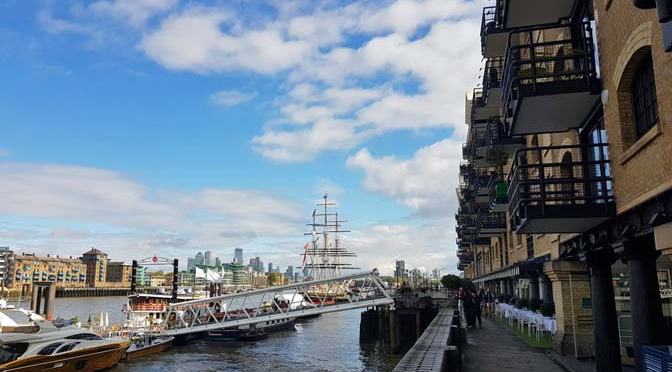
Featured Image: The Thames Path near Butler’s Wharf Pier by Tim Heaton (CC BY-SA 2.0). This part of the Path’s access to the Thames was made possible by Maggie Blake and other local residents: Developers of the derelict warehouses along Butler’s Wharf “… wanted to limit riverfront access to the owners, occupiers and guests of Butler’s Wharf [new] restaurants and apartments. Maggie Blake and her supporters thought otherwise. They fought a spirited and eventually successful campaign which saved the historic riverfront and its wonderful views of Tower Bridge for ordinary folk”.
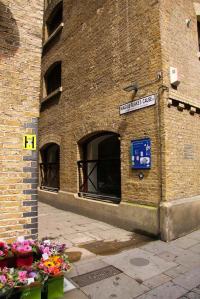
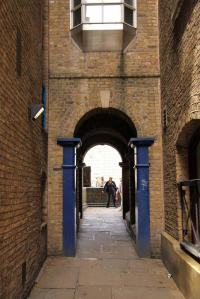
Maggie Blake’s Cause by Steve Daniels (CC BY-SA 2.0). Alley that connects Shad Thames with the waterfront. Maggie Blake, along with other activists wanted to ensure that local people and the general public could walk freely along the south bank of the Thames.
Protected: Shakespeare Wos ‘Ere
Rockin’ Roads
As someone who has made a good living studying maps, I’ve come to accept that many roads are named after local worthies, some of these are commemorating politicians, and some commendably feature the name of a local hero or it could be a sports person, in fact, Tessa Sanderson has two to her name.
But one group seems to have been forgotten – musicians. So much so I’ve only managed to locate four in London.
Bob Marley Way, Brixton
Bob Marley arrived in London on 3 January 1977, fleeing Kingston after an attempt to kill him (he would go to his grave years later with a bullet still lodged in his arm), he moved into 42 Oakley Street, just off the King’s Road, giving him easy access to the recording company Island Studios in Basing Street, Notting Hill. Marley would leave London after 16 months returning to Jamaica in April 1978. His eponymous street is off Mayall Road which runs parallel to Railton Road, but so small it doesn’t appear on the map.
Ronnie Lane, Manor Park
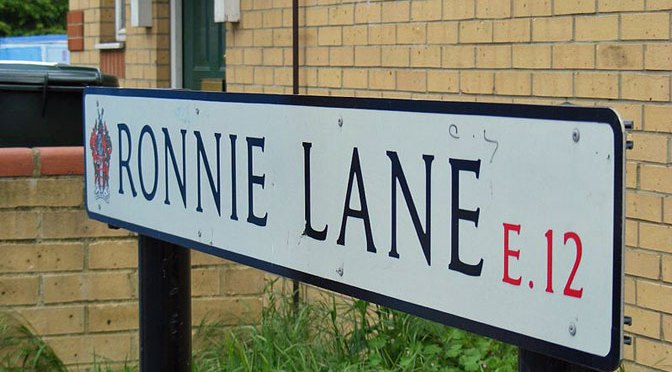
With a name that lends itself perfectly to a street, Ronnie Lane was an obvious choice when naming a new development. Close to the North Circular, Ronnie Lane has three entirely separate stunted dead ends leading off two different main roads. A founder member of the 1960s rock band Small Faces, the Plaistow-born musician, who subsequently played bass guitar with Faces, acquired the nickname ‘Three-Piece’, much like the three cul-de-sacs which now take his name. He died in 1997, after suffering from multiple sclerosis for more than two decades.
Vera Lynn Close, Forest Gate
The singer, from East Ham, became known as the ‘Forces’ Sweetheart’ for her performances and recordings during the Second World War. She became the first centenarian to have an album in the charts last year when a collection of songs to mark her 100th birthday made it into the top three. Again this close off Dames Road is too small to feature on a map.
Freddie Mercury Close, Feltham
Farrokh Bulsara worked at nearby Heathrow washing dishes in a kitchen, growing up at 22 Gladstone Avenue (another road named after a worthy), which is marked with a blue plaque. Farrokh is better known as Queen’s frontman Freddie Mercury, but I’m surprised they haven’t put the giant figure which stood outside the Dominion, Tottenham Court Road at the entrance to this unprepossessing cul-de-sac off Hanworth Road.
Featured image: Ronnie Lane, Manor Park, London Borough of Newham. Street named after British musician Ronnie Lane by Sludgegulper (CC-BY-SA-2.0).
 CabbieBlog